Physics - master
- Nordic applicants: April 15th or November 1st
- EU/EEA + Swiss applicants: March 1st
- Non-EU/EEA applicants: November 15th
About the study
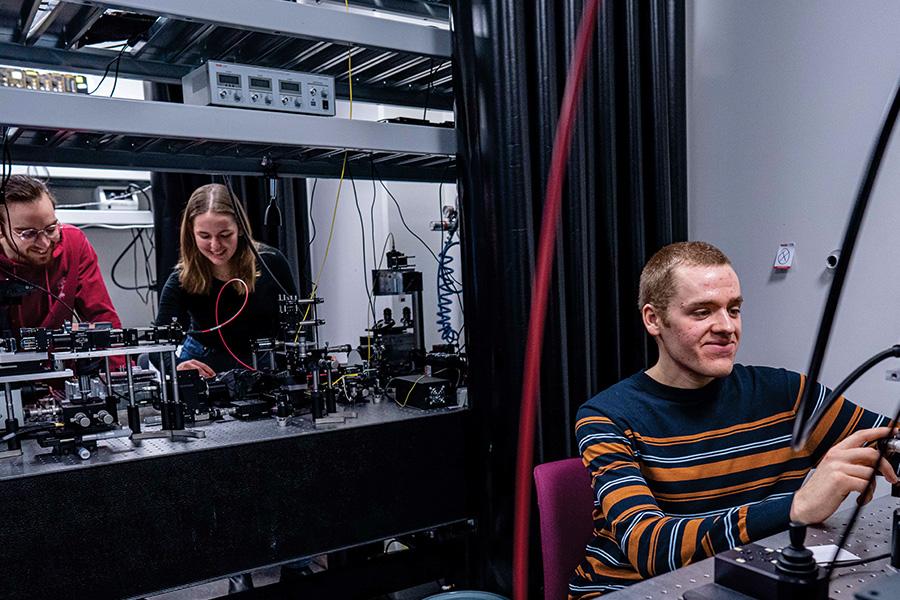
Explore physics from nanoscopy to space science at UiT. Use advanced modelling and remote sensing to address climate change and sustainable energy, preparing for careers in research, technology and innovation.
What will you learn?
The Master’s in Physics combines advanced theory, computational methods and research-based learning. You will develop expertise in areas such as fusion physics, climate physics, space physics, Earth observation, renewable energy or machine learning, and learn to:
- Analyse large and complex scientific datasets
- Model physical processes using mathematics, statistics and programming
- Evaluate scientific theories, methods and experimental results
- Work independently on a supervised research project
- Communicate findings clearly in writing and presentations
The programme also develops critical thinking, research ethics and interdisciplinary problem-solving skills, preparing you to contribute to sustainable innovation in physics and related fields.
Student life



What can you become?
Graduates can work as physicists, researchers, consultants, data analysts, software or systems developers, climate advisers and environmental specialists. Career opportunities include:
- Earth observation and environmental monitoring
- Climate modelling and energy management
- Sensor, rocket and space technology
- Application development and statistical analysis
- Research, industry and public administration in Norway and internationally
Career opportunities
Access to further studies
Completed Master's degree studies qualify for admission to PhD-studies in physics, depending on satisfactory marks in the Master's and Bachelor's degree. PhD-studies in physics are offered at UiT The Arctic University of Norway.Programme structure
How is the teaching organized?
The Master’s in Physics is a campus-based programme at UiT and requires regular physical attendance. Teaching may include:
- Lectures and supervised exercises
- Laboratory and computer-lab work
- Fieldwork and, where relevant, research cruises
- Independent work on a supervised master’s thesis
Some courses include mandatory assignments that must be approved before you can take the exam. Assessment varies and may include written exams, reports, presentations and oral examinations. If your thesis involves laboratory, field or cruise-based work, you must complete the required safety training beforehand. Students should expect a full-time workload of approximately 40 hours per week.
Language of instruction
Language of instruction is English and all of the syllabus material is in English. Examination questions will be given in English, but may be answered either in English or in a Scandinavian language.
In addition, the Master's thesis may be written either in English or in a Scandinavian language.
Programme structure
See the subjects you can take in this study programStudy plan
Outgoing exchange
Exchange is possible abroad or at UNIS and may be included in your degree if approved in advance. Discuss relevant courses with your supervisor and the Department of Physics and Technology before departure. See UiT’s exchange agreements for options.
Studiesteder du kan utveksle til
Admission requirements
Bachelor’s degree in Physics (180 ECTS) or equivalent qualifications. An additional requirement is specialization in physics worth the equivalent of minimum 80 ECTS.
Applicants must have a minimum grade average comparable to a Norwegian C (2.5) in the ECTS scale, see the UiT webpage for International admissions for more information on how the point average is calculated.
Applicants with education from non-Nordic countries must document English language proficiency. You will find more information on English language requirements on the UiT webpage for International admissions.
Admissions capacity spring 2027 (nordic applicants):
20 places
Admissions capasity fall 2027 (all applicants):
20 places
Applicants from Norway or Nordic countries:
- Applicants from Norway or Nordic countries can apply for admission to the program twice a year.
- The application deadline is April 15th for admission to the fall semester
- The application deadline is November 1st for admission to the spring semester
- Her finner du all informasjon knyttet til søking og opptak.
Applicants within EU/EEA/Switzerland:
You will find more information about admission for EU/EAA applicants here.
Applicants outside EU/EEA/Switzerland and the Nordic countries:
You will find more information about admission for Non-EU/EEA applicants here
Har du spørsmål?




You might also be interested in
Mathematical Sciences - master
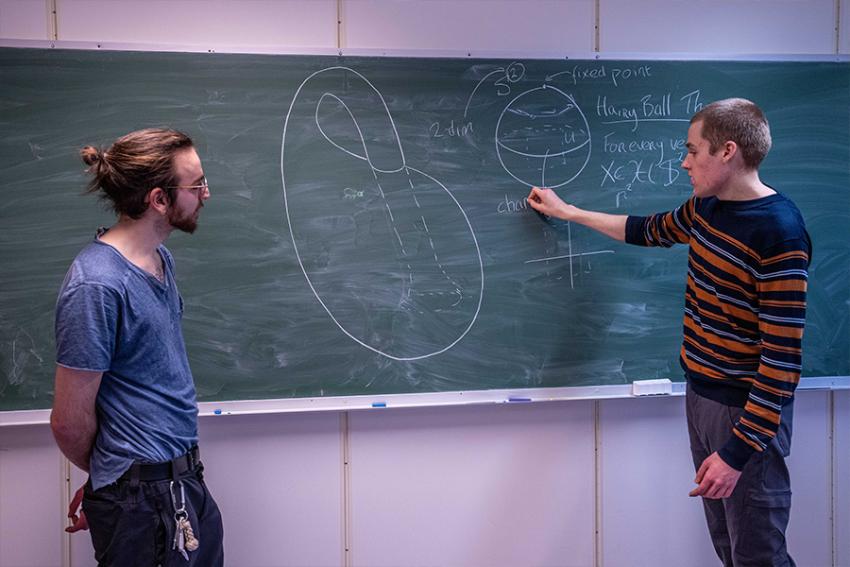
Master in Mathematical sciences introduces you to mathematical research and the appliance of mathema...
Geosciences - master
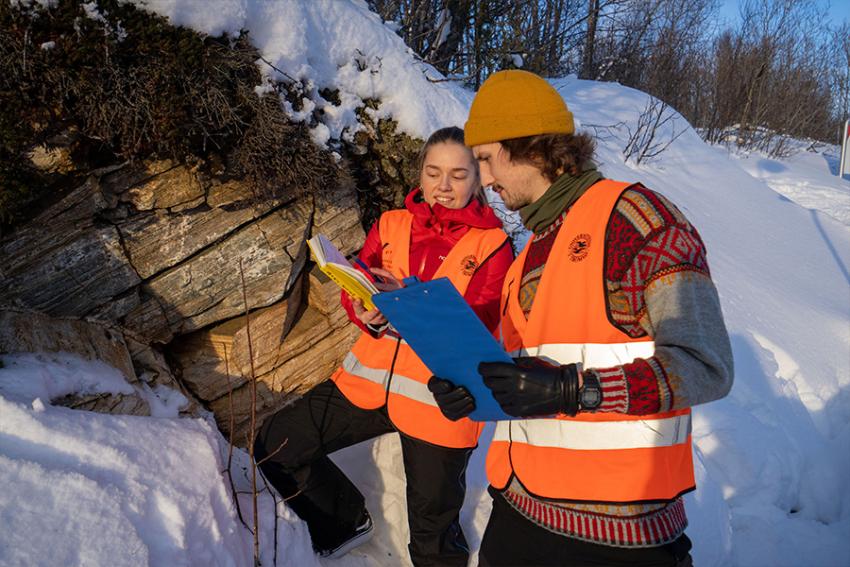
Geological competence is needed to study geohazards, climate and environmental change, and to unders...
Computational chemistry - master
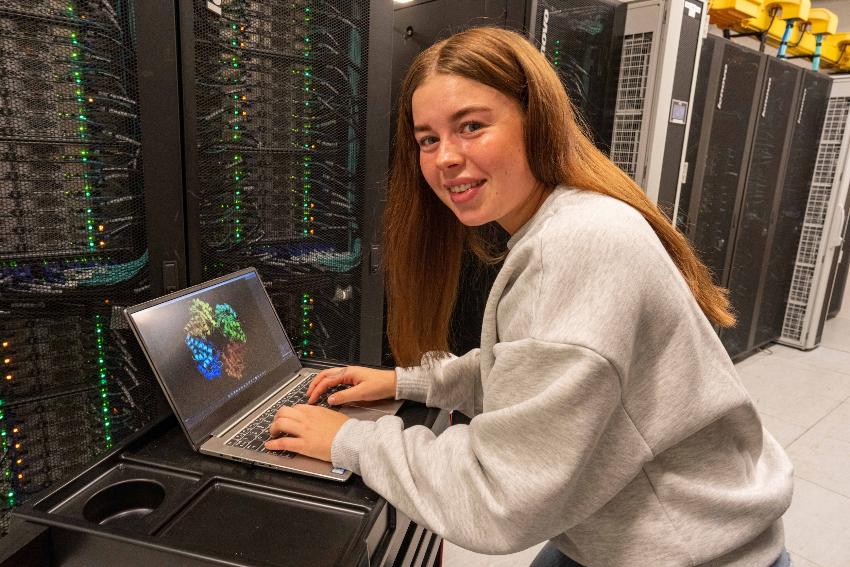
Master computational chemistry at UiT. Model molecules, explore quantum science, join global researc...
Følg @uitstudent på Instagram eller TikTok for å få et enda bedre innblikk i hvordan det er å studere på UiT. Her viser studentene fram sin studiehverdag, deler tips og nyttig informasjon, og du kan stille spørsmål om alt du måtte lure på.
Sjekk også @uitnorgesarktiske på Instagram eller TikTok for info om studier, jobbmuligheter og forskning.
