Guest Lecture Friday April 24th, 2026: Dr.-Ing. Eric Veith
We are excited to announce that Dr.-Ing. Eric Veith, OFFIS - Institute for Information Technology R&D Division, on Friday April 24th, 2026 will be giving a guest lecture titled: "AI and Security: How Smart Fridges Attack the Power Grid and What We Can Do About It"
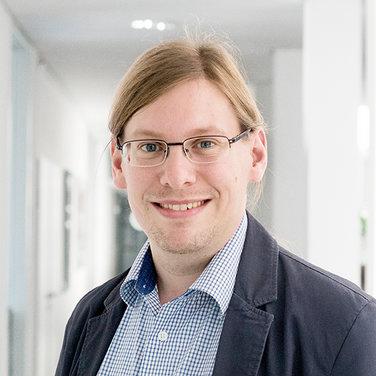

(Please note that this lecture has been moved from 17th to 24th of April!)
This talk is part of the course INF-2310 Computer Security, but it is open to all.
The lecture will be held in person at MH 1 - Auditorium 4.
Professional (academic) contact person is Prof. Håvard Dagenborg.
Target group: Bachelor, master, PhD students and employees at NT-Fak.
Welcome!
----------------
Date: Friday April 24th, 2026, at 12:15
Place: Realfagbygget, Store Auditorium B302
Title: "AI and Security: How Smart Fridges Attack the Power Grid and What We Can Do About It"
Lecturer: Dr. Eric MSP Veith, OFFIS e.V. — Institute for Information Technology, R&D Division Energy, Germany
Abstract
In order to reach set goals for greenhouse gas emissions, the share of renewable energies in power grids rises around the world. Together with new market concepts and an ever-tighter integration of prosumers, the strive for efficient operation of power grids has introduced a multitude of information and communication technologies as well as AI-based algorithms. Moreover, the proliferation of IoT technologies has created a large group of devices, which may be neglectable individually, but become grid-affecting in sum. Complex cyber-physical systems inherently suffer from attack vectors because of the complexity. Recent years have also shown us that power grids have become valuable targets.
Learning agents, i.e., software systems based on Deep Reinforcement Learning (DRL), have already firmly established themselves in a multitude of applications for smart grids. They promise to provide resilient strategies for the operation of power grids, being able to adapt themselves and react to events that were not foreseen by their creators. However, DRL agents suffer from non-explainability and also cannot guarantee wanted behavior at all times. As such, researchers have toyed with the idea of combining DRL with deterministic algorithms or have tried to tackle the problem of explainability.
In this talk, we will present the Adversarial Resilience Learning methodology and reference framework. It extends the state of the art in DRL for power grids by establishing an autocurriculum setup to improve training performance, by transparently incorporating offline and imitation learning into the agent’s architecture, and using eXplainable Reinforcement Learning through equivalent decision trees to give behavioral guarantees. The ARL agent coexists with proven multi-agent system approaches and can form a hybrid, effectively combining deterministic near-optimal solutions to known use cases, while being able to adapt to unforeseen circumstances.
Short Bio
Dr. Eric MSP Veith is a computer scientist by heart. He obtained his diploma in 2010; his studies initially focused on computer and communication networks. During is PhD, he devised a Multi-Agent System for guaranteed optimal real power equilibria in distribution grids with a high amount of volatile, distributed, renewable energy resources.
In 2017, after his PhD, he joined the computer science institute OFFIS in Oldenburg, Germany. Here, he created Adversarial Resilience Learning (ARL), a methodology based on Deep Reinforcement Learning to analyze a cyber-physical energy system for weaknesses and let the agents reliably learn strategies for a resilient operation.
2022-2025, Eric has lead his own junior research group at the University of Oldenburg, Germany, focusing on extended agent architecture based on ARL that allow for guarantees and explainability and supervising PhD candidates in this particular area of research. He is now scientific director at OFFIS, supervising 4 PhD students in the ARL context.
Eric is member of Germany's federal platform for artificial intelligence (PLS), of the Transatlantic Cyber Forum, the German standardization organization (DIN), is IARIA fellow and serves in the steering committee of IARIA's ENERGY, and serves in the TPC of the ACM e-Energy and the European Simulation and Modelling Conference.
Kortnytt fra Institutt for informatikk

-
Fiskeri- og havbruksvitenskap - bachelor
Varighet: 3 År -
Fiskeri- og havbruksvitenskap - master
Varighet: 2 År -
Akvamedisin - master
Varighet: 5 År -
Bioteknologi - bachelor
Varighet: 3 År -
Arkeologi - master
Varighet: 2 År -
Musikkteknologi
Varighet: 1 År -
Computer Science - master
Varighet: 2 År -
Geosciences - master
Varighet: 2 År -
Technology and Safety - master
Varighet: 2 År -
Physics - master
Varighet: 2 År -
Mathematical Sciences - master
Varighet: 2 År -
Computational chemistry - master
Varighet: 2 År -
Luftfartsfag - bachelor
Varighet: 3 År -
Arkeologi - bachelor
Varighet: 3 År -
Informatikk, datamaskinsystemer - bachelor
Varighet: 3 År -
Informatikk, sivilingeniør - master
Varighet: 5 År -
Geovitenskap- bachelor
Varighet: 3 År -
Samfunnssikkerhet - bachelor
Varighet: 3 År -
Automasjon, ingeniør - bachelor (ordinær, y-vei)
Varighet: 3 År -
Samfunnssikkerhet - master
Varighet: 2 År -
Farmasi - master
Varighet: 2 År -
Romfysikk, sivilingeniør - master
Varighet: 5 År -
Bærekraftig teknologi, ingeniør - bachelor
Varighet: 3 År -
Forkurs for ingeniør- og sivilingeniørutdanning
Varighet: 1 År -
Anvendt fysikk og matematikk, sivilingeniør - master
Varighet: 5 År -
Praktisk-pedagogisk utdanning for trinn 8-13 - årsstudium
Varighet: 2 År -
Internasjonal beredskap - bachelor
Varighet: 3 År -
Datateknikk, ingeniør - bachelor (y-vei)
Varighet: 3 År -
Droneteknologi, ingeniør - bachelor
Varighet: 3 År -
Bygg, ingeniør - bachelor
Varighet: 3 År -
Bygg, ingeniør - bachelor
Varighet: 3 År -
Bygg, ingeniør - bachelor (y-vei)
Varighet: 3 År -
Datateknikk, ingeniør - bachelor
Varighet: 3 År -
Datateknikk, ingeniør - bachelor
Varighet: 3 År -
Elkraftteknikk, ingeniør - bachelor
Varighet: 3 År -
Elektronikk, ingeniør - bachelor
Varighet: 3 År -
Elektronikk, ingeniør - bachelor (y-vei)
Varighet: 3 År -
Maskin, ingeniør - bachelor
Varighet: 3 År -
Maskin, ingeniør - bachelor
Varighet: 3 År -
Maskin, ingeniør - bachelor (y-vei)
Varighet: 3 År -
Satellitteknologi, ingeniør - bachelor
Varighet: 3 År -
Satellitteknologi, ingeniør - bachelor (y-vei)
Varighet: 3 År -
Applied Computer Science - Master
Varighet: 2 År -
Electrical Engineering - master
Varighet: 2 År -
Engineering Design - Master
Varighet: 2 År -
Industrial Engineering - Master
Varighet: 2 År -
Aerospace Engineering - master
Varighet: 2 År -
Bygg og miljø, sivilingeniør - master
Varighet: 2 År -
Bibliotek- og dokumentasjonsvitenskap - årsstudium
Varighet: 1 År -
Datateknikk - videreutdanning
Varighet: 1 År