ArcHum Delegation Visits KTH for Collaborative Research Exchange
Researchers from UiT and KTH Royal Institute of Technology met in Stockholm on 8–9 September to explore new collaborations in humanities-driven research, combining creative workshops, dynamic presentations, and discussions on future research politics.
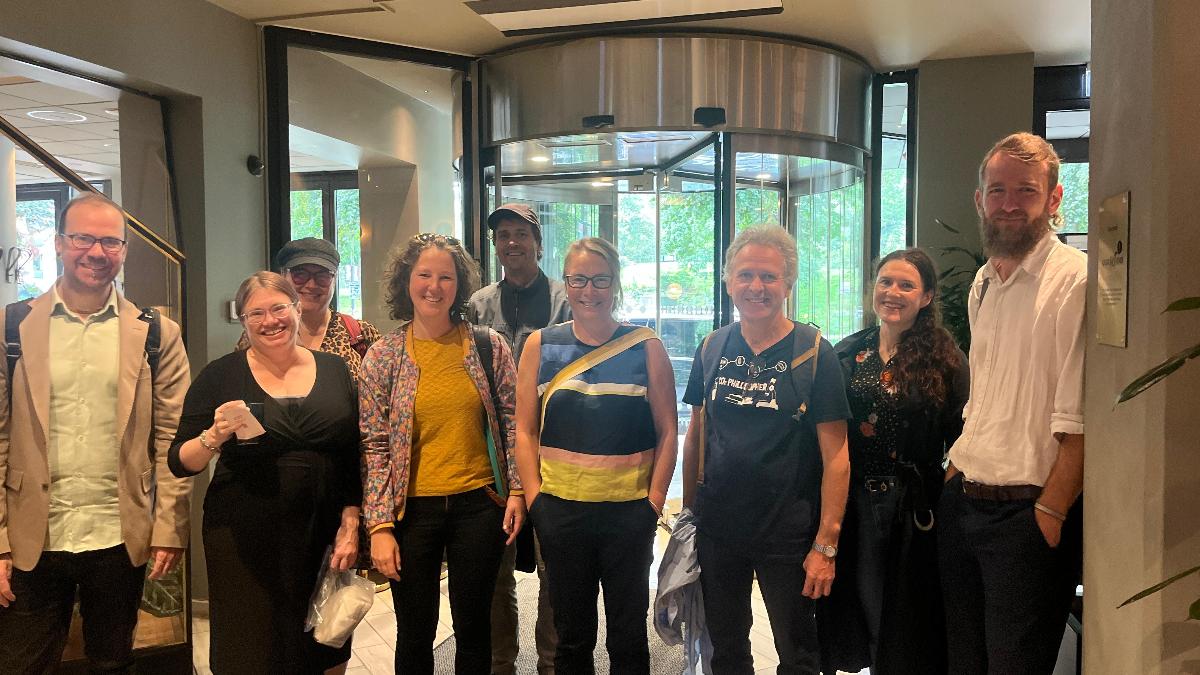


A delegation from UiT The Arctic University of Norway recently visited the KTH Environmental Humanities Laboratory, Centre of Excellence for Anthropocene History and the KTH Future Humanities Initiative at KTH Royal Institute of Technology in Stockholm.
The two-day meeting, held on the 8th and 9th of September, aimed to foster collaboration and dialogue on ongoing and emerging humanities-driven research and research politics. The event was a joint initiative between the UiT’s Centre for Arctic Humanities (ArcHum) and KTH’s Division for History of Science, Technology and Environment.
Arctic Pecha Kucha and Future Agora
The program featured presentations from both UiT and KTH, showcasing diverse research initiatives. The presentations were delivered in a dynamic Arctic Pecha Kucha format (7 slides in 7 minutes), allowing participants to quickly grasp the breadth of research being conducted at both institutions.
The meeting also featured a Future Scenario Workshop, facilitated by the UiT team, which focused on designing a future agora for interdisciplinary research through serious playfulness.
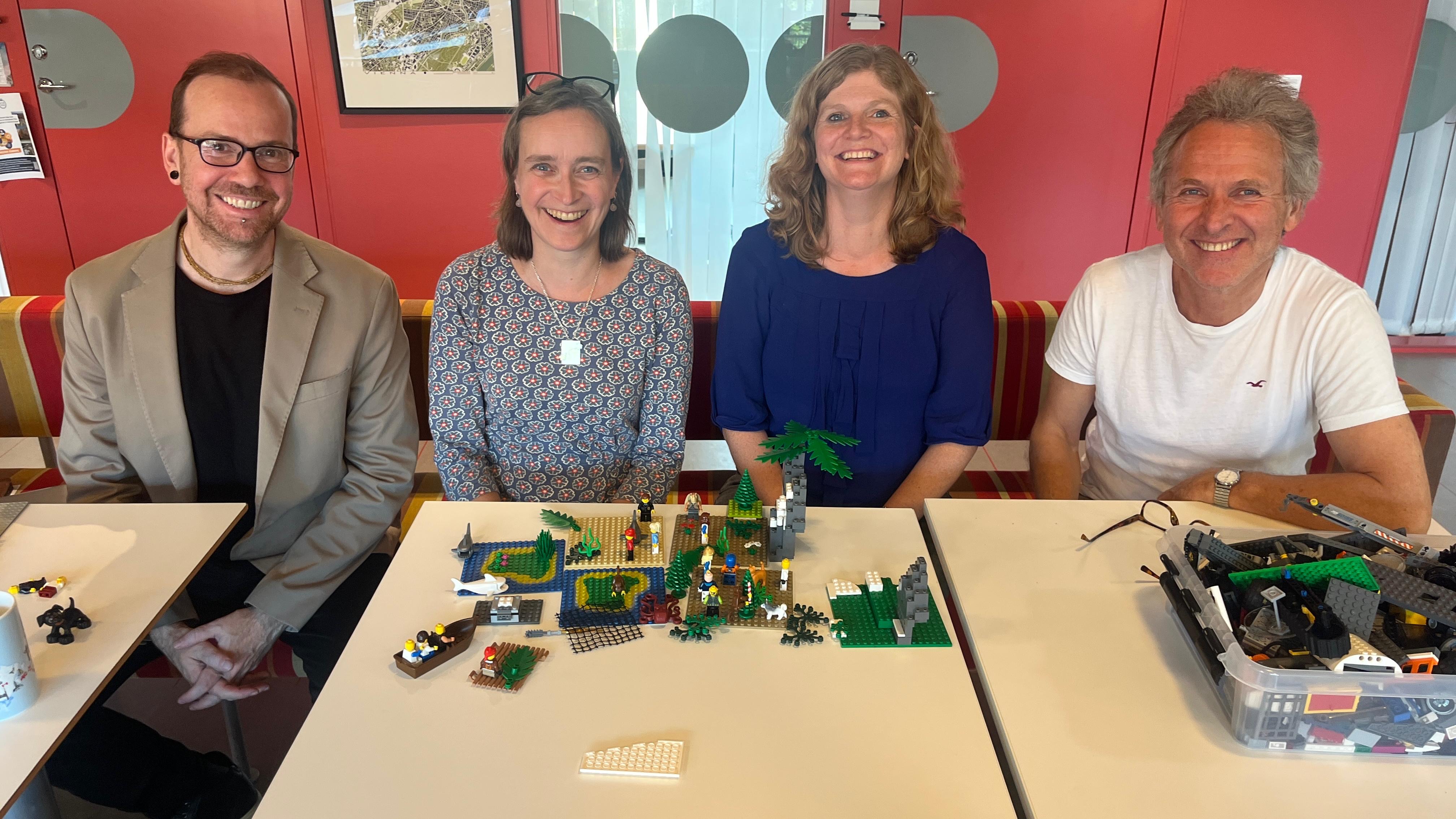
An agora was the public square of ancient Greece, a space for assembly, debate, and collective decision-making – an ideal metaphor for imagining shared futures. Drawing on this concept, we split into groups and were tasked with envisioning an imagined future for both Stockholm and Tromsø. Using piles of LEGO bricks, animals, and humans, as well as satellite maps of our two cities, we built miniature worlds that reflected our ideas about sustainability, technology, and community life. Some groups designed floating modular pontoons on the water, featuring multispecies worlds where humans, animals, and plants could thrive together.
Futuristic reindeer migration
– We imagined futuristic reindeer migration corridors threading over and under human infrastructure, meaningful indigenous-led spaces, and tourist and mobile phone-free zones where human-human and human-nonhuman interconnection could be valorised, says Richard Fraser, Ea:rth.
In the end, the workshop itself became a lively, playful experiment – a true agora – where conversation and construction intertwined. In this sense, it embodied the spirit of the agora itself: a democratic, open-ended space where collective imagination can shape shared visions of the future, challenging us to think not only about reimagined cities but also about an alternate Arctic built on multispecies coexistence, creativity, and care.
Humanities in research funding
The meeting further included a Research Politics Workshop led by Lize-Marie Hansen van der Watt and Moa Ekbom. This session explored the role of humanities in shaping future knowledge centres.
– The humanities are essential for research to be meaningful in society. The humanities centres at KTH are an excellent example of how humanities research not only complements, but also is one of the driving forces behind the technological research that KTH specialises in. It is good to see that recognised at KTH, although of course there is still work to be done. There is much we can learn from them, particularly with a view to future planetary sustainability and cross-disciplinary degree programmes that do not fit traditional faculty boundaries says Kate Maxwell, Environmental Humanities.
Forest, Water, City and The Stockholm idea
Participants also enjoyed informal networking activities, including a forest walk, swimming in the sea, a joint dinner and an exploration of Stockholm’s intellectual heritage. In his talk about Stockholm’s intellectual cradle, Sverker Sörlin, underlined idealism, the need to “convince in other ways” and “infra-levels” of how change goes on.
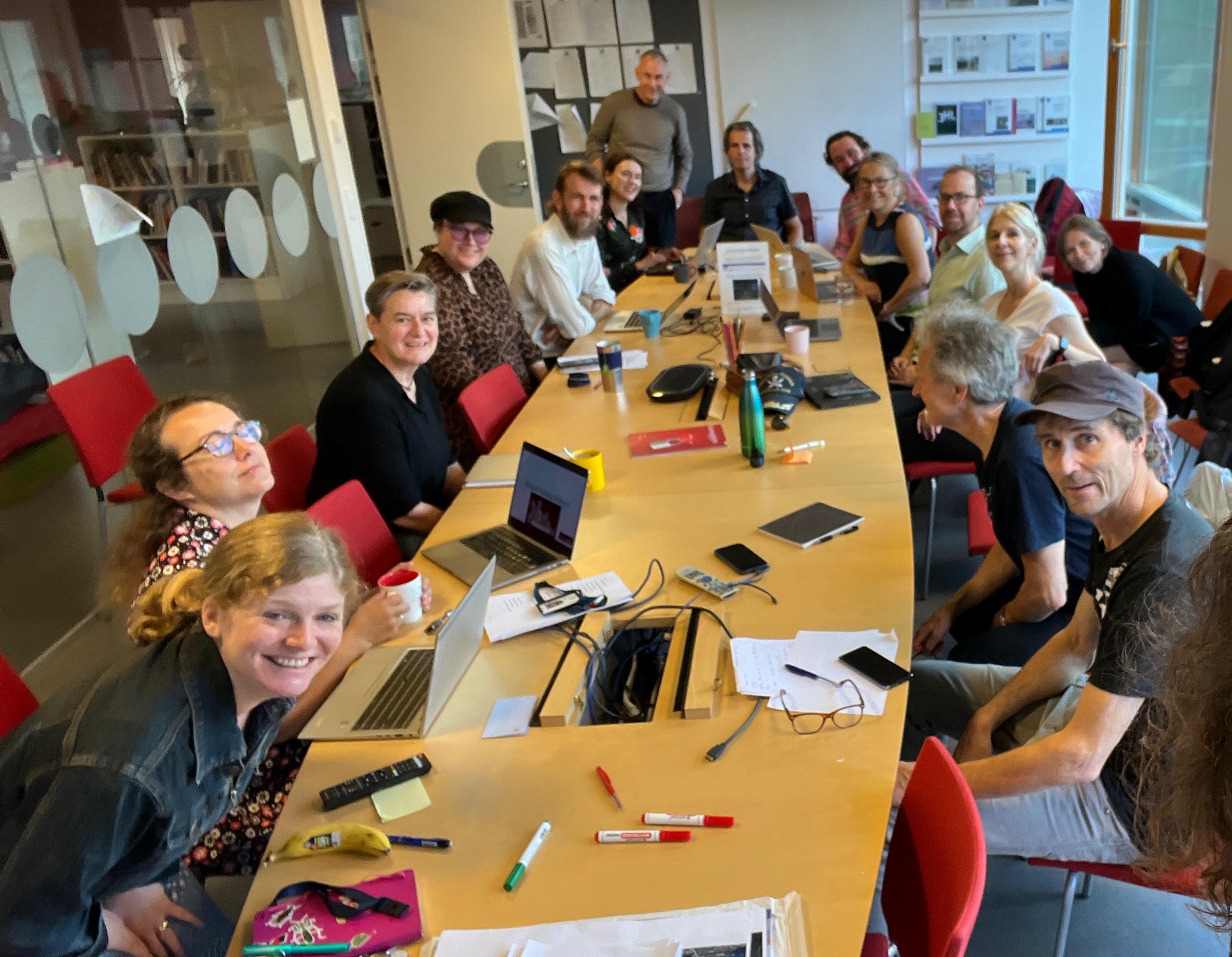
– The meeting at KTH brought together diverse research communities, providing a dynamic platform for connecting professionals across disciplines to explore shared goals and challenges in humanities-driven research and research politics. For me, as a researcher based at the Arctic University Museum of Norway, it was a particular pleasure to visit the exhibitions at the Nordiska Museet alongside colleagues. This experience offered a valuable opportunity to engage in discussions about how the exhibitions highlighted issues related to Indigenous cultures, traditional knowledge, and the pressing challenges facing today's Arctic, says Trude Fonneland, SAMFORSK.
The visit at KTH came about following the UiT campus tour with Sverker Sörlin in autumn 2024.
You can listen to a conversation with Sverker Sörlin in RESULT podcast studio here.
The journey underscored the importance of interdisciplinary collaboration in addressing global challenges and advancing humanities-driven research.
– This visit marks a significant step in strengthening ties between UiT and KTH, paving the way for future joint initiatives and research endeavors, concludes Lilli Mittner, ArcHum coordinator.
UiT Participants
- Richard Fraser | associate professor, Department of Social Sciences
- Clare Heyward | professor, Institute of Philosophy
- Sigrun Høgetveit Berg | professor, Department of Archaeology, History, Religious Studies and Theology
- Andreas Klein | senior Academic Librarian, Department for Research and Education Support, University Library
- Kate Maxwell | professor, Music Conservatory
- Svein Anders Noer Lie | associate professor, Institute of Philosophy
- Øyvind Stokke | associate professor, Institute of Philosophy
- Trude Fonneland | professor, The Arctic University Museum of Norway
KTH participants
- Sverker Sörlin, senior professor environmental history
- Nina Wormbs, professor history of technology
- Sabine Höhler, professor science and technology studies
- Adam Wickberg, docent and researcher
- Kati Lindström, docent and researcher
- Lakin Andersson, research engineer
- Anja Moun Rieser, research engineer
- Robert Gioielli, associate professor environmental humanities
- Per Högselius, professor history of technology
- Lize-Marie Hansen van der Watt, researcher
- Moa Ekbom, researcher and research administrator
- Eric Paglia, researcher
- Sebastiaan Lundsteen, visiting researcher
- Sandra Swart, guest professor in Anthropocene History
Coordinators
Lize-Marie Hansen van der Watt | Division of History of Science, Technology and Environment, KTH
Lilli Mittner | Centre of Arctic Humanities, UiT The Arctic University of Norway
Kortnytt fra Fakultet for humaniora, samfunnsvitenskap og lærerutdanning, Norges arktiske universitetsmuseum og akademi for kunstfag, Universitetsbiblioteket

-
Fiskeri- og havbruksvitenskap - bachelor
Varighet: 3 År -
Fiskeri- og havbruksvitenskap - master
Varighet: 2 År -
Akvamedisin - master
Varighet: 5 År -
Arkeologi - master
Varighet: 2 År -
Instrument 2
Varighet: 1 År -
Hørelæredidaktikk - master
Varighet: 2 År -
Peace and Conflict Transformation - master
Varighet: 2 År -
Computer Science - master
Varighet: 2 År -
Geosciences - master
Varighet: 2 År -
Biology - master
Varighet: 2 År -
Technology and Safety - master
Varighet: 2 År -
Physics - master
Varighet: 2 År -
Computational chemistry - master
Varighet: 2 År -
Law of the Sea - master
Varighet: 3 Semestre -
Biologi - bachelor
Varighet: 3 År -
Nordisk - årsstudium
Varighet: 1 År -
Historie - årsstudium
Varighet: 1 År -
Engelsk - årsstudium
Varighet: 1 År -
Luftfartsfag - bachelor
Varighet: 3 År -
Pedagogikk - bachelor
Varighet: 3 År -
Arkeologi - bachelor
Varighet: 3 År -
Spansk - årsstudium
Varighet: 1 År -
Pedagogikk - master
Varighet: 2 År -
Informatikk, datamaskinsystemer - bachelor
Varighet: 3 År -
Informatikk, sivilingeniør - master
Varighet: 5 År -
Allmenn litteraturvitenskap - årsstudium
Varighet: 1 År -
Likestilling og kjønn - årsstudium
Varighet: 1 År -
Historie - bachelor
Varighet: 3 År -
Geovitenskap- bachelor
Varighet: 3 År -
Kjemi - bachelor
Varighet: 3 År -
Samfunnssikkerhet - bachelor
Varighet: 3 År -
Samfunnssikkerhet - master
Varighet: 2 År -
Kunst - bachelor
Varighet: 3 År -
Kunsthistorie - master
Varighet: 2 År -
Musikkutøving - bachelor
Varighet: 4 År -
Farmasi - master
Varighet: 2 År -
Religionsvitenskap - årsstudium
Varighet: 1 År -
Romfysikk, sivilingeniør - master
Varighet: 5 År -
Klima og miljøovervåkning, sivilingeniør - master
Varighet: 5 År -
Sosialantropologi - bachelor
Varighet: 3 År -
Bærekraftig teknologi, ingeniør - bachelor
Varighet: 3 År -
Historie - master
Varighet: 2 År -
Filosofi - bachelor
Varighet: 3 År -
Anvendt fysikk og matematikk, sivilingeniør - master
Varighet: 5 År -
Barnevernsarbeid - master
Varighet: 2 År -
Forfatterstudium 2 - årsstudium
Varighet: 1 År -
Fine Art - master
Varighet: 2 År -
Barnevern - bachelor
Varighet: 3 År -
Arctic Nature Guide - one year programme
Varighet: 1 År -
Sosialt arbeid - bachelor
Varighet: 3 År