
Cultural Events
On this page you will find information about the cultural events and presenters of the cultural seminars that will be held during the fall semester of 2025.
How to join?
The workshops wil be held as one series and you are encuraged to join evry workshop! you can sign up for all of them here: påmelding
How does the everyday student life feel like as a computer science student – the good and the bad?
In this panel debate, you will meet four computer science students who share honest experiences about life as a student. We’ll explore both the highlights and the biggest challenges of the program, and discuss how to deal with pressure, academic expectations, and the social environment. The audience is invited to ask questions and join the conversation. This is a unique opportunity to gain insight into what it’s really like to study computer science – from those who know it best.
Hvordan sikre drømmejobben når du ikke vet hva du drømmer om!
Det er ikke alltid så lett å vite hva man skal bli når man blir stor. Ragnhild var aldri helt sikker på hva hun ville – men har likevel drømmejobben.
The presenter
Ragnhild Varmedal er en erfaren teknolog og tjenesteeier i Norsk Helsenett. Hun har en mastergrad i informatikk fra Universitetet i Tromsø, og har gjennom hele karrieren jobbet i skjæringspunktet mellom teknologi, strategi og helsefag. Har du brukt Helsenorge har du antakelig brukt løsninger Ragnhild har vært med på å lage.
Ved siden av jobben har Ragnhild LEGO-nerd som har engasjert seg i teknologiopplæring for barn og unge. Hun har vært hoveddommer i First Lego League i 15 år, hvor hun blir inspirert av unge til å utforske teknologi, programmering og innovasjon gjennom lek og konkurranse.
Med en solid teknologisk verktøykasse og lang erfaring fra komplekse digitale prosjekter, er Ragnhild en tydelig stemme i arbeidet med å utvikle helseløsninger som både fungerer og redder liv. Hun er også opptatt av å løfte frem mangfold i teknologimiljøer, og har et stort engasjement for å gjøre tech til et sted hvor alle kan lykkes – uansett bakgrunn. 
Artificial Intelligence for All
Software is an infrastructure of all industries and societies around the world, serving global users despite social differences, including race, gender, class, ethnicity, sexuality, and nationality.
In the era of Artificial Intelligence (AI) and increasing automation in software industry, the role of humans is even more emphasized across age, culture, and gender. However, the engagement of people in software and AI engineering is not uniform. It is important to address the diversity gap in software engineering urgently when new AI intensive software systems are being created because there is a risk that AI generated software perpetuates sexist and racist assumptions and ideologies.
The concept of intersectionality explores the interconnectedness of social differences, including race, gender, class, ethnicity, sexuality, and nationality. The goal of this lecture is to discuss the state of the art about diversity issues in core topics of AI and software engineering.
The Presenter
Letizia Jaccheri is a Professor at the Department of Computer Science of the Norwegian University of Science and Technology (link www.ntnu.edu), Norway. Jaccheri has been teaching courses in software engineering at various levels and acted as one of the in dependent directors of Reply S.p.A (link reply.eu). From 2013 to 2017 she was department head for the Computer Science department at NTNU. She is ACM Distinguished speaker since 2018. She has got two gender equality prizes for her work to attract and retai n women to computer science. Letizia Jaccheri has a long record of research leadership in interdisciplinary projects with a focus on gender and software engineering. She is in involved in several research projects, and she leads the COST Action CA19122 Gender Balance in Informatics EU GAIN (link eugain.eu) with 155 members from 39 European countries. Letizia has plans to continue to contribute to address the issue of diversity in software engineering.
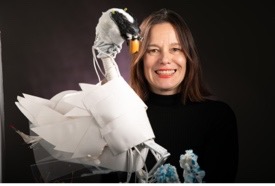
Brain orchestra in resting-state: Identifying communication modules from the functional architecture of area V1
How does the brain perform the complicated computations that allow us to learn about and interact with the environment? The rapid advances in optical imaging, machine learning, and the availability of computational resources, provide a unique opportunity to decipher this fundamental question. Although much has been learned about the computational properties of single neurons, we remain far from understanding how networks of cortical cells coordinate and interact with each other to process information. Several pioneering works have proposed theories regarding how the configuration of neuronal ensembles encodes information in the cortex. Ensembles of neurons that fire in synchrony are likely to be more efficient at relaying shared information to downstream targets as well as more likely to belong to networks of neurons subserving similar functions. Spontaneous patterns of activity reflect the intrinsic dynamics of the brain in the absence of external stimulation or task performance.
We imaged essentially simultaneously thousands of pyramidal neurons from granular and supragranular layers in mouse primary visual cortex (area V1) and mapped the functional connectivity within and across layers. We found that under resting-state conditions, 19-34% of neuronal pairs at distances < 300μm exhibited significant functional connections, decreasing to ∼10% by 1mm. Orientation-tuning similarity had a weak influence on correlations measured during resting-state conditions. In contrast, internal brain state, reflected in modulations of aggregate neuronal activity or pupil diameter, played a much stronger role. Overall, V1 laminae display small-world architecture, yet layers show different connectivity structure: Layer 4 exhibits stronger pairwise correlations and flatter degree-of-connectivity distribution compared to supragranular layers, whose degree-of-connectivity distribution decays exponentially.
We argue that neurons, together with their first-order functionally connected partners, define basic multi-neuronal ensembles (modules) that serve as fundamental information processing primitives both within and across cortical laminae. Across cortical layers, the firing probability of Layer 2/3 pyramidal neurons can be predicted by the co-firing of their first-order functionally connected partners in Layer 4, following a ReLU-like activation pattern. Typically, Layer 2/3 neuron firing probability rises sharply, when ≥ 13% of its Layer 4 partners co-fire, a nonlinear behavior that ensures reliable transmission of supra-threshold activity as well as sparse firing. Furthermore, module-to-module information flow from Layer 4 to Layer 2/3 displays increased specificity, sensitivity, accuracy, and precision relative to module-to-neuron information transfer. Interestingly, modules of different sizes exhibit different response properties as well as different strengths of coupling to behavioral brain-state parameters, distributed across a continuum. In general, responses of Layer 2/3 neurons adapt to the dynamic range of the aggregate input they receive from their co-firing Layer 4 partners. These findings on the behavior of first-order functionally connected multi-neuronal ensembles (modules) remain robust even when functional connectivity is assessed under stimulation conditions, where signal correlations predominate.
The presenter
Maria Papadopouli (Ph.D., Columbia University, 2002) is a Professor of Computer Science at the University of Crete, a Research Associate at the Institute of Computer Science, FORTH, a Lead Researcher at the Archimedes Research Unit, Athena Research Center, and a Fulbright Scholar. She has been an MSCA Fellow at the Brigham and Women's Hospital, Harvard Medical School (2022-2025), a Fulbright Scholar at the Computer Science and Artificial Intelligence Laboratory (CSAIL), MIT (2017), and at the School of Electrical Engineering, KTH Royal Institute of Technology in Stockholm. From July 2002 until June 2006, she was a tenure-track Assistant Professor at the University of North Carolina at Chapel Hill (UNC), on leave from July 2004 until June 2006. She is interested in understanding the underlying dynamics of various complex real-world networks, from the Internet to the brain. Her research has been supported by several awards (e.g., IBM Faculty Awards, Google Faculty Award) and national, EU, and international grants.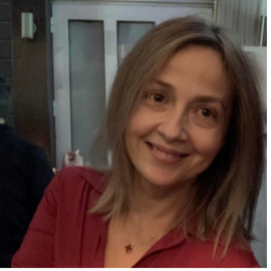
Fra nerdet nisje til fundament for moderne samfunnsutvikling - Anekdoter og erfaringer fra en faglig reise over 40 år
Informatikk som fag spiller en meget sentral rolle i moderne samfunnsutvikling, og foredraget vil belyse hvordan forskning og studentaktivitet på Institutt for Informatikk ved UiT har bidratt. Konkret erfaring med egne bedriftsetableringer blir vektlagt, der det vises til hvordan utdanning og forskning på instituttet har vært basis for internasjonale oppstartsbedrifter innen søkemotorteknologi, fotballanalyse samt AI og kreftdiagnostisering.
Det kan være motiverende og viktig at dere studenter, med omfattende arbeidskrav og travle dager, får litt innblikk i de spennende arbeidsmulighetene som foreligger etter uteksaminering fra UiT. Mulighetene er store og valget er deres, men det forutsetter at dere studerer de rette fagene på den rette måten og med rette innsats. Råd og vink som gis fra en som har vært med på denne faglige reisen de forrige 40 årene kan være definerende for deres videre karriere de neste 40 årene eller lenger.
The presenter
Professor Dag Johansen, IFI, UiT (Johansen, Dag | UiT)
Dette var ikke i studieplanen
Hva kan man egentlig bruke en informatikkutdanning til – egentlig? Ellingsen trodde først at valgene etter studiet var ganske forutsigbare: konsulent, utvikler, eller jobb i en av de fem IT-bedriftene i Tromsø. Men et tilfeldig tips åpnet øynene hennes for helt andre muligheter – og før hun visste ordet av det, var hun i gang med å starte sin egen tech-startup.
I denne presentasjonen deler hun erfaringer fra gründerlivet: hva hun lærte, alt som var (ikke så overraskende) hardt, og hvorfor hun til slutt valgte å gå over til trygg jobb i et statseid selskap– fra den mest utrygge til den mest stabile jobben hun kunne finne.
Målet er å vise at informatikk åpner flere dører enn man kanskje tror – noen ganger trenger man bare at noen peker på dem og sier "du vet at du kan gjøre det her, ikke sant?”
The Presenter
Mariel Evelyn Markussen Ellingsen har en mastergrad i informatikk fra UiT – Norges arktiske universitet. Før hun ble uteksaminert jobbet hun deltid i DIPS som systemutvikler, som undervisningsassistent for UiT og studentkonsulent for BBI-prosjektet. Ellingsen grunnla oppstartsbedriften Woid, som utviklet en applikasjon for personer som bruker høreapparater. Etter 2,5 år gikk hun vekk fra gründerlivet til å bli ansatt i Statnett som plattformutvikler.
From the university's lecture halls to the unpredictable world of startups
Starting with a background in computer science and enriched by academic research during her PhD, Ilaria discovered what academia prepares you for—and what it doesn’t. While university teaches you how to think critically, solve problems, and master complex technologies, it often doesn’t show you how to take an idea to market, work in fast-moving teams, or handle risk and failure. Ilaria will reflect on how she learned these skills outside the classroom, how her academic background helped, and what she wishes she had known earlier. Whether you're thinking about research, industry, or starting something of your own, this talk is meant to inspire you to think beyond the degree—and shape your own definition of success.
The Presenter
Ilaria Pigazzini is co-founder of a startup specializing in developing platforms for quality control of software systems based in Milan, Italy. She received her PhD in computer science from the University of Milano-Bicocca. Always driven by the desire to start an innovative company, during her academic career she develops Arcan, a project that she transforms into a startup in 2021. At the end of 2023, the startup is acquired by TXT Group, an international leading company in software engineering and digital transition. To date, in the role of CEO, Ilaria continues to work full-time on Arcan's commercial and strategic development.

The presenter
Camilla Stormoen is an IT-manager at Norges Råfisklag. She completed her education as a Civil Engineer in Computer Science at the University of Tromsø (UiT) in 2018. She started her career as an intern at Norges Råfisklag.
As an IT-consultant in the Norwegian seafood industry Camilla has been involved with software and website development such as Råfisklagets auction system, as well as Power BI for data analysis and digital transformation.
Her interest in strategy and management led her to the opportunity to become an IT-manager at the age of 29.