Researcher finds giant viruses just outside work
The discovery could have implications for the fight against antibiotic resistance.


Giant viruses are “the next big thing” in PhD student Juliana Miranda Tatara’s field of research. But before you imagine viruses the size of cars and a new American disaster film, you can relax. Fortunately, they are completely harmless to humans.
These viruses are still tiny organisms, but they are giant compared with other viruses, such as the coronavirus.
Giant viruses can in fact be the same size as some small bacteria, which are themselves much larger than ordinary viruses.
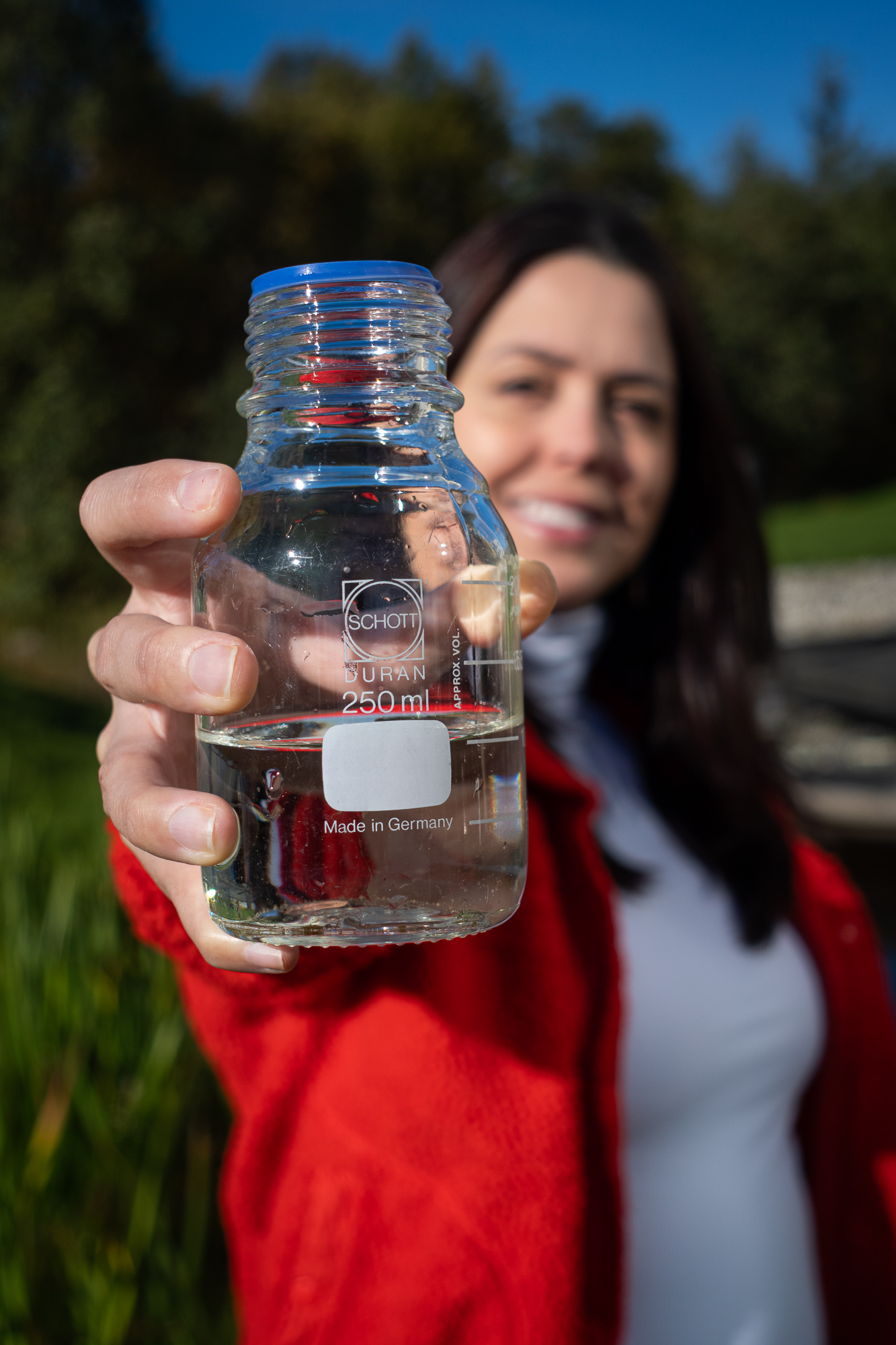
Could be an important discovery
What makes the search for, and research into, giant viruses particularly exciting is their potential to become a new weapon in the fight against antibiotic resistance.
“We know that giant viruses exist in many places and interact with many other microorganisms. We therefore expect to find proteins that affect bacteria in ways that differ from the antibiotics we have today. This could open up new possibilities for combating antibiotic resistance,” explains Juliana Tatara.
Giant viruses have enormous genomes containing unique proteins. Researchers do not yet know what these proteins do, but this opens up entirely new possibilities for important research discoveries.
A piece of detective work
As part of her doctoral research, Tatara is searching for giant viruses and their secrets.
Researchers have found them in many places around the globe: from Siberia to the Amazon, and from the Barents Sea to Antarctica.
However, we still know very little about them. What is more, they are not easy to find. The challenge is that you cannot simply take a water sample and start counting viruses.
“Giant viruses leave genetic traces in water samples, and those are the traces we are looking for. It is almost like searching for footprints. It can be real detective work.”
This detective found the traces she was looking for just outside her own workplace, the Norwegian College of Fishery Science (NFH) at UiT.
Now, she is working to find out how effective giant viruses are against bacteria, and whether it is worth investigating their secrets further.
“So far, it looks really promising,” Tatara concludes with a knowing smile.
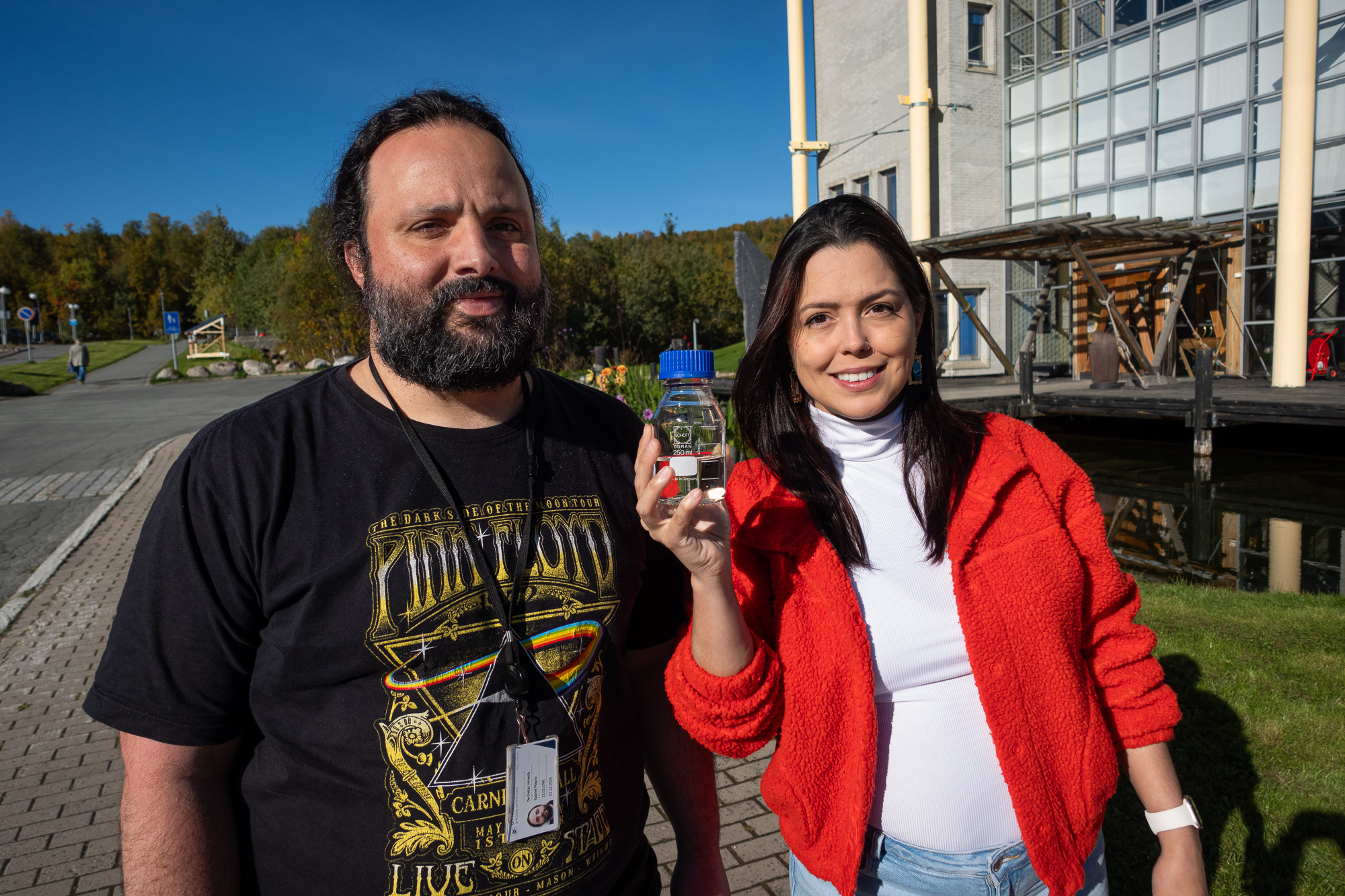
The genome – our genetic material
A genome is the total amount of genetic material in an organism: in other words, the complete DNA sequence found across all its chromosomes. The genome contains all the information needed to create and maintain an organism throughout its life. In humans, the genome consists of all the DNA in the 46 chromosomes, in addition to the circular chromosome found in the mitochondria.
This work was funded by CANS - Centre for New Antibacterial Strategies at UiT and Tromsø Research Foundation.
Scientific reference
"Isolation of a Cohort of Giant Viruses From Above the Arctic Circle in Northern Norway"
https://enviromicro-journals.onlinelibrary.wiley.com/doi/10.1111/1462-2920.70366
This text was translated into British English using UiT’s AI large language model based on ChatGPT. The original text was written without any use of AI. The translation has been quality assured by the author.
Kortnytt fra Fakultet for biovitenskap, fiskeri og økonomi, Norges fiskerihøgskole