Joining forces in the fight against superbugs
A new clinical–academic collaboration (CAG) is bringing together basic research, diagnostics and patient care at UiT, the University Hospital of North Norway (UNN) and Nordland Hospital.


Antimicrobial resistance – when bacteria become resistant to antibiotics – is a major problem in countries outside the Nordic region.
Fortunately, the situation is still under control in Norway, thanks to good infection control, sound guidelines for antibiotic use and skilled doctors who prescribe antibiotics only when necessary. Nevertheless, bacterial infections still impose significant costs on society and represent a major challenge for patients in hospitals and nursing homes.
Research collaboration in the North
Patient-tailored management of bacterial infections in the age of antimicrobial resistance (CAG-PIA) is a research collaboration between the University Hospital of North Norway (UNN), Nordland Hospital and UiT The Arctic University of Norway. The initiative is funded by the Northern Norway Regional Health Authority (Helse Nord) and the Faculty of Health Sciences at UiT.
Read more about the CAG «Patient-tailored management of bacterial infections in the age of antimicrobial resistance (CAG-PIA)» and its sub-projects.
A completely new research initiative is now being launched. It aims both to reduce the burden on patients and to help keep the development of antimicrobial resistance at bay.
Faster diagnostics
The new initiative is called a clinical–academic collaboration, or a CAG for short. Its purpose is to encourage greater professional collaboration across sectors and to bring important basic medical research into the healthcare system more quickly.
“There is too much distance between academia and clinical practice. That is why the Northern Norway Regional Health Authority (Helse Nord) and UiT have joined forces in a new type of collaboration. A CAG is a mutual commitment between the employees involved in the health trusts and the university,” explains Mona Johannessen, who is leading the initiative from the university side.
Bacterial infections can affect anyone, anywhere. The clinical challenge is growing as the demographics of the population change.
“For example, very young newborn babies have an increased risk of infection. The number of older people will also increase over time, and more of them will have underlying health conditions. This also increases the risk of infections,” says Johannessen.
Another challenge in Northern Norway is the long distances and scattered population. There are eleven hospitals on the mainland, but only two of them have microbiological diagnostic facilities that can identify precisely which bacteria have caused a patient’s infection.
“This means that if you visit a doctor’s surgery outside Bodø or Tromsø, the sample has to be sent there. That can be unfortunate for patient care. In our CAG, we therefore want to conduct research that can provide test results more quickly. We also want to find new ways of preventing and treating infections, at a time when antimicrobial resistance is increasing here in Norway as well.”
Improving newborn health
Paediatrician Claus Klingenberg at UNN leads one of the three sub-projects in the new clinical–academic collaboration. The role of the microbiome in early life is a project focusing on the bacterial flora, or microbiome, of newborn babies.
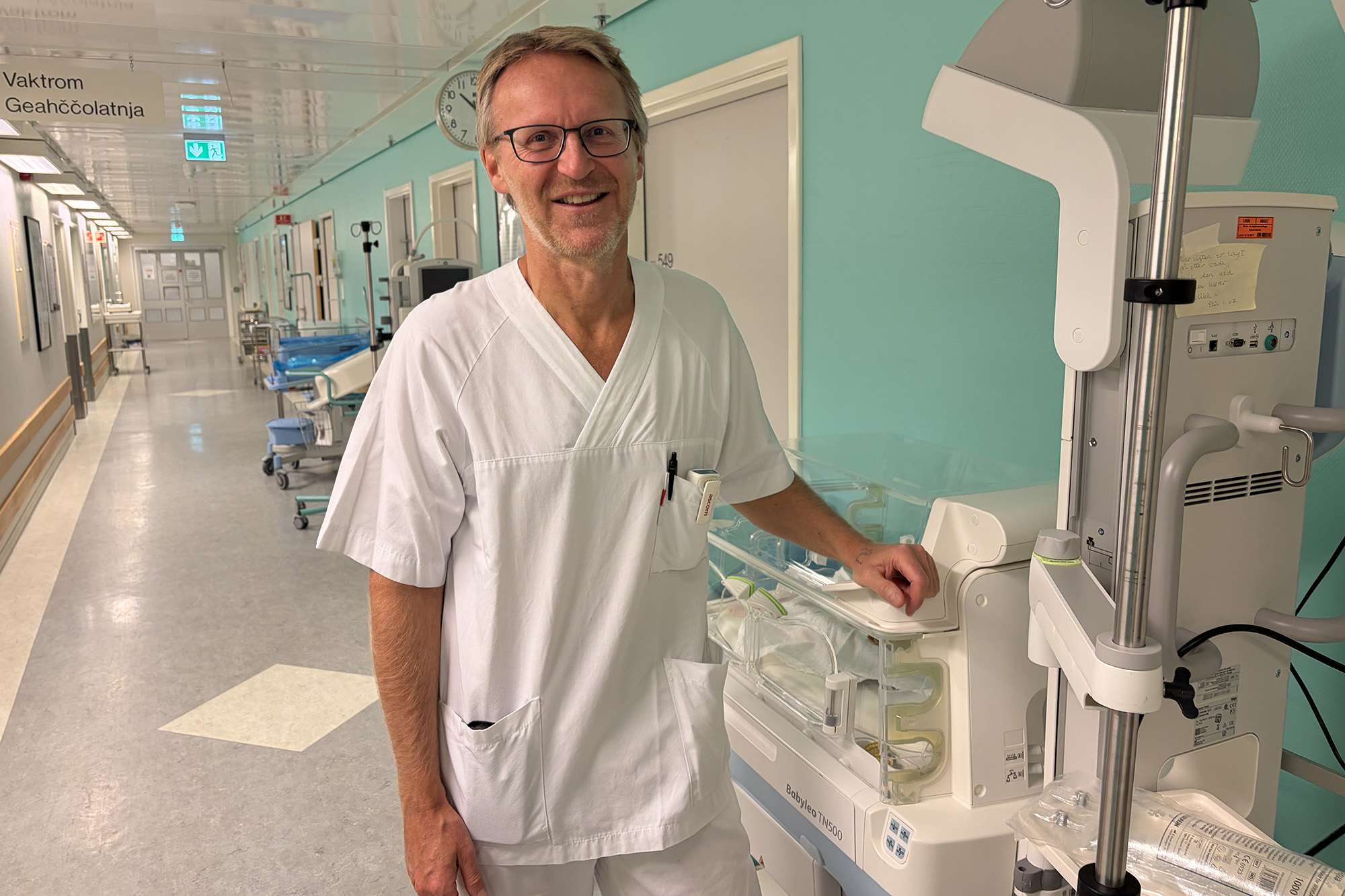
“We are looking at infections in newborns and how optimised use of antibiotics can affect and improve newborn health. We are also working extensively on how we can influence the gut flora – for example through probiotics – so that it becomes more resilient to various diseases in newborn babies, both in the short and the long term,” he says.
The microbiome component of the CAG also includes a major clinical project led by Pauline Cavanagh on mastitis in mothers, and how this affects breast milk and milk production.
“What we find both exciting and important is that we are establishing very good collaboration across different professional groups and regions. Being part of a CAG also makes us a more attractive partner, both nationally and internationally,” explains Klingenberg, emphasising:
“Research is not a one-person show! It takes collaboration, collaboration and more collaboration to move things forward. That is how you learn, and how you get new ideas.”
Focusing on patients and families

The Norwegian organisation Løvemammaene (The Lion Mothers), the Diabetes Association and the Norwegian Cancer Society are all represented by user representatives in the new initiative. Ragnhild Stenset is a board member of Løvemammaene’s Northern Norway region. She has a child with several disabilities and extensive experience as a family carer.
“When our child developed an immune deficiency, the importance of rapid test results and sound medical assessments became particularly clear to us. Close collaboration with the healthcare service from an early stage was crucial in enabling us to make good decisions together and facilitate the best and most efficient course of treatment possible,” she says.
Her family lives relatively close to a hospital, but Stenset is deeply committed to representing those in a different situation. Through this project, she wants to highlight and communicate the challenges faced by many families across the region.
“For many of our members who are in the same or similar situations but live in rural areas, the reality is completely different. That is precisely why I believe this initiative is so important. It can help ensure that people who live far from hospitals also gain faster access to test results, assessments and healthcare, and thus have better conditions for receiving safe and effective treatment.”
On behalf of patients, Stenset has high hopes that this particular initiative will benefit patients and families across the region. Her wish is for treatment to be as targeted and effective as possible, while causing as little strain and discomfort as possible for children.
“For me, this is largely about faster decision-making, more targeted treatment and improved patient safety. For families living with serious illness, rapid access to sound assessments and the right treatment can make a major difference – both to the course of treatment and to their sense of security in everyday life.”
CAG: A clinical–academic collaboration
A Clinical–Academic Group (CAG) is a collaboration between clinicians, researchers, patients and other relevant professional communities. Its purpose is to strengthen the link between basic research and clinical practice in hospitals, so that new knowledge can benefit patients more quickly than before.
This text was translated into British English using one of UiT’s AI large language models based on ChatGPT. The original text was written without any use of AI. The translation has been quality assured by the authors.
Kortnytt fra Det helsevitenskapelige fakultet