Travelogue: Researchers and PhD Candidates on a Study Trip to The Hague
From the 20th to the 24th of April, researchers and PhD candidates from the Faculty of Law participated on a joint study trip to The Hague to learn more about the work of key international law institutions.
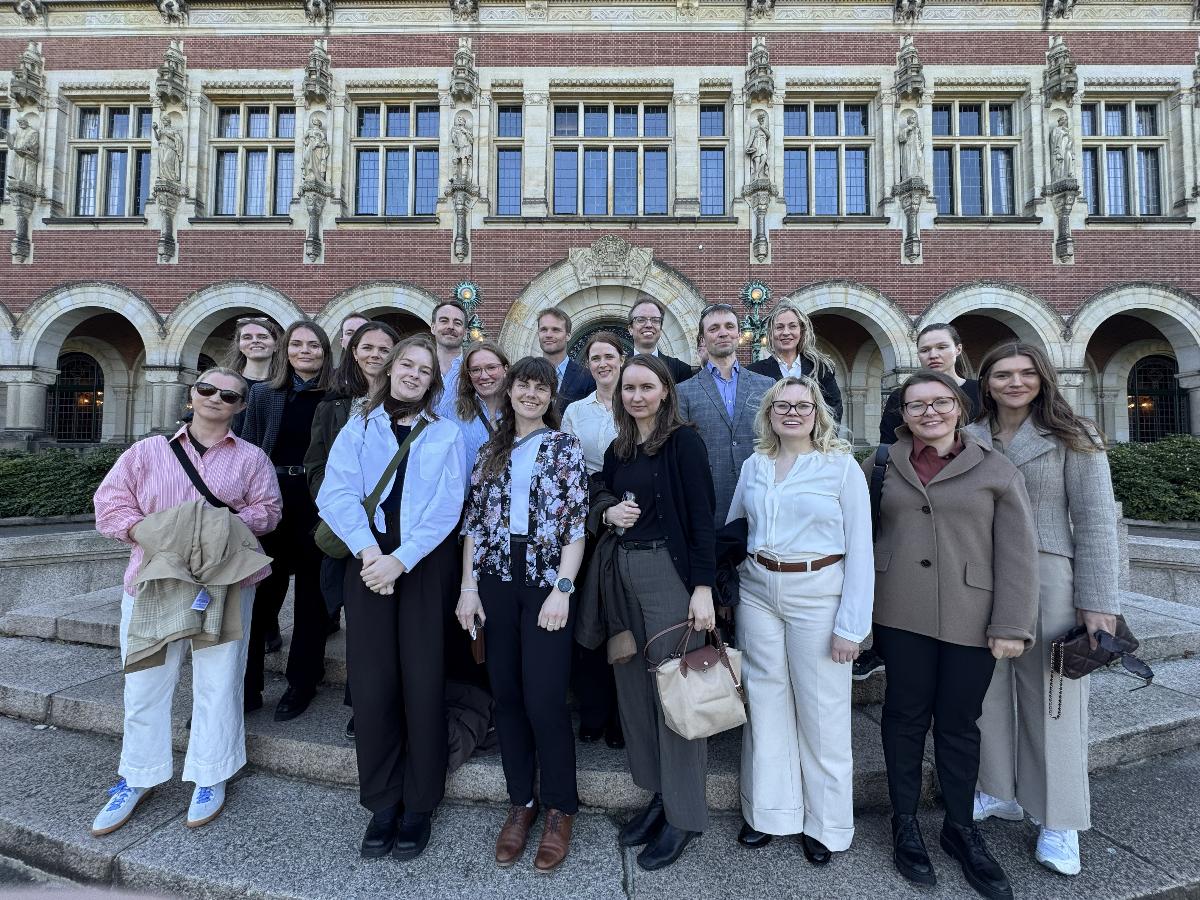

The Research Group for Human Rights and International Law, together with PhD candidates who participated in the PhD-course JUR-8005 ‘International Legal Perspectives’, recently completed a study tip to The Hague in the Netherlands. The Hague is known as the ‘international law capital of the world’, hosting numerous courts and institutions which play a central role in the administration and enforcement of international law. The group had the opportunity to visit several key institutions. Twenty staff members of the law faculty travelled to The Hague.
Visits to the Institutions in The Hague
The purpose of the trip was to provide the participants with deeper insights into how international legal institutions work to promote and uphold international law. The visit to The Hague also offered a unique opportunity to discuss the significance of international law and the challenges that legal institutions are facing today. Globally, skepticism towards international law is growing. The opportunity to meet and engage with judges, legal professionals and other representatives from the various institutions was valuable, and led to engaging and critical discussions about the evolving challenges confronting international law.
The International Criminal Court (ICC)
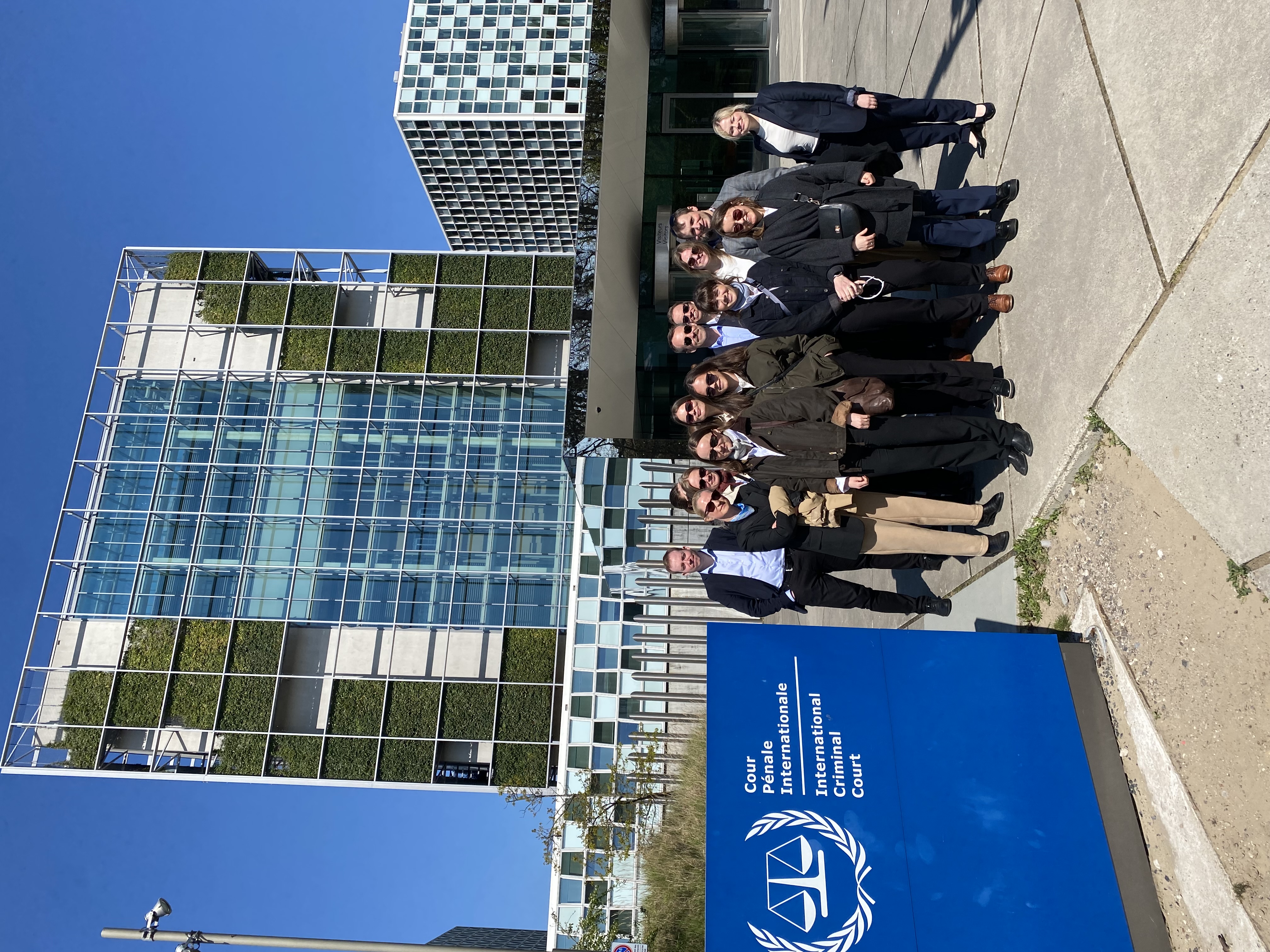
During the visit to the ICC, the participants were given a tour and an overview of the court’s structure and mandate. Judge Beti Hohler shared her experiences and reflected on her role as a judge and the increasing challenges the ICC is facing due to technological development. The participants were given a unique insight into the growing criticism and (political) pressure against the ICC as an institution. It was particularly interesting to hear Judge Hohler’s reflections on these topics since she has been personally sanctioned by the United States, due to her work as an ICC judge.
Kosovo Specialist Chambers (KSC)
The group also visited the Kosovo Specialist Chambers, a relatively lesser-known court from a Norwegian perspective. The KSC operates in parallel to Kosovo’s national legal system, and addresses cases involving war crimes, crimes against humanity, and other serious offences, such as witness intimidation, that were committed during or in relation to the Kosovo War (1998-2000). The visit included a tour and engaging and insightful discussions about the KSC’s role and significance, the current pending cases, and on the perception of the court by Kosovo’s population.
The International Court of Justice (ICJ) and the Peace Palace Library
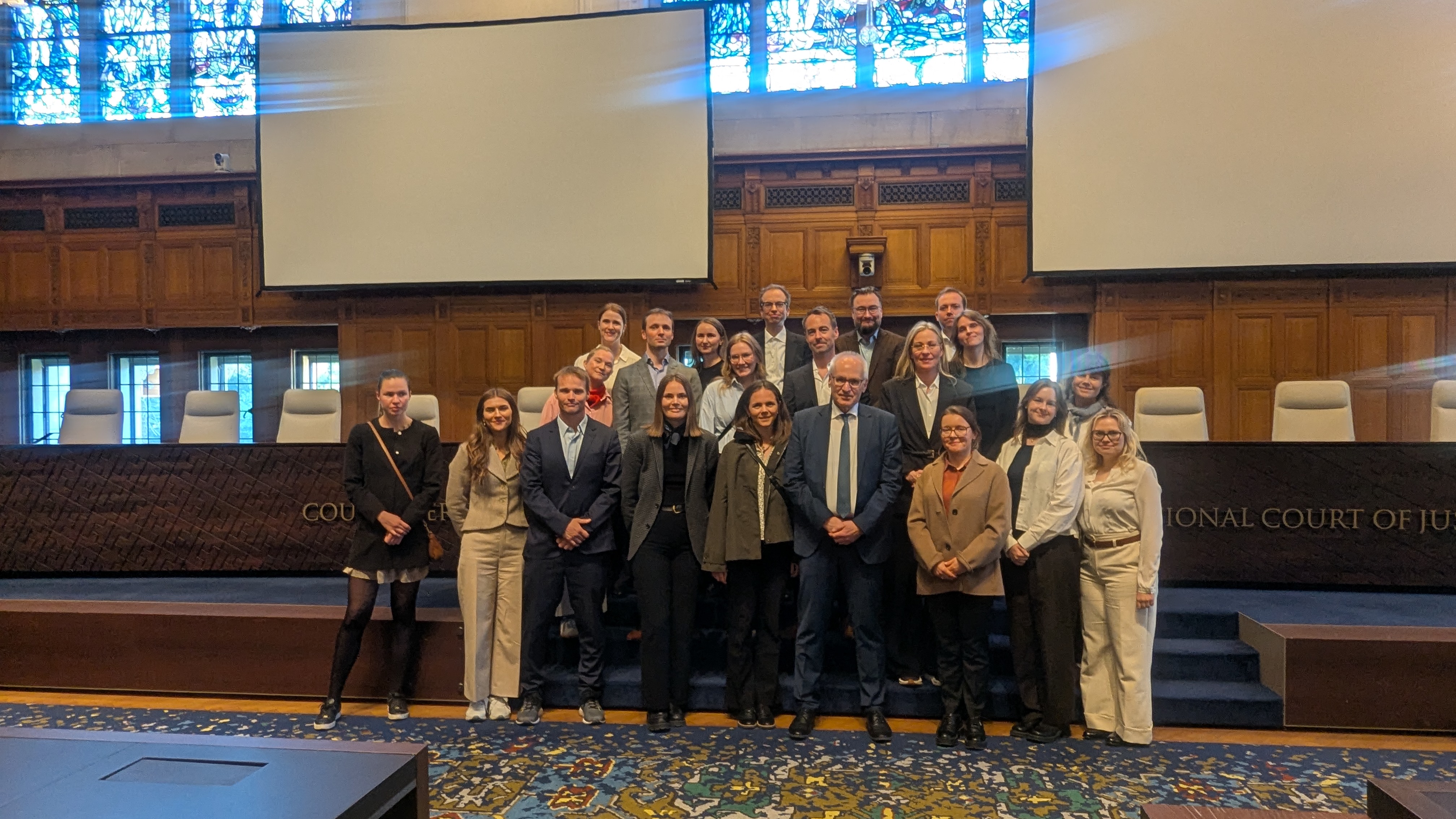
One of the highlights of the trip was the visit to the beautiful Peace Palace. The participants had the opportunity to meet with Judge Georg Nolte in the Great Hall of Justice, the courtroom of the ICJ. Nolte shared his thoughts on his work as a judge and the ICJ’s role in the international legal system. The group also had the opportunity to visit the Peace Palace Library, where librarian Ruaridh Maxwell spoke about its history, and they had the opportunity to view some original pictures and historical works, including a letter written by Hugo Grotius (Hugo de Groot), a famous lawyer and philosopher who shaped international law.
Register of Damage for Ukraine (RD4U)
The group visited the relatively newly established RD4U, which documents compensations claims for losses caused by the Russian full-scale invasion of Ukraine in 2022. Legal advisor Hannes Jöbstl provided a thorough overview of RD4U’s work, including the documentation of civilian casualties, destruction and damage to property and infrastructure, and other serious violations of international law, such as torture and sexual violence. The meeting with Jöbstl offered a valuable perspective on the challenges of achieving justice and accountability in wartime. Particularly interesting was the discussion on the efforts to secure funding for the eventual payment of these claims.
The Hague Conference on Private International Law (HCCH)
During the visit to the Permanent Bureau of the HCCH, participants received an overview of the organisation’s history and its work on promoting multilateral cooperation on matters of private international law. Under the HCCH framework, among other things, conventions are negotiated that facilitate cross-border legal collaboration relating to for example adoption and commercial matters. The group engaged in discussions on topics such as the HCCH’s role in relation to other international institutions, including the EU (which is a member of the HCCH).
The Organisation for the Prohibition of Chemical Weapons (OPCW)
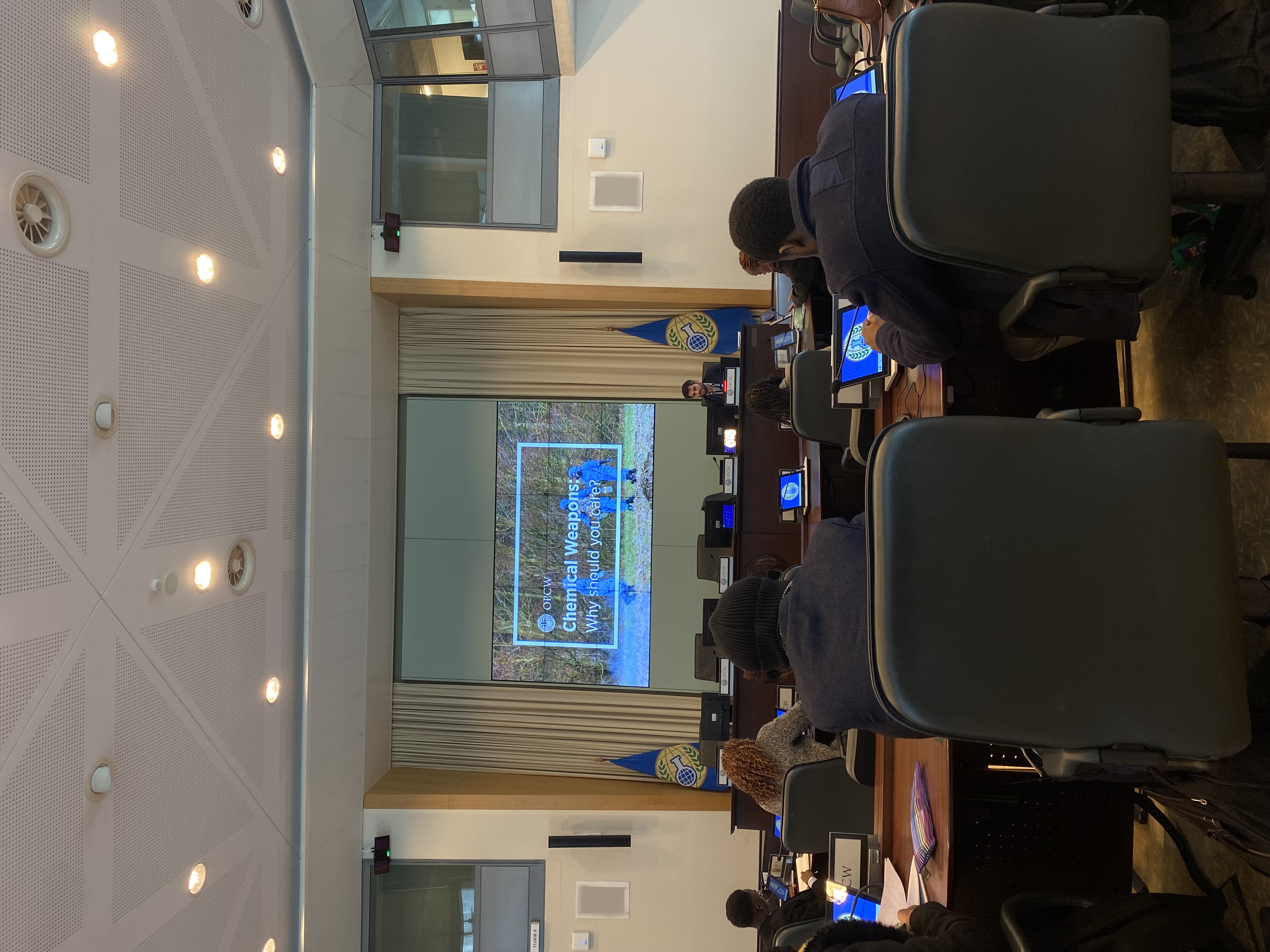
During the visit to the OPCW Headquarters, the participants were provided with detailed information about the organisation’s efforts to prevent the development, production, stockpiling and use of chemical weapons. The group attended an interesting presentation about the Chemical Weapons Convention. The visit to the OPCW illustrated how international cooperation can drive change in state practice on a global scale.
The Norwegian Embassy in The Hague
The group also had the opportunity to visit the multilateral team at the Norwegian Embassy in The Hague. Here, they gained insights into how the embassy serves as a key supporter and facilitator of Norway’s work with the institutions such as the ICC, ICJ and HCCH. The embassy’s role as a bridge between Norway’s relevant ministries and the international institutions based in The Hague, was highlighted during discussions around the embassy’s table.
Reflections on the study trip
The study trip to The Hague provided a unique opportunity for PhD candidates and members of the research group to visit important legal institutions and delve into the complexities of international law. Through meetings with judges, legal advisors, and other representatives from the various institutions, participants gained valuable insights and perspectives on how international law operates in practice.
In addition to the rich academic programme, the group enjoyed spring in The Hague, including visiting the long promenade on the beautiful Scheveningen beach. The trip also offered the chance to strengthen bonds with colleagues, and was a great opportunity to get to know colleagues working in different fields of law.
This piece is written by PhD Candidates Klara Bugge Kasperesen and Ida Jørgine Bendiksen, and Postdoctoral Research Fellow Jessica Schechinger.
Kortnytt fra Det juridiske fakultet