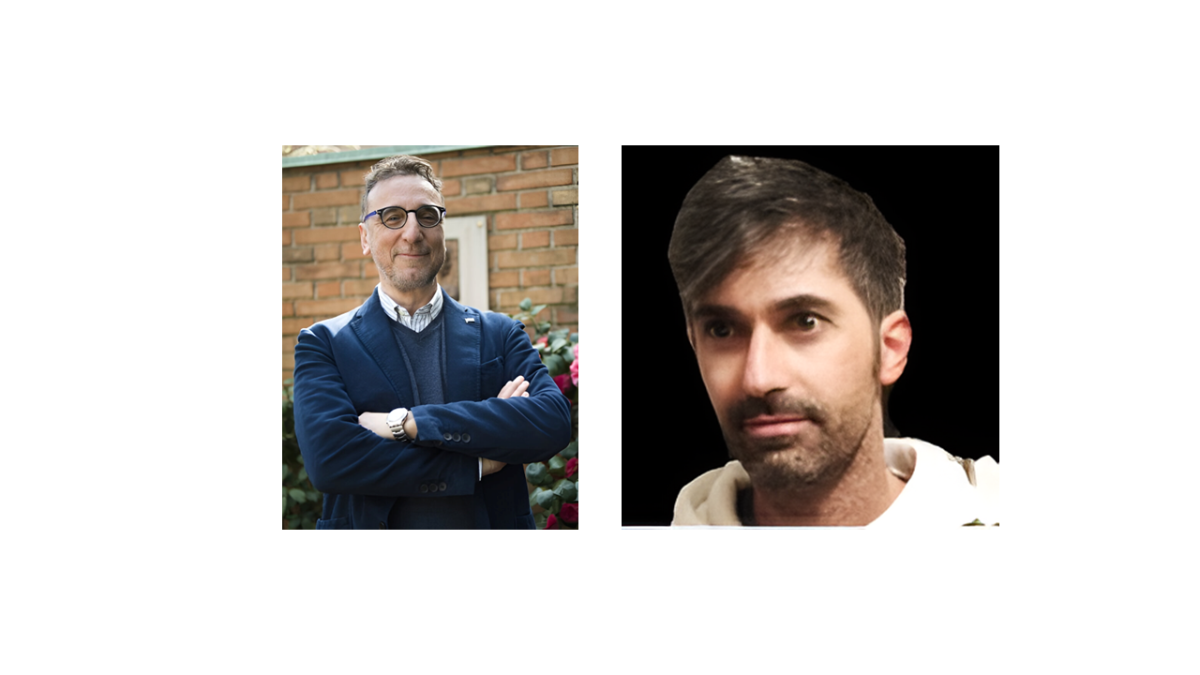
Guest Lecture Monday March 2nd, 2026: Dr. Preka and Prof. Giacomello, University of Bologna
We are excited to announce that Dr. Oltion Preka and Prof. Giampiero Giacomello from the University of Bologna will be giving a guest lecture titled “Beyond Small Samples: LLM-Generated Synthetic Data and the Search for Better Public Policies”.

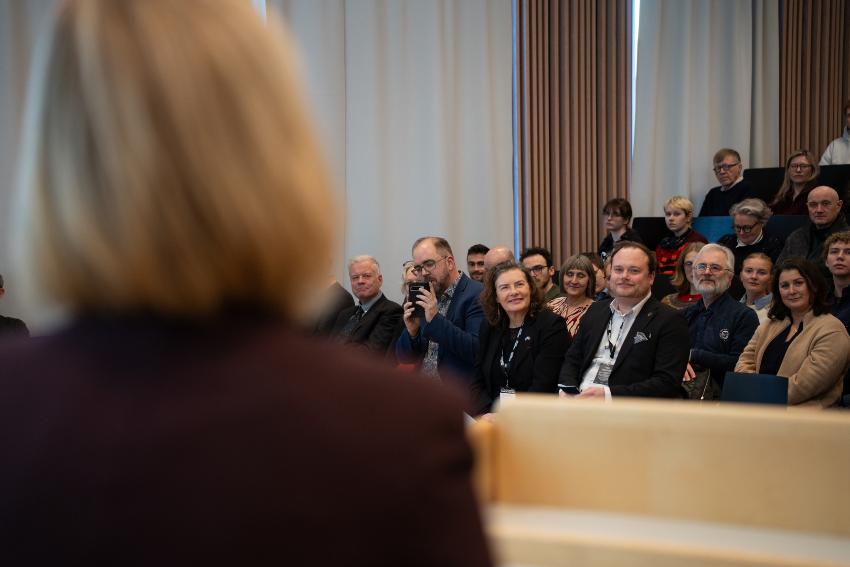
The lecture will be held in person at Teknologibygget, Auditorium 2.019 from 11:00.
Contact person is Enrico Tedeschi.
Target group: students and employees at UiT.
Welcome!
------------------
Date: Monday 2nd of March from 11:00-12:00
Place: Teknologibygget, Auditorium 2.019
Title: Beyond Small Samples: LLM-Generated Synthetic Data and the Search for Better Public Policies
Lecturers: Dr. Oltion Preka and Prof. Giampiero Giacomello, University of Bologna
Abstract
Data scarcity is a structural obstacle across many domains, including cybersecurity or healthcare among others, not only for research but also (and perhaps more importantly) to develop evidence-based policies and operational decision-making. These latter instances are particularly crucial for societies and economies that must hence function with sub-optimal public policies and/or less efficient resource allocation. Even when available, datasets in these areas are often small, sparse, inconsistent, and difficult to share for various reasons, while modern analytical tools increasingly rely on robust data. Therefore, empirical research is constrained by a persistent limitation of high-quality incident data.
This seminar presents a pragmatic response: generating synthetic tabular cybersecurity incident data using large language models (LLMs) to augment limited datasets while reducing exposure of sensitive information. We adopt the GReaT approach. It first serializes tabular data into text to preserve schema semantics and cross-field relationships, and pretrained LLM (Unsloth/Llama 3.2 1B) is then fine-tuned on a small dataset cyber-attack records.
The talk emphasizes evaluation for both fidelity and privacy through practical diagnostics for near-duplicates and overfitting. Results indicate that synthetic data remain close to real data (supporting realism), while providing early evidence that the approach can reproduce key statistical and structural properties without straightforward memorization.
The long-term goal of the seminar, however, would be that of testing the feasibility of extending to other areas of public policy, which also suffer from the data-quality constraints (e.g. public health), some of the best practices (for example scenario exploration, and model development under real-world constraints) derived from cybersecurity research. If the solutions achieved in the field of cybersecurity could be effectively applicable to other areas and contribute to develop better public policies in those areas, that would be the most far-reaching outcome of our research agenda.
Bio
Giampiero Giacomello is an Associate Professor of Political Science with the Department of Political and Social Sciences, University of Bologna, Italy, where he teaches cybersecurity and heads the Department’s Computational Social Science Center (CSSC). Previously he held visiting research and teaching positions at several American and European universities. His research interests include cybersecurity, social computing, and simulation methods. He has authored and co-edited thirteen volumes and published several articles in Safety Science, Defense Economics, International Spectator, European Political Science, International Studies Review, European Security, International Political Science Review and others. Dr. Giacomello has long been associated with ISODARCO (International School on Disarmament and Research on Conflicts) part of the Pugwash group.
Oltion Preka is a research fellow at the Department of Political and Social Sciences (DPSS), University of Bologna, Italy. He also earned his PhD at the Department of Statistical Sciences. He has taught “Big Data for the Social Sciences” and other graduate courses at DPSS for several years. His main research interests focus on advancing applications of Natural Language Processing and Deep Learning techniques in the social sciences, with a current emphasis on LLM-based synthetic data generation for cybersecurity.
Kortnytt fra Institutt for informatikk

-
Fiskeri- og havbruksvitenskap - bachelor
Varighet: 3 År -
Fiskeri- og havbruksvitenskap - master
Varighet: 2 År -
Akvamedisin - master
Varighet: 5 År -
Bioteknologi - bachelor
Varighet: 3 År -
Arkeologi - master
Varighet: 2 År -
Geosciences - master
Varighet: 2 År -
Biology - master
Varighet: 2 År -
Physics - master
Varighet: 2 År -
Mathematical Sciences - master
Varighet: 2 År -
Biomedicine - master
Varighet: 2 År -
Computational chemistry - master
Varighet: 2 År -
Biologi - bachelor
Varighet: 3 År -
Medisin profesjonsstudium
Varighet: 6 År -
Luftfartsfag - bachelor
Varighet: 3 År -
Informatikk, datamaskinsystemer - bachelor
Varighet: 3 År -
Informatikk, sivilingeniør - master
Varighet: 5 År -
Geovitenskap- bachelor
Varighet: 3 År -
Biomedisin - bachelor
Varighet: 3 År -
Matematikk - årsstudium
Varighet: 1 År -
Ergoterapi - bachelor
Varighet: 3 År -
Fysioterapi - bachelor
Varighet: 3 År -
Radiografi - bachelor
Varighet: 3 År -
Farmasi - bachelor
Varighet: 3 År -
Farmasi - master
Varighet: 2 År -
Romfysikk, sivilingeniør - master
Varighet: 5 År -
Bærekraftig teknologi, ingeniør - bachelor
Varighet: 3 År -
Odontologi - master
Varighet: 5 År -
Anvendt fysikk og matematikk, sivilingeniør - master
Varighet: 5 År -
Praktisk-pedagogisk utdanning for trinn 8-13 - årsstudium
Varighet: 2 År -
Internasjonal beredskap - bachelor
Varighet: 3 År -
Ernæring - bachelor
Varighet: 3 År -
Ph.d.-program i naturvitenskap
Varighet: 3 År -
PhD Programme in Natural Science
Varighet: 3 År -
PhD Programme in Science
Varighet: 3 År -
Lektor i realfag trinn 8-13 - master
Varighet: 5 År -
Kunstig intelligens, sivilingeniør - master
Varighet: 5 År -
Fysikk og matematikk - bachelor
Varighet: 3 År -
Nautikk - bachelor
Varighet: 3 År -
Medisin profesjonsstudium - forskerlinje
Varighet: 7 År -
Havteknologi, ingeniør - bachelor (ordinær, y-vei)
Varighet: 3 År -
Informatikk, datafag - bachelor
Varighet: 3 År -
Computer Science - master
Varighet: 4 År -
Fornybar energi, sivilingeniør - master
Varighet: 5 År -
Bærekraftig kjemi og innovasjon, sivilingeniør - master
Varighet: 5 År -
Marine Biotechnology and Biological Chemistry - master
Varighet: 2 År -
Musikkteknologi
Varighet: 1 År -
Computer Science - master
Varighet: 2 År -
Technology and Safety - master
Varighet: 2 År -
Arkeologi - bachelor
Varighet: 3 År -
Samfunnssikkerhet - bachelor
Varighet: 3 År