Contemporary Risk and Crisis Management - master
- Nordic applicants: April 15th
- EU/EEA + Swiss applicants: March 1st
- Non-EU/EEA applicants: November 15th
About the study
Study UiT’s online master in Contemporary Risk and Crisis Management. Build multidisciplinary skills to manage pandemics, cyber-attacks, climate change and terrorism—from local to global levels
What will you learn?
The master’s programme in Contemporary Risk and Crisis Management gives you advanced, multidisciplinary knowledge of:
- Risk and crisis management, climate change adaptation and societal security
- Theories, methods and current debates in the field
- Complex challenges at local, national and international levels
You will learn to:
- Analyse risks, crises and societal security issues critically
- Design and conduct independent research using relevant methods
- Assess sources and apply evidence to practical and theoretical problems
- Address ethical considerations in research and professional practice
You will develop the competence to communicate clearly with academic, professional and public audiences, lead projects, support decision-making and contribute to innovation in a rapidly changing world.
Practical execution
The master’s programme in Contemporary Risk and Crisis Management is fully online and can be taken from anywhere. No physical attendance is required.
Teaching and learning activities include:
- Video lectures and written materials
- Live and recorded guest lectures
- Digital workshops and supervision
- Project work and research-based learning
- Simulation-based games
Assessment consists of individual take-home examinations and semester projects, completed individually or in groups.
You can study full time over two years or part time over three to four years, making it possible to combine the programme with work. Check the study plan for the expected weekly workload.
Language of instruction
English.
Programme structure
See the subjects you can take in this study programStudy plan
Admission requirements
Bachelor’s degree (180 ECTS) or equivalent qualification.
Admission requires 80 ECTS covering specialization in risk, crisis, societal security, disaster management, QHSE (quality, health, safety and environment), climate change, development studies, safety, resilience, emergency services, political science, organizational studies, sociology, planning or geography.
Applicants must have a minimum grade average comparable to a Norwegian “C” (3.0) in the ECTS scale, see the UiT webpage for International admissions for more information on how the point average is calculated.
Applicants with education from non-Nordic countries must document English language proficiency.
Planned number of admissions fall 2027 (all applicants):
50 places.
Admission is competitive, based on academic qualifications.
Visa
Students admitted to our digital master program do not need to apply for a student visa.
Applicants from Norway or Nordic countries:
Her finner du all informasjon knyttet til søking og opptak.
Applicants within EU/EEA/Switzerland (except the Nordic countries):
You will find more information about admission for EU/EAA applicants here.
Applicants outside EU/EEA/Switzerland and the Nordic countries:
- Applicants in this group has to pay a tuition fee. You can find the prices for the program here.
You will find more information about admission for Non-EU/EEA applicants here
What can you become?
Graduates can work as risk analysts, safety advisers, emergency planners, crisis managers, security officers, preparedness coordinators, auditors or consultants. Career opportunities exist in:
- Public administration, emergency services and security
- Humanitarian organisations and development agencies
- Industry, manufacturing and primary industries
- Digital security, risk management and consulting
The degree also provides a foundation for further research and PhD studies.
Access to further studies
Upon successful completion of the programme, students will be qualified for admission to a PhD program in a number of academic areas at the UiT The Arctic University of Norway or elsewhere.Outgoing exchange
The online programme has no exchange opportunities through elective courses. Individual exchange may be possible while writing the master’s thesis in the 3rd and/or 4th semester, subject to an approved agreement.
Costs and support
Apply for student financial support from Lånekassen
You are responsible for covering your own travel and accommodation expenses for any required on-campus sessions and examinations.
Har du spørsmål?



You might also be interested in
Technology and Safety - master
This master program gives you a unique knowledge aimed towards technology and safety challenges in t...
Luftfartsvitenskap - master
Ved UiT kan du som pilot kan ta master i luftfartsvitenskap!
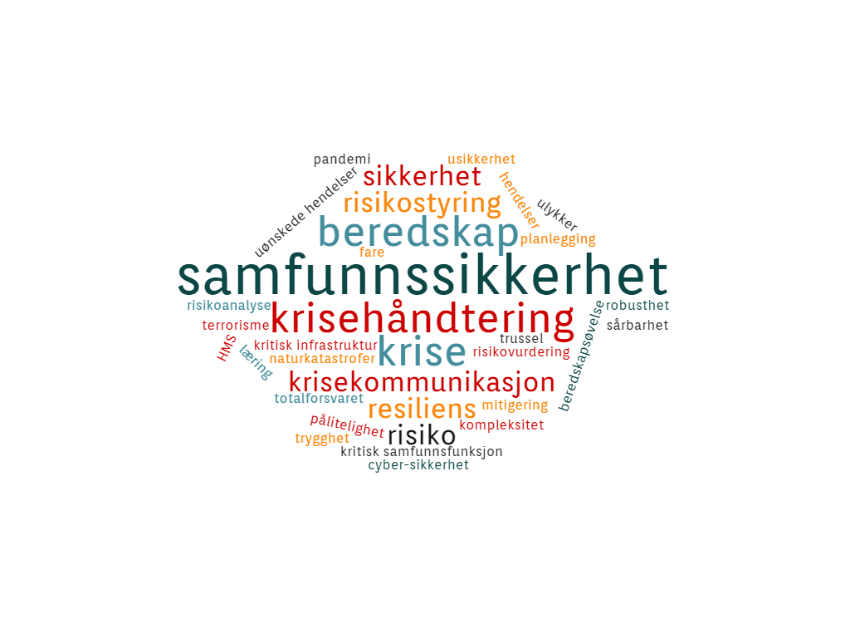
Samfunnssikkerhet - master
Hvordan møter samfunnet sikkerhet- og beredskapsutfordringer? Lær mer om krisehåndtering, HMS, risik...
Følg @uitstudent på Instagram eller TikTok for å få et enda bedre innblikk i hvordan det er å studere på UiT. Her viser studentene fram sin studiehverdag, deler tips og nyttig informasjon, og du kan stille spørsmål om alt du måtte lure på.
Sjekk også @uitnorgesarktiske på Instagram eller TikTok for info om studier, jobbmuligheter og forskning.
