Keynote speakers
Professor Jan Erik Henriksen, UiT The Arctic University of Norway, Sápmi, Norway
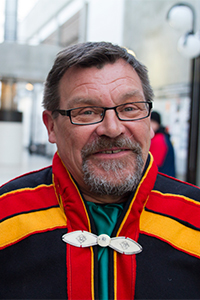
BIO
Henriksen is a Sámi-speaking coastal Sámi from Unjargga, married into a reindeer-herding family and has two adult children. In 1982, he completed BA in social work. He worked for one year as child welfare consultant and later six years as head of the social work department in Kautokeino Municipality. In 1989 he started at the Department of Social Work at the University College in Finnmark, which today is part of UiT The Arctic University of Norway. Henriksen has always had a strong community involvement through assignments and participation in media debates. In 2004 he was co-editor and contributed with two articles in a textbook on social work and health in various Sámi contexts (Tronvoll, Moe & Henriksen 2004). He has also written several articles on networking and Sámi social work (Henriksen 2010, Henriksen, Jan Erik 2013). In recent years, Henriksen has increased his international commitments and has published several articles in English: The extended Sami family in a social network perspective (2015). In 2016 he published two articles in a special issue of the journal: International Social Work: The one article; ‘Participatory action of conflicts in Sami areas’, together with professor Ida Hydle. And the other article ‘From housing campaign to multicultural understanding: The development of professional social work in Sámi areas in Norway’, is the bases for this lecture.
ABSTRACT
The presentation focuses on the development of professional social work in Sámi areas in Norway after World War II, which coincided with the development of the welfare state. Labour immigration in the 1970s made Norway visible as a multicultural society and the welfare professions adopted culturally sensitive methodology, which is also reflected in Sámi social work. Today’s criticism of multiculturalism requires new answers. The integration of the Sámi into the nation-state’s welfare system is an argument for why a decolonizing Sámi approach should build on the aim of post-colonialism. This approach recognizes historical injustice and the emphasis on dialogue in critical indigenous philosophy.
Professor Kerry Arabena, University of Melbourne, Australia

BIO
Professor Kerry Arabena is Chair for Indigenous Health and Director of the Indigenous Health Equity Unit at The University of Melbourne. A descendent of the Meriam people from the Torres Strait, she has a Doctorate in Human Ecology and a degree in Social Work. She is the Executive Director and Lead Investigator on the First 1000 Days Australia, an interventions based pre birth multigenerational cohort study designed with and for Aboriginal and Torres Strait Islander families. This is now a national and international initiative through a joint collaboration between the University of Melbourne and Save the Children and engaging Indigenous peoples in Indonesia and Norway. With an extensive background in public health, administration, community development and research, her work has made significant contributions in areas such as sexual and reproductive health, family violence, gender issues, access and equity, service provision, and harm minimisation. Her professional experience has seen her recognised as an Australian of the Year Finalist in 2010 and recipient of the prestigious JG Crawford Prize for Academic Excellence at Australian National University in 2011. She was the inaugural Co Chair of the National Congress of Australia's First People's and the inaugural CEO of the Lowitja Institute. She is currently a member of the Aboriginal Economic Board in Victoria, OzChild, Indigenous Community Volunteers, Kinnaway Aboriginal Chamber of Commerce and the Victorian Aboriginal Economic Board of Development. She is an author and business owner; a mother and a grandmother with interests in achieving equity for all Australians.
ABSTRACT
First 1000 Days Australia – the Australian Model of the international 1,000 Days movement – aims to provide a coordinated, comprehensive strategy to strengthen Aboriginal and Torres Strait Islander families so they can address their children’s needs from pre‐conception to two years of age, thereby laying the best foundation for their future health and wellbeing. This presentation will showcase what is being achieved through time specific, multidisciplinary and multi-knowledges approaches to Building resilience; Learning and innovation, fostering Leadership and Generating and using evidence for impact. Conceived of an led by Indigenous academics, First 1000 Days Australia is premised on the family remaining the primary and preferred site for developing and protecting culture and identity in Aboriginal and Torres Strait Islander children. As such, the work is guided by a First 1000 Days Australia Council made up of Aboriginal and Torres Strait Islander Elders, researchers, community members, front-line workers and policy makers. The Council ensures First 1000 Days Australia endorsed work is led by Aboriginal and Torres Strait Islander people and employs Indigenous methods of knowledge generation. Founded on partnerships to promote collective impact, the Australian Model takes a multigenerational view of the family and is guided by a multidisciplinary Scientific Advisory Committee as well as other Aboriginal and Torres Strait Islander scholars. This model has the potential to faciliate joined up activities across regions and countries, with preliminary discussions occurring in Norway, Indonesia and New Zealand. This model will also be be presented as a framework through which to mobilise a global First 1000 Days Indigenous People's Movement, and will discuss the contribution of Indigenous Social Workers to this effort.
Dr. Lydia Heikkilä, Researcher, Sámi Studies Program, Faculty of Social Sciences, University of Lapland, Sápmi, Finland
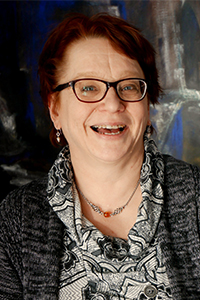
BIO
Lydia Heikkilä (PhD, Sociology) works as a researcher in Sámi Studies in the Faculty of Social Sciences at the University of Lapland in Rovaniemi, Finland. She has extensive experience in research on the life conditions and wellbeing of the Sámi, in particular reindeer-herding families and communities. She has cooperated closely with Sámi communities and NGOs, initiating and guiding development of culturally based social services. Dr Heikkilä is currently the leader of a research project funded by the European Social Fund on satisfaction among the Sámi with social and health services. The research seeks to increase theoretical understanding of social inclusion and the roles of culturally based social and health services in supporting the wellbeing of Sámi communities. She is also engaged in developing community-based participatory methods and ethical guidelines for Sámi research.
ABSTRACT
In her presentation, Dr Lydia Heikkilä reflects on the preliminary results of a case study of satisfaction among the Sámi with social and health services. The study seeks to provide insights on Indigenous resilience capacities and to expand social scientific understanding of the concepts of social inclusion and cultural marginalization from the Sámi perspective. To this end, it pursues two focuses: the first examines the strategies that Sámi living in urban environments employ to meet their everyday life needs; the second analyses the special challenges that this group faces in maintaining cultural integrity and relationships with Sámi communities, both those in their immediate surroundings and in the remote Sámi Home Area. The success of urban Sámi in these efforts is crucial to enabling intergenerational transmission of the culture and language. The case study has found that the traditional Sámi reciprocal networks operate in multiple restructured ways to sustain members’ material and relational needs, replacing or complementing what is a limited supply of culturally based social and health services.
Dr. Michael Yellow Bird, Director, Tribal and Indigenous Peoples Studies Program, Professor at North Dakota State University, USA
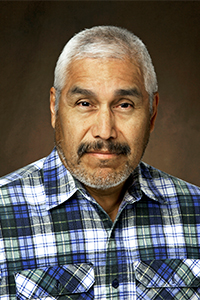
BIO
Dr. Michael Yellow Bird is a citizen of the Three Affiliated Tribes, the Mandan, Hidatsa, and Arikara. He grew up on the Fort Berthold reservation in White Shield, North Dakota. He has held faculty appointments in the Schools of social work at the University of British Columbia, University of Kansas, Arizona State University, and Humboldt State University. He is currently a professor in the Department of Sociology and Anthropology and the Director of the Tribal and Indigenous Peoples Studies program at North Dakota State University.
ABSTRACT
In this presentation, Dr. Michael Yellow Bird uses neuroscience research to examine how mindfulness approaches and traditional Indigenous contemplative practices can train the mind and positively change the structure and function of the brain. He will discuss how experiences and perceptions change our brain (neuroplasticity); shape our DNA and affect the expression of our genes; activate different brain regions, change our brain waves, and shape specialized brain cells such as mirror neurons; and alter our neurotransmitters and modulators.
Dr. Natalia Okhlopkova, Professor at North Eastern Federal University named after M- K. Ammosov, Yakutsk, Russia
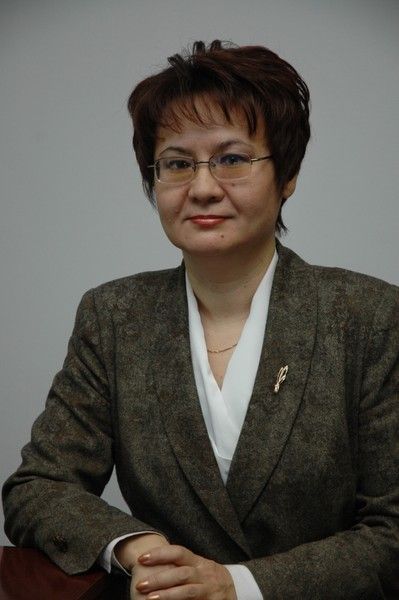
ABSTRACT
In this presentation we will examine and discuss the possibility of adaptation of traditional values and way of life of indigenous of the north of Russia fo modernization. Traditional activities of indigenous peoples such as reindeer herding, hunting, fishing, agriculture, traditional way of life, including nomadism come often in contradiction to such aspects of modern life as education, skilled medical care, the development of industrial production, mining in areas of compact residence indigenous peoples of the north. Traditional values are often destroyed, especially among young indigenous people of the north in the boarding schools away from their parents and the traditional way of life. The practice of social, psychological training, social work, resolving conflicts between traditional values and trends of modernization allows to generate positive social mood, improve the socio-psychological climate in the communities of indigenous peoples of the north. As shown by our experience in conducting such trainings and workshops in communities of indigenous peoples of northern Russia, from 2006 initiated by the Thematic Network on Local and Regional Development, University of the Arctic, this activity brings tangible results in terms of increased social adaptability of the indigenous peoples of the north and their integration into modern life as well as to the growth of national consciousness.