
Growing Curiosity Through Art and Geoscience at EGU26
As part of the ongoing collaboration within the Extremes project, artist Heike Jane Zimmermann participated in the EGU General Assembly 2026 conference in Vienna, Austria, one of Europe’s largest gatherings for geoscientists, educators, and researchers. The conference provided an inspiring space for interdisciplinary exchange, where science, education, and creative practice could meet and interact in meaningful ways.
A blog by Jane Zimmermann and Valentina Lanci
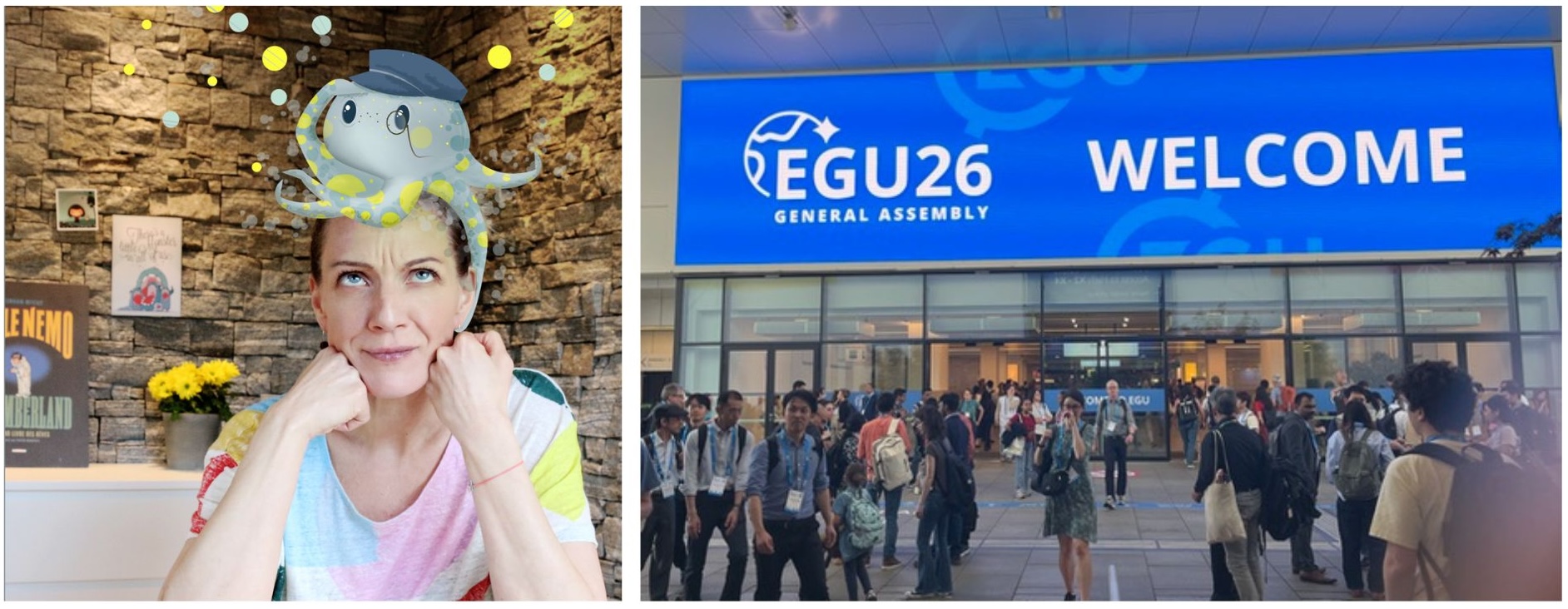
At the EGU conference, Jane Zimmermann took part in the interactive short course session “Growing Curiosity – Geoscience Education for Children” . The session brought together scientists, educators, and artists to exchange tools, insights, and experiences related to geoscience education for children. The aim of the course was not only to share educational resources and ideas but also to connect participants with similar interests and inspire future collaborations and new educational initiatives.
The session opened with a 15-minute keynote presentation by invited speaker Takeshi Kosaki, followed by a series of fast-paced six-minute pitch presentations from participating speakers. Each talk offered a unique perspective on how geoscience can be communicated to children in creative, engaging, and impactful ways.
After the presentations, the format shifted into an interactive poster session where participants could explore the projects in more depth. The room quickly transformed into a lively, welcoming space filled with discussion, questions, and exchanges of ideas about science communication and education.

Jane’s presentation, “Sculpting as a Tool for Communicating Geoscience to Children,” (Figure 2) explored how tactile and visual experiences can help make complex scientific concepts more accessible. Sculpting can open new ways of understanding scientific processes - particularly for children, but also for adults - by encouraging learning through touch, observation, creativity, and play.
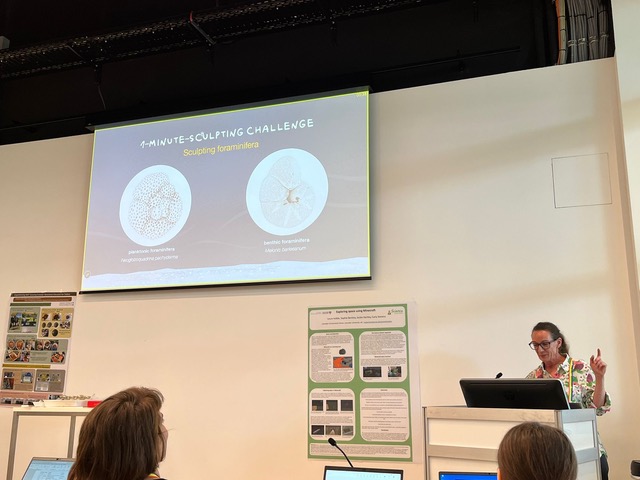
To demonstrate this hands-on approach, Jane invited the audience to participate in a one-minute sculpting challenge. Hidden under each seat was a small bag containing a piece of air-dry clay and a toothpick for sculpting. After a short introduction and with two reference images of foraminifera projected on the screen, participants were challenged to sculpt their own miniature versions of these microscopic marine organisms in just one minute.
Almost instantly, the room filled with focused concentration, laughter, and curiosity. The challenge resulted in a wide variety of imaginative and creative interpretations of foraminifera, highlighting how artistic engagement can spark interest and conversation around scientific topics.
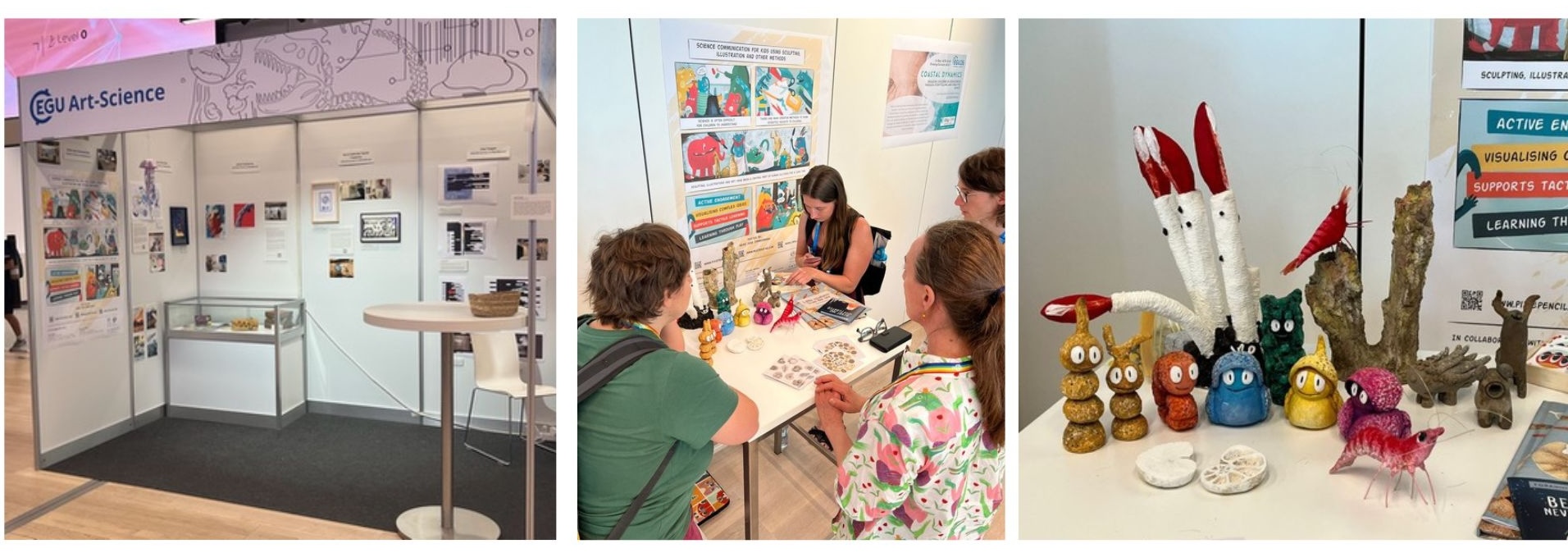
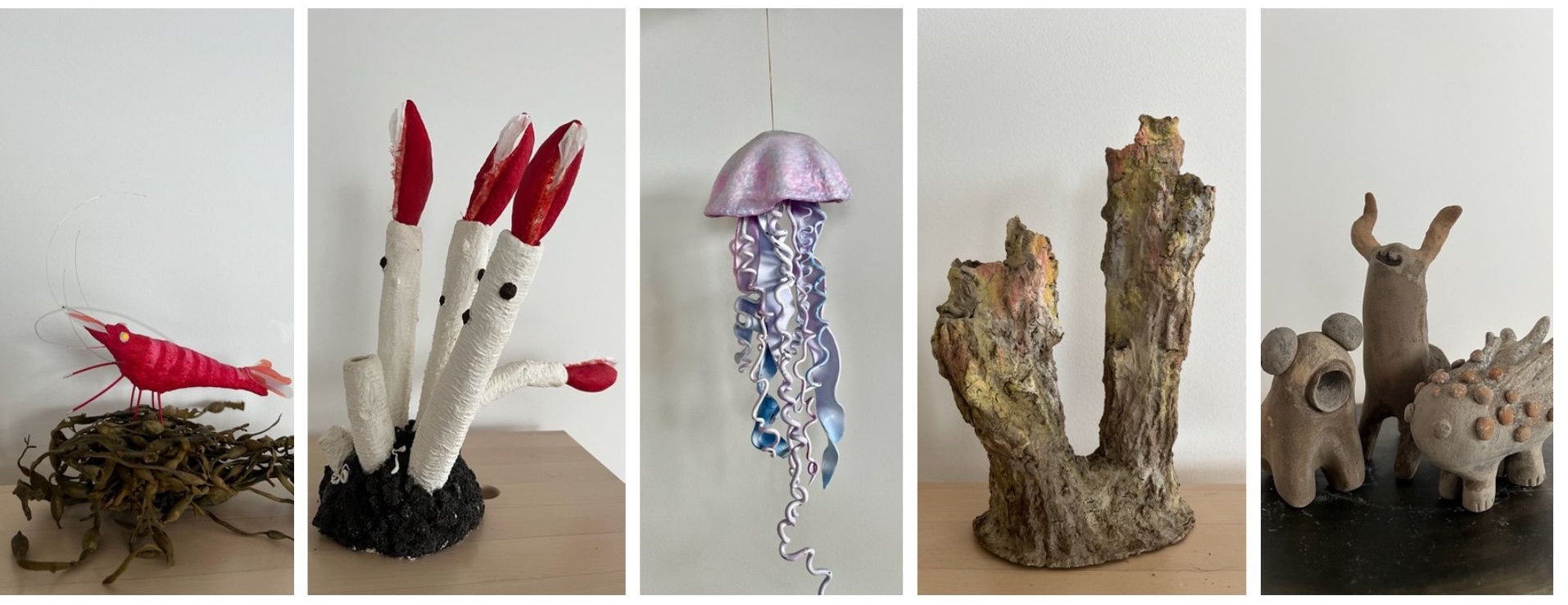
Alongside the workshop activity, Jane presented a series of sculptures made from deep-sea sediment and paper clay (Figure 3). These works functioned not only as artistic interpretations that invited viewers to imagine the unseen landscapes and life of the deep-sea, but also as conversation starters that encouraged audiences, especially children, to wonder about what lies beneath the ocean surface and to consider how scientific knowledge can be explored and communicated through material, texture, and form.
The response during the poster session was incredibly engaging. Many visitors were curious about the materials, the artistic process behind the sculptures, and how similar approaches could be adapted for classrooms, museums, or informal educational settings.
One of the strongest takeaways from the session was the shared understanding that curiosity is at the heart of scientific learning. Whether through storytelling, interactive teaching, artistic experimentation, or sculptural interpretation, each contribution demonstrated different ways to encourage curiosity and make science approachable and meaningful for both children and adults.
This presentation was developed in collaboration with Professor Giuliana Panieri (Department of Geosciences at UiT The Arctic University of Tromsø and CNR-ISP), deep-sea biologist Mari Heggernes Eilertsen (University of Bergen - CBE Arctic Team), and Associate Professor Filip Maric (Department of Health and Care Sciences at UiT).
Jane Zimmermann is also a member of the EGU Art–Science Working Group, and in addition to this presentation, she contributed to several other EGU26 activities aimed at strengthening connections between art and science and exploring how creative practices can support scientific communication and public engagement. In particular, she played a key role in designing the EGU mural created for the organisation’s 20th anniversary in Vienna.