
From Arctic Research to Artistic Creation: Fieldwork in Húsavík
In May, a team of five artists and two curators travelled to Húsavík in North Iceland for an inspiring fieldwork trip in preparation for an upcoming exhibition opening this October at the Whale Museum. Drawing on the artists' experiences during the EXTREMES 2025 expedition in the Arctic Ocean and Barents Sea, the exhibition brings together art, science, and environmental research.
A blog by Auður Aðalsteinsdóttir and Valentina Lanci
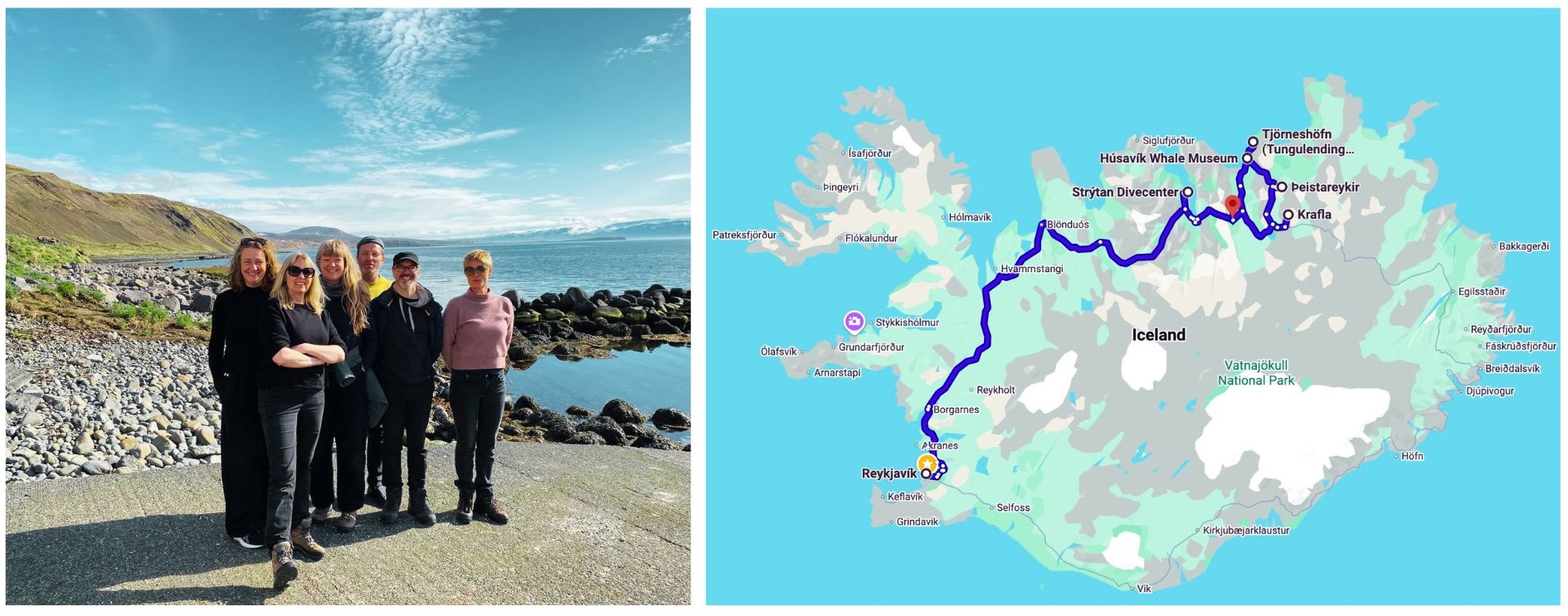
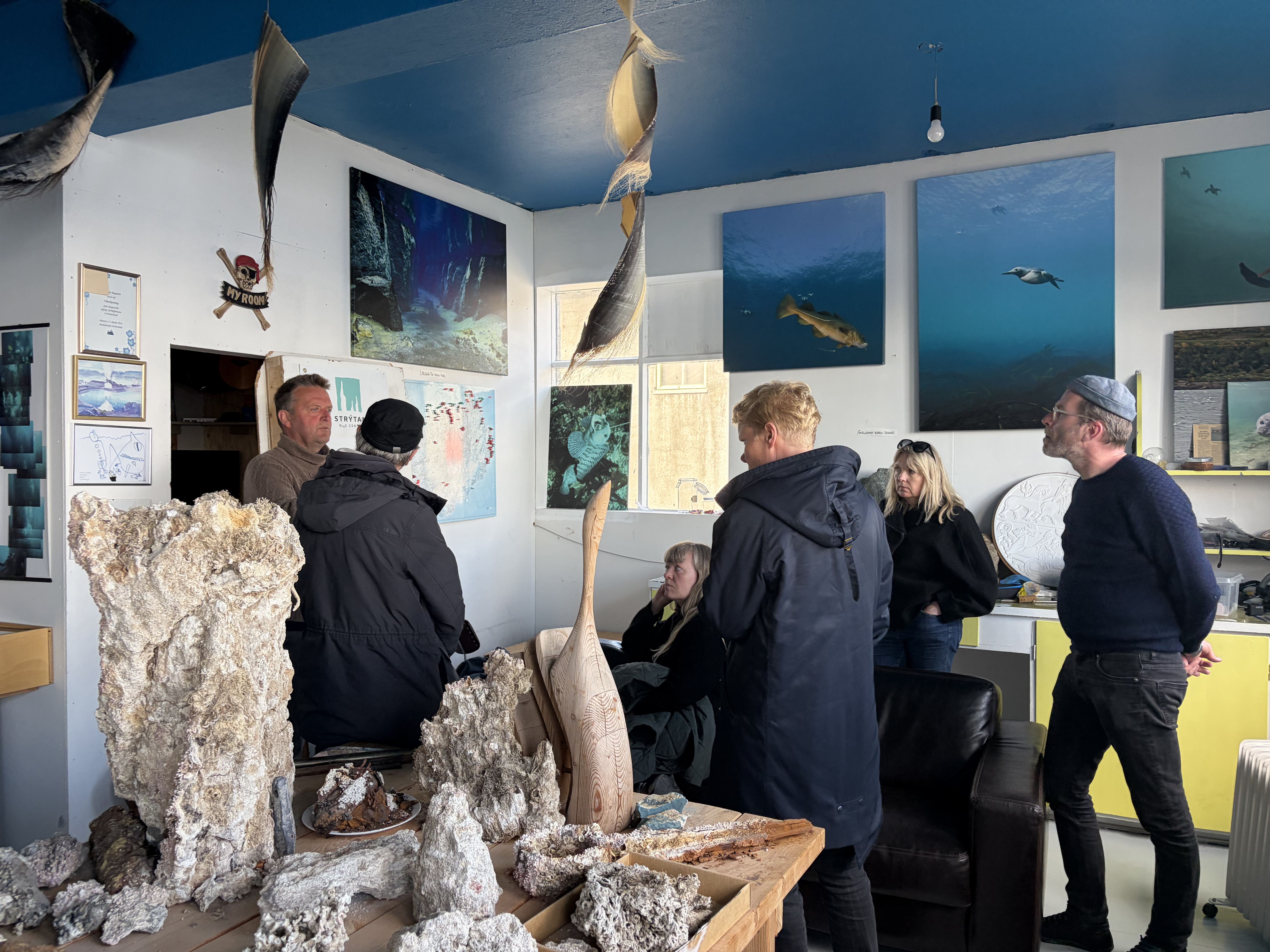
After a scenic journey from Reykjavík across Iceland, the team immersed themselves in the landscapes, geology, and marine environments that will shape the exhibition. Their first stop was Eyjafjörður, where diver Erlendur Bogason introduced them to the remarkable hydrothermal chimneys hidden beneath the fjord's surface, offering a fascinating glimpse into Iceland's underwater geology.
At the Whale Museum, museum director Arngrímur Arnarson welcomed the group, while whale specialist Garðar Þröstur Einarsson led an in-depth tour of the museum's permanent exhibition. Their insights into whale biology, the history of whaling, and the impacts of climate change provided valuable context for developing artworks that will enter into dialogue with the museum's collection.
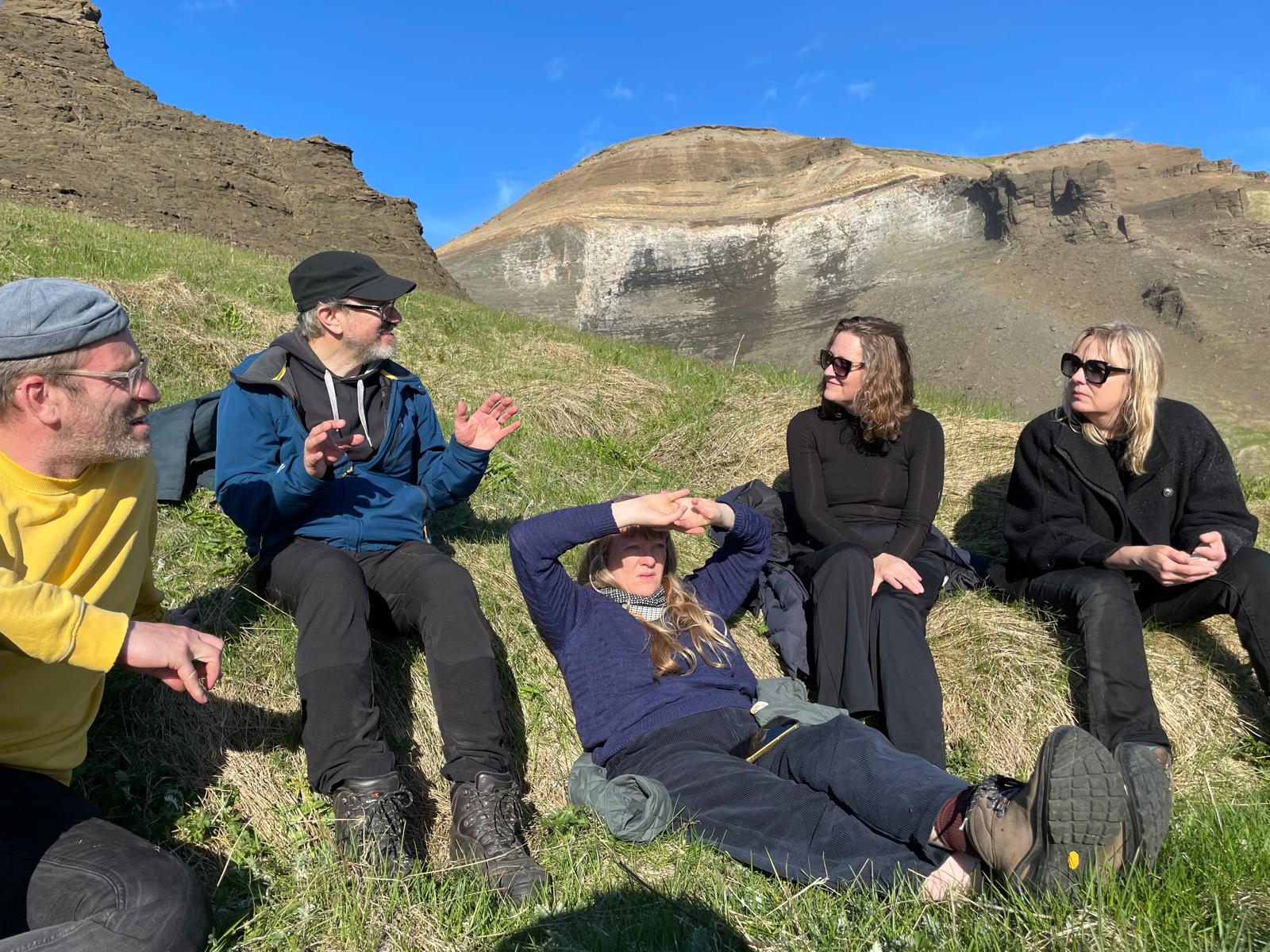
The team also explored the fossil-rich sedimentary rocks of the Tjörnes strata at Tungulending. In beautiful spring weather, they examined one of the North Atlantic's most significant geological sequences, whose layers preserve evidence of ancient climates, changing sea temperatures, and environmental conditions spanning the Pliocene and Quaternary periods.
"The Tjörnes sequence is unique in the North Atlantic area in its lithological character and long Pliocene and Quaternary record, combining lithological and paleontological evidence about past environmental conditions, temperatures, and climate."
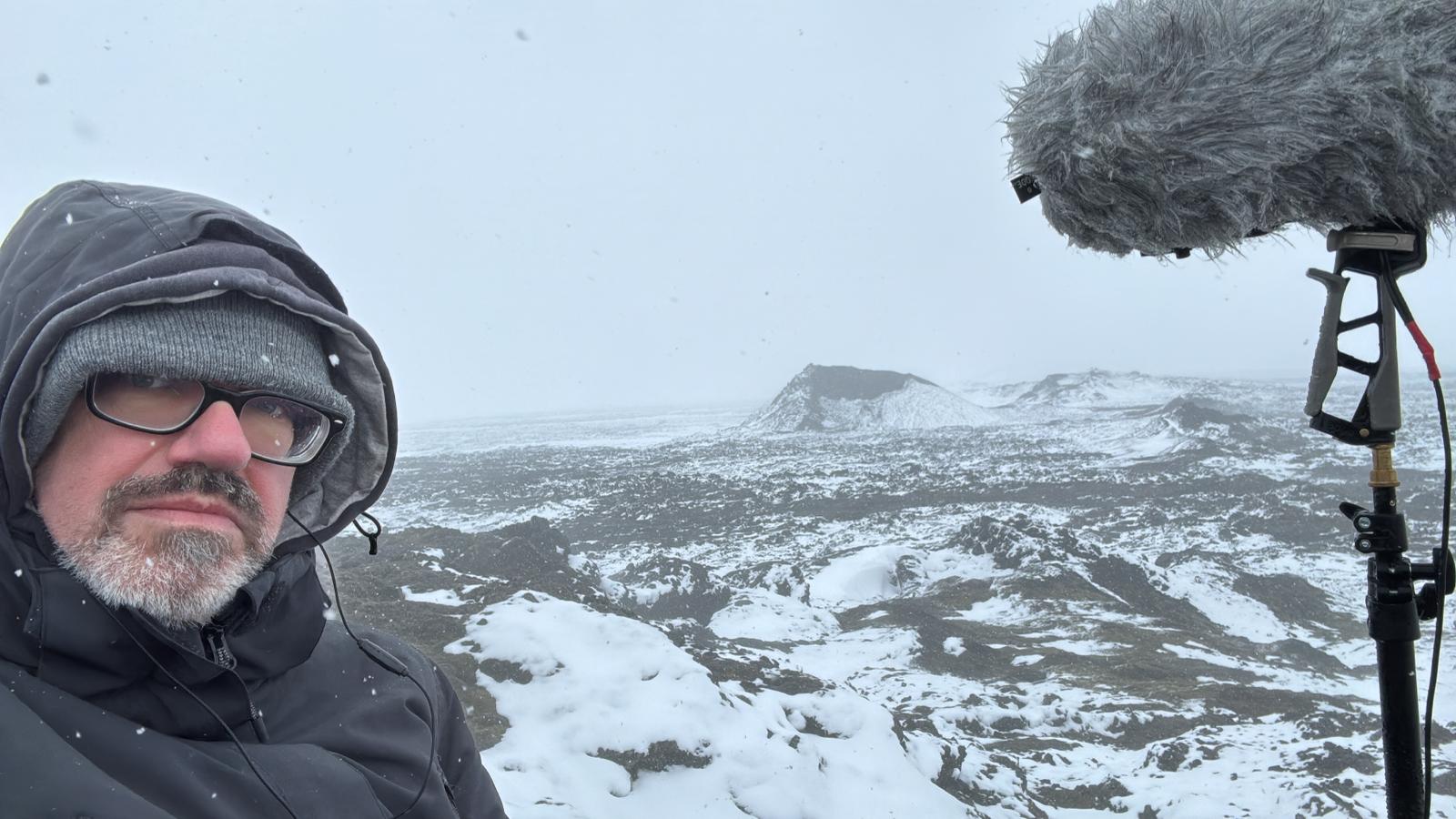
For artist John Grzinich, the fieldwork had begun several days earlier. Travelling through the geothermal landscapes of Þeistareykir and Krafla, he recorded the sounds of hot springs before collaborating with students at the University of Iceland's Research Centre in Húsavík to capture recordings of whale vocalisations.
Alongside these excursions, the team held an intensive workshop outside the Whale Museum, discussing concepts, planning installations, and exploring how the exhibition could engage with the museum's unique spaces.
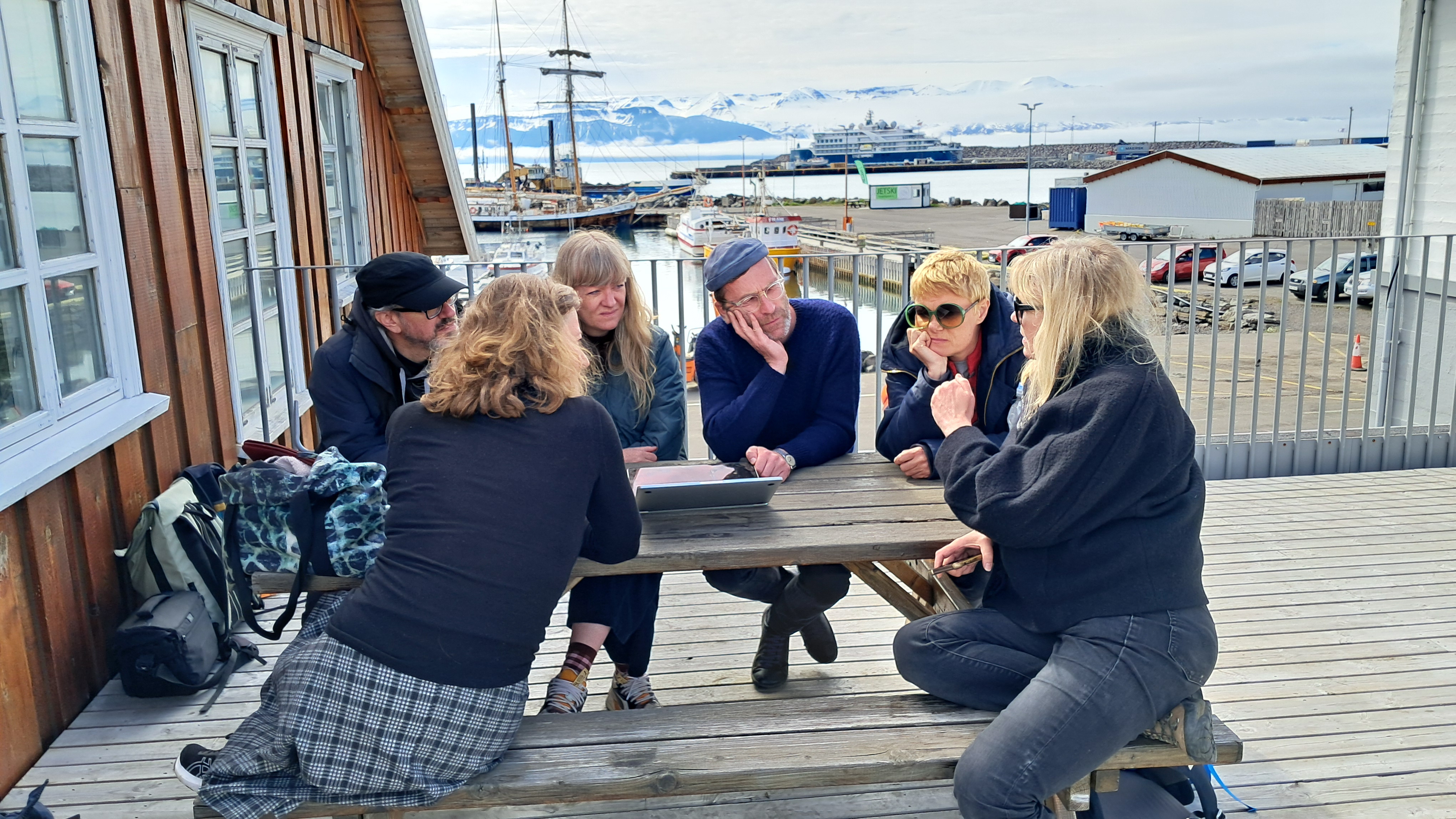
The exhibition will combine ROV footage collected during the EXTREMES 25 expedition with new visual and sound recordings created by the artists, alongside interviews with researchers and carefully selected found materials. Together, these elements will offer fresh artistic perspectives on Arctic research, marine ecosystems, geological time, and the evolving relationship between humans and the natural world.
Organised by the University of Iceland's Research Centre in Þingeyjarsveit in collaboration with the Whale Museum in Húsavík, the exhibition will open in October 2025. Participating artists are Angela Snæfellsjökuls Rawlings, Gry Bagøien, Hekla Dögg Jónsdóttir, John Grzinich, and Þorgerður Ólafsdóttir. The exhibition is curated by Auður Aðalsteinsdóttir and Michael Kjær.
We look forward to sharing more as the project develops and to welcoming visitors to the exhibition this autumn to experience the intersection of art, science, and environmental exploration.
About EXTREMES
The EXTREMES project is funded by UArctic (Grant UA 06/2024- for the period 1 January 2025 – 31 December 2026). Bringing together researchers from UiT The Arctic University of Norway (Department of Geosciences), the University of Copenhagen (Department of Arts and Cultural Studies), and the University of Iceland Research Centre in Þingeyjarsveit, the project explores new perspectives on the Arctic through interdisciplinary collaboration. The exhibition, opening in October 2026, marks an important milestone in the project and is made possible with additional support from the Nordisk Kulturfond.