Each creole language must be studied individually
- Theories about creole languages are many. Some scientists look upon them as similar because of their African origin, while other linguists assume they are similar because of universal grammar; they see creole languages as the purest examples of universal grammar. I think each creole language must be studied individually, to find it's complex history, says Marleen van de Vate, defending her PhD thesis these days.
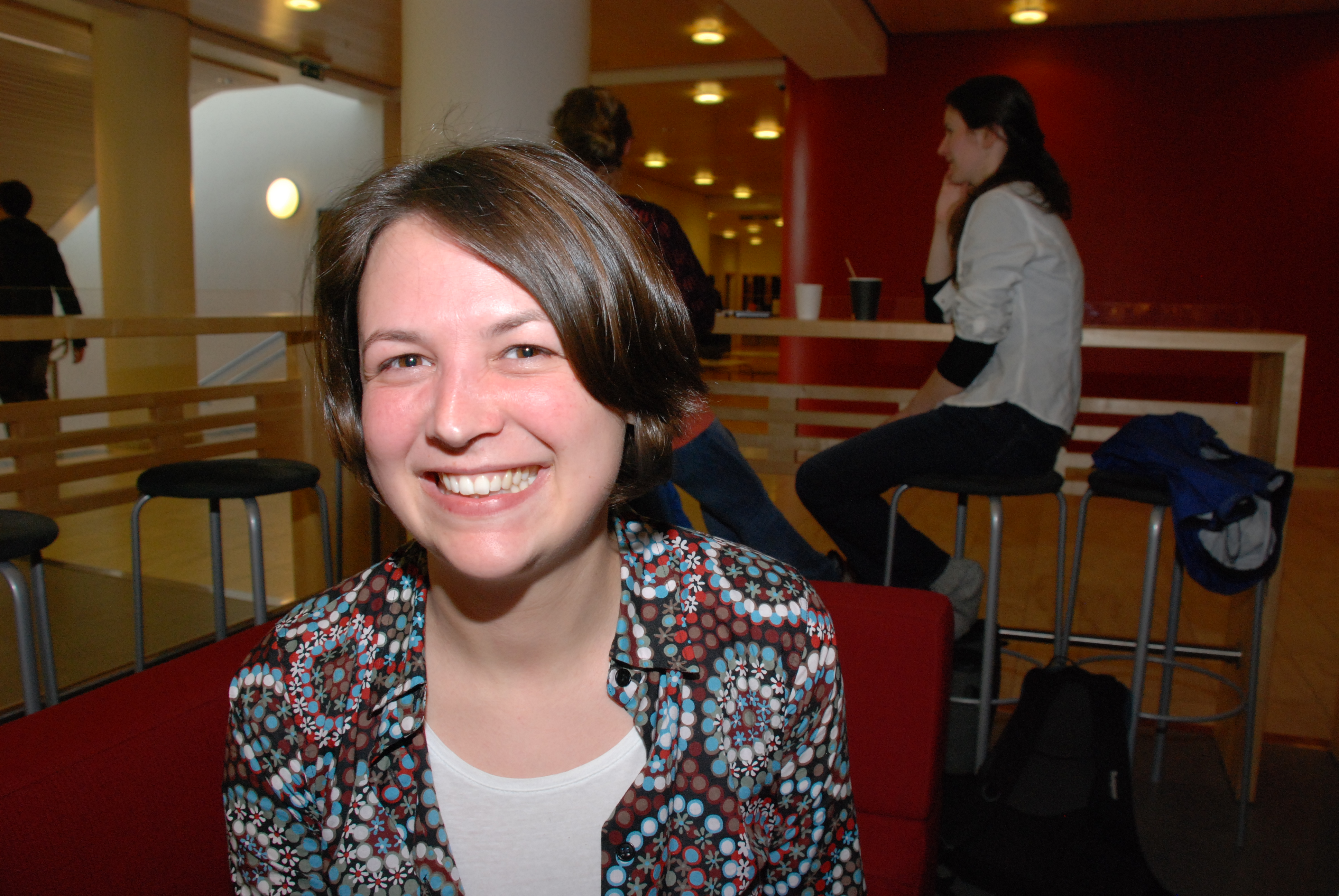 |
Marleen van de Vate has studied tense, aspect and modality in the creole language Saamáka. |
Van de Vate has studied tense, aspect and modality (TAM) in Saamáka, an English/Portuguese Maroon creole language in Suriname. This is the first TAM-study of a creole from a formal theoretical perspective. A creole is a language that has developed from different parent languages, but has become nativized and thus acquired by children as their primary language. In many former colonies there are several creoles. Saamáka is considered a "radical" creole, since the influence of English is less than in many other creole languages.
Dutch colony, but English/Portuguese language
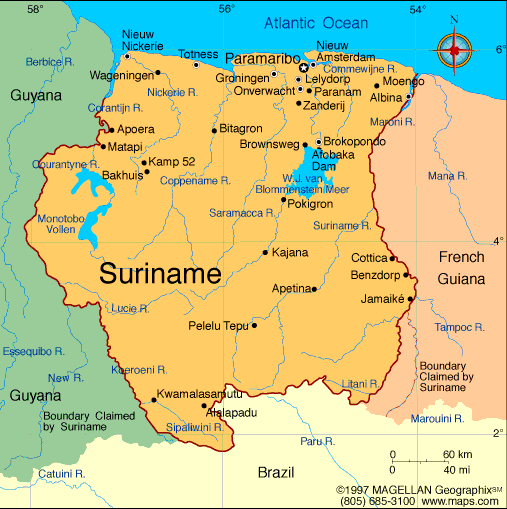
Suriname is a former Dutch colony on the northern, Caribbean coasts of South America. The English occupied the area in 1651, and in 1667 the Netherlands traded Suriname for New Amsterdam (the later New York). Many of the plantation owners were still English speaking. As in the other Caribbean colonies slaves were imported from Africa to work in the prosperous sugar industry. Since there were strong Brazilian connections in the colony, many Portuguese jews came from Brazil to Surinam. The slaves therefore developed a language of both Portuguese and English origin. It is estimated that Saamáka has 30% Portuguese vocabulary, 70% English and 10% African. And this is considered a "radical" mix. The Saamáka speakers live along the Suriname river and are descendants of slaves who fled the plantations already in the 17th and 18th centuries.
- Since the slaves early fled the sugar plantations, the language developed with less European influence, says van de Vate.
 |
A monolingual community
Saamáka is one of many creoles in Suriname, and is spoken by 25.000 to 50.000 people, and van de Vate did her field work in a monolingual community.
- Saamáka is the only language spoken in the village, an oral oriented community. Even if the children learn Dutch six years in primary school, not many are able to conversate in Dutch. But they have to go away to attend high school, and many of them never return, and thus loose their language as grown ups.
Important research effort
Van de Vate's studies comprise the first full TAM-description af any creole language, and thus her resarch is important - and useful - for other linguists as well. In addition, she has made a theoretical contribution when it comes to the understanding of the future tense.
- Is "will" future tense or modality? Is it intention or not? The study of creole languages adds something to this discussion with their different unmarked verbforms. Unlike Norwegian and English, for instance, where the past tense is marked after the verb, like in 'played' or 'leikte', in Saamáka you find verb forms without any mark of either tense, aspect or modality. Thus it is the type of verb, either eventive or stative, which determines which tense the verb must be understood in, van de Vate concludes.
Read van de Vate's thesis here.