Researchers and Key Organizations Gathered at UiT for the Second NORSIL-NKJ Seminar
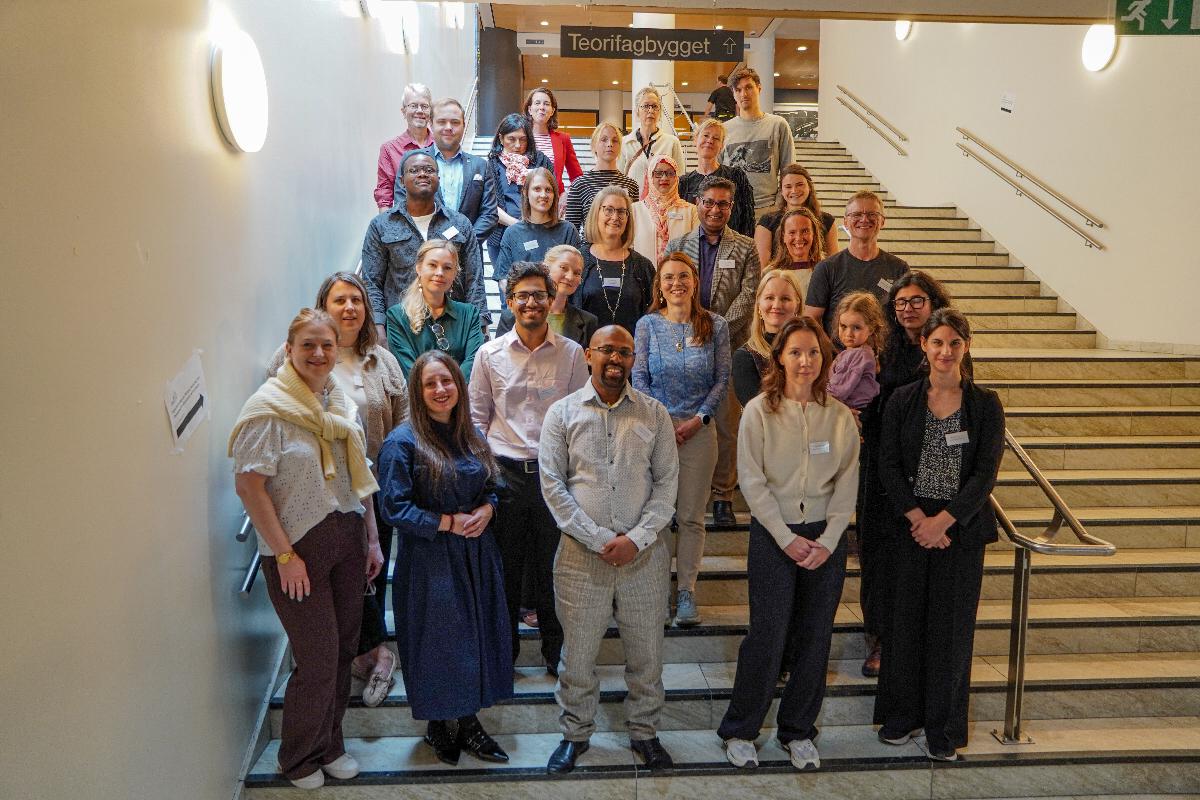
This week, on the 16th and 17th of June, the Research Group for Sámi and Indigenous Peoples Law at the Faculty of Law, UiT, hosted the second seminar of the Nordic Research Network for Sámi and Indigenous Peoples Law (NORSIL), bringing together researchers from across the Nordic region for two days of interdisciplinary dialogue and collaboration.

Indigenous Knowledge as a Source of Law
The seminar focused on the role of Sámi institutions and traditional knowledge (árbediehtu) in reindeer herding within the context of the green transition in Norway, Sweden, and Finland. Discussions explored how Indigenous knowledge contributes to sustainability governance and how national and international legal frameworks, courts, and human rights bodies engage with Indigenous knowledge as a source of law.
Transdisciplinary and International Network
As a transdisciplinary network connecting Nordic, Sámi, and international scholars, NORSIL provides an important platform for strengthening research collaboration, exchanging perspectives across disciplines and borders, and advancing knowledge on legal and societal issues affecting Indigenous peoples. The seminar offered valuable opportunities for participants to share research on key issues and to develop new connections with scholars from other Nordic institutions.
– NORSIL provides an important forum for co-creation and the exchange of knowledge on critical issues affecting the Sami people across the Nordic countries, says seminar organizer and leader of the Research Group for Sámi and Indigenous Peoples Law at UiT, Associate Professor Endalew Enyew.
– The second NORSIL–NKJ seminar convened more than thirty researchers, PhD candidates, and early-career scholars to present and discuss the relevance of Sami traditional knowledge (árbediehtu) within the discourse on the green energy transition. The secretariat of the Nordic Joint Committee for Agriculture and Food Research, the secretariat of the Barents Euro-Arctic Cooperation Working Group on Indigenous Peoples and the Barents Youth Council, as well as a representative of the Sami Council, attended the seminar and contributed their perspectives. By all measures, the seminar was a great success, Enyew concludes.
Support and Contributions from Key Organizations
The NORSIL project for 2025–2027 is funded by the The secretariat of the Nordic Joint Committee for Agriculture and Food Research (NKJ).
In addition, the GRIP‑Bear project (Research Collaboration on Climate Change, Green Energy Transition, and Rights of Indigenous Peoples in the Barents Euro‑Arctic Region), funded by the Barents Euro‑Arctic Council, provided financial support for travel and accommodation for participating PhD students and a representative of the secretariat of the Barents Euro-Arctic Cooperation Working Group on Indigenous Peoples (WGIP) and the Barents Youth Council (BYC).
Sofie Andersson from the secretariat of the NKJ presented on NKJ and its network projects while Jens Kristian Øvstebø from the secretariat of the WGIP and the BYC gave insights into the work of WGIP and BYC.
Kortnytt fra Det juridiske fakultet