Hope and Willpower Aboard the Statsraad Lehmkuhl
At the student course Arctic Future Pathfinders, academic knowledge, cultural understanding, and personal reflection are combined.
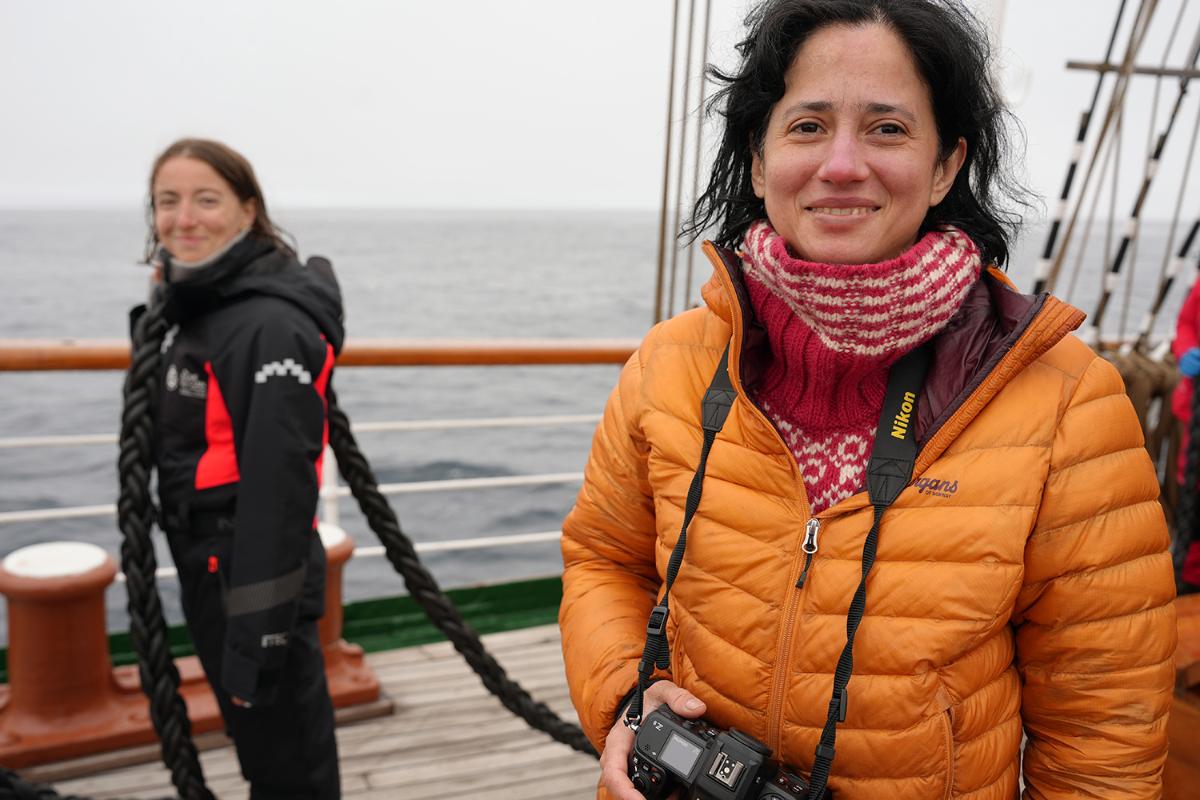
Ana Luisa Sanchez Laws, a professor of interdisciplinary methods at the Centre for Peace Studies at UiT, aims to challenge the participants of Arctic Future Pathfinders to think beyond traditional academic frameworks. The first day focused on creating dialogue and collaboration among the participants.
"There is an incredible amount of knowledge within the group, and my intention was to get them to talk to each other, get to know one another, and perhaps lay the foundation for future collaborations," says Sanchez Laws.
In addition to fostering collaboration, she has introduced alternative ways of understanding knowledge.
"Most people think of knowledge as academic articles and publications, but it is so much more. We are here in Inuit land, and I wanted to show them the value of storytelling and cultural perspectives," says Sanchez Laws.
For instance, Inuit stories and cultural differences were discussed, which she believes can provide students with new insights.
"These stories contain knowledge that is difficult to understand without experiencing it firsthand. It’s something you can’t gain just by reading an article," says Sanchez Laws.
Students Are Engaged and Challenged
The teaching also has a broader goal: to encourage participants to reflect on how they can use their knowledge to make a difference in the world.
"A career is just a small part of it. It’s about being able to convey the importance of what you do to others, whether it’s through technology, storytelling, or face-to-face communication," explains Sanchez Laws.
Cultural Understanding and Hope for the Future
Despite the challenges of climate change and the world’s uncertain future, the instructor has found hope in the collaboration and determination she sees in the students to make a difference.
"There is so much hope and willpower here. Even small contributions can make a difference," she concludes.
Kortnytt fra Seksjon for kommunikasjon