The Arctic Six appoints three new Fellows from UiT
Three researchers will contribute to finding new ways for interdisciplinary collaboration between six Arctic universities in Norway, Sweden, and Finland.
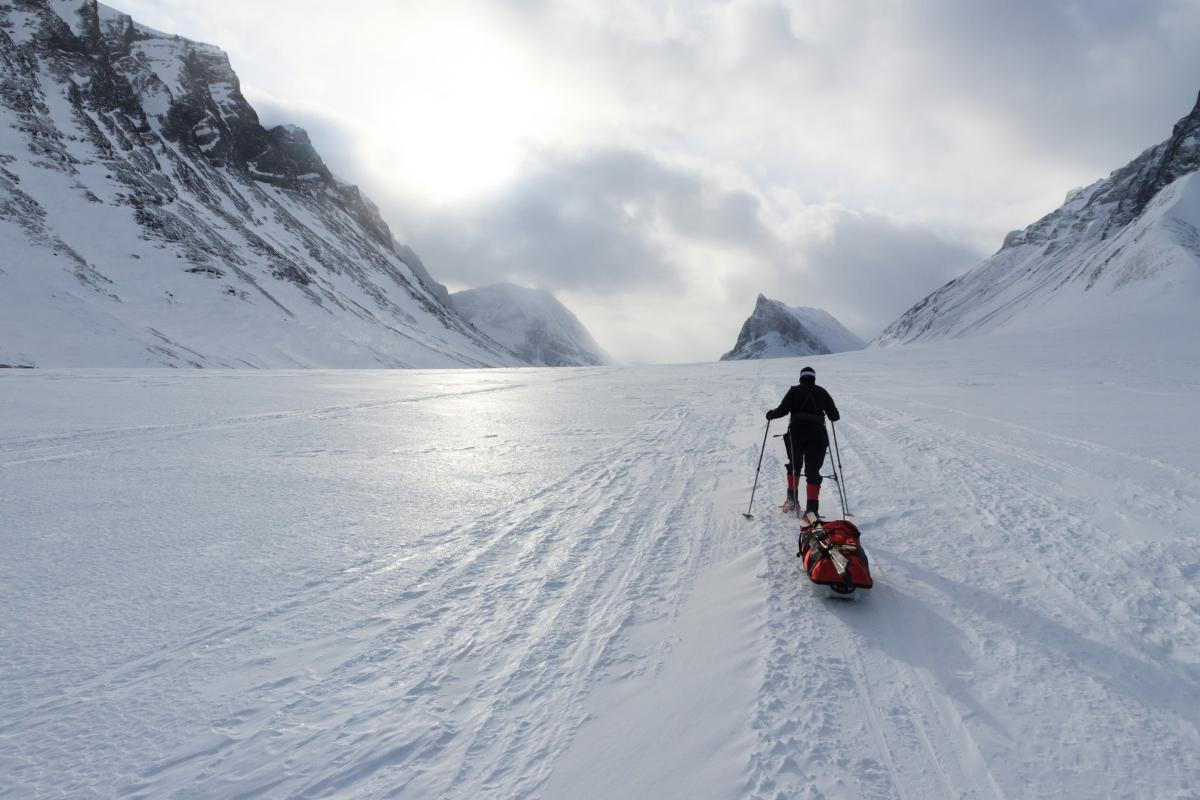

Every other year, the university alliance The Arctic Six appoints a new team of early-career researchers. Their title is Fellows, and they are tasked with initiating new research and education projects over a two-year period.
Their mandate is to find innovative ways to build interdisciplinary collaboration between six Arctic universities in Norway, Sweden, and Finland.
Among the 14 appointees are two PhD candidates and one postdoctoral fellow from UiT. They are working on projects related to methane emissions in the Arctic, extreme weather and health, as well as the development of advanced sensor technology.
New knowledge about methane emissions
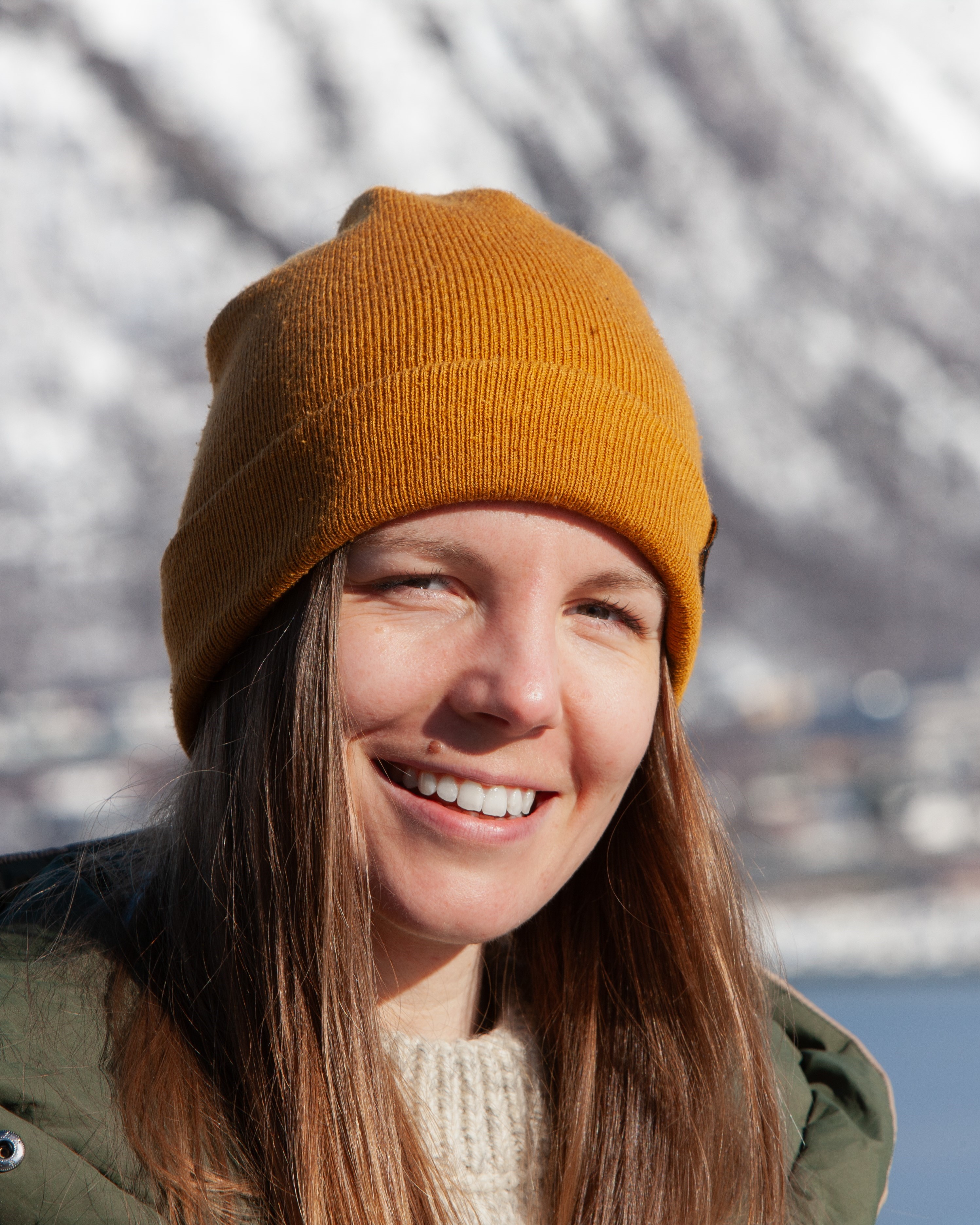
One of them is Marie Bulínová, a PhD candidate at the Department of Geosciences. The main focus of her project is to search for traces of methane emissions. She does this through chemical analyses of sediments and environmental DNA from lakes and waterways in the Arctic.
Methane is a potent greenhouse gas that plays a significant role in global warming. However, Bulínová points out that not much research has been conducted on how Arctic rivers and lakes act as sources of methane emissions.
“These systems are important because they connect terrestrial and marine environments. But we have a knowledge gap regarding how methane emissions from these systems might change as the Arctic warms. It is essential to fill these gaps to understand the full picture of methane emissions in the Arctic,” says Bulínová.
She believes her research could enable more accurate predictions, using climate models, of how methane emissions from the Arctic will influence future climate change.
Working in an interdisciplinary environment allows me to combine ideas and methods from different scientific fields, which makes my research stronger and more innovative.
By collaborating with colleagues from Umeå University, Bulínová receives support with modelling and access to advanced tools for measuring greenhouse gases. This also provides new opportunities for career development and for advancing Arctic science.
“Working in an interdisciplinary environment allows me to combine ideas and methods from different scientific fields, which makes my research stronger and more innovative. The collaboration also helps me build networks with other researchers and develop new skills,” she adds.

Aiming to improve health preparedness
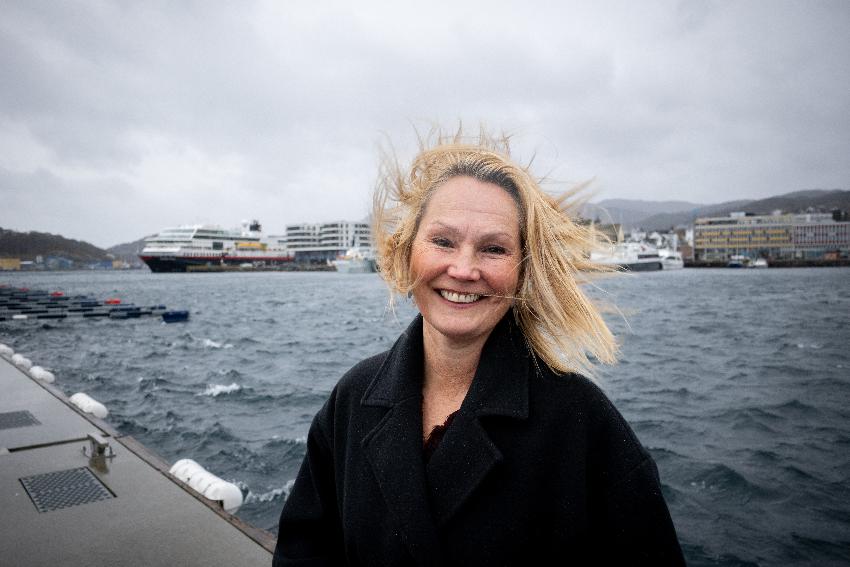
Another of the newly appointed Arctic Six Fellows is Mojdeh Rafieian, a PhD candidate at the Department of Community Medicine. She is researching how type 2 diabetes and hypertension affect cardiovascular responses when the body is briefly exposed to both cold and heat.
Rafieian highlights that type 2 diabetes (T2D) is a condition that is widespread globally, and that individuals with T2D are particularly vulnerable to climate change. This is linked to their susceptibility to temperature-related health risks, such as sudden cardiac events during periods of extreme cold or heatwaves.
Rafieian points out that, so far, there has been a lack of research examining how individuals with diabetes physically respond to cold and heat.
“We aim to address the challenge associated with this knowledge gap. We want to contribute to the development of protective strategies for a medically high-risk group. Our goal is to improve clinical awareness, health preparedness, and public health resilience,” she says.
Facts about The Arctic Six Fellows
- Every other year, early-career researchers at six Arctic universities in Norway, Sweden, and Finland are appointed as Fellows.
- The researchers are tasked with developing projects that contribute to building innovative and interdisciplinary collaboration between the partner universities.
- For the academic year 2025–2026, 14 researchers, including postdoctoral fellows and PhD candidates, have been awarded grants to conduct research.
- Two PhD candidates and one postdoctoral fellow from UiT have been appointed as Fellows.
- They are working on projects related to methane emissions in the Arctic, extreme weather and health, and the development of advanced sensor technology.
Rafieian believes her research can also provide valuable insights into how to better protect the occupational health of individuals with T2D.
For Rafieian, her new role as a researcher within The Arctic Six provides access to a robust, interdisciplinary network working across leading Nordic institutions in environmental and health research.
She also believes this enables a multidimensional approach to complex issues affecting populations in Arctic regions.
“Interdisciplinary collaboration fosters innovative solutions and ensures that the findings are applicable in various contexts within Arctic regions,” concludes Rafieian.
Developing an advanced sensor
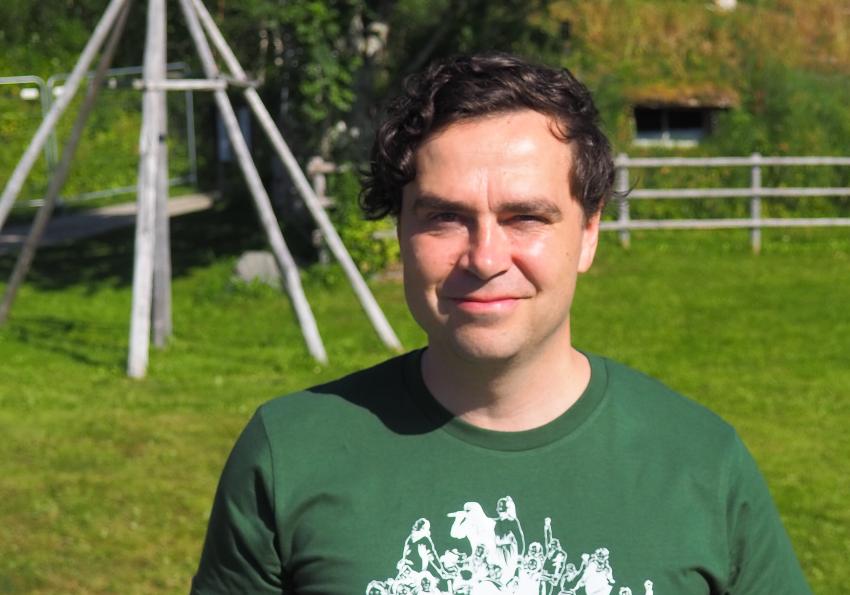
The third newly appointed researcher is Ragnar Seton, a postdoctoral fellow at the Department of Physics and Technology. At UiT, he is a member of the Photonic Sensing research group. There, he is developing a miniaturised spectroscopy sensor, integrated on a chip, capable of recording extremely precise gas measurements.
The sensor can be used for analysing chemical, biological, and natural materials and can measure properties at the molecular level. Spectroscopic analyses are an important tool in research on climate and environmental conditions, among other fields.
Seton specialises in a research area where a waveguide is used to direct lasers through the gas being analysed. The method is called "laser absorption spectroscopy-based trace gas analysis". Seton explains that his research group is globally leading in the use of this method.
Seton highlights that a unique feature of the sensor is its ability to analyse extremely small amounts of gas, as little as one-millionth of a litre.
“There are many areas where this type of sensor could not previously be used. One such area is bacterial metabolism. With our sensor, it will be possible to measure how much certain bacteria 'consume.' It will enable new types of analyses in biology and biomedicine,” says Seton.
To maintain the leading position of his research group, he believes that collaboration with Nordic colleagues in both Sweden and Finland will be of great importance.
“As a Fellow, I have the opportunity to visit and collaborate with colleagues in the Nordic region who possess unique expertise. This exchange will lead to highly positive developments in both research and the educational offerings at our respective universities,” concludes Seton.
Kortnytt fra Institutt for samfunnsmedisin, Institutt for geovitenskap, Institutt for fysikk og teknologi