Master of Science Freya Elizabeth Sykes will hold the Trial Lecture and Thesis Defense for the PhD degree in Science on Thursday, October 15, 2026.
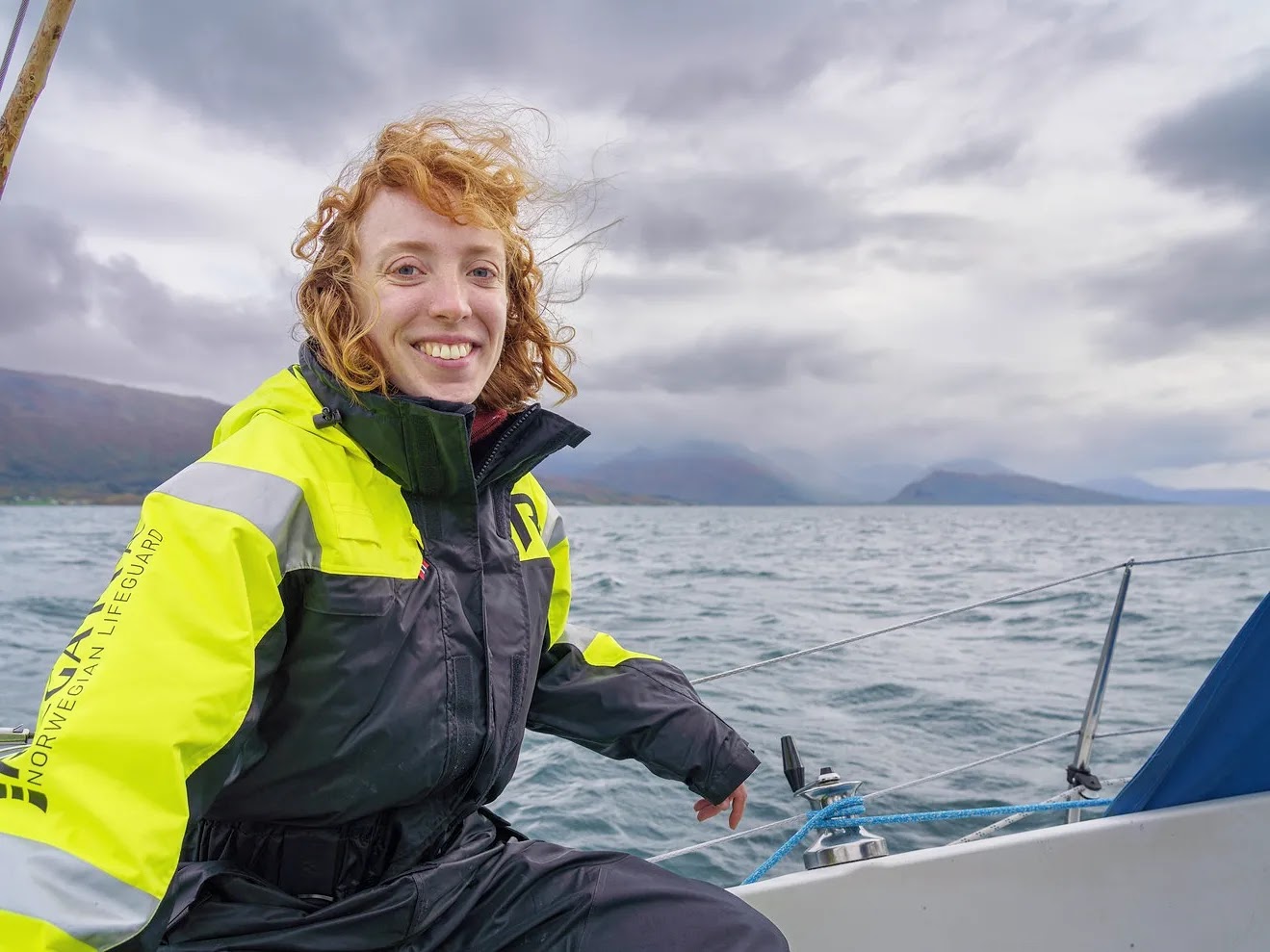
Trial Lecture
Will take place 10:15 - 11:15.
The title of the Trial Lecture is:
« How do we know how the AMOC has changed? Integrating instrumental observations, climate-model simulations and palaeoclimate reconstructions »
Thesis Defense
Will take place 12:15 - 15:00.
The title of the thesis is:
« Development of geochemical proxy calibrations in planktic foraminifera and their application to Nordic Seas palaeoceanography »
Abstract
Contemporary climate change is causing rising sea surface temperatures, salinity changes, reduced sea ice cover and ice sheet melt, and changes to carbonate chemistry in the high latitudes. It has also induced concerns that enhanced warming in the Arctic Ocean and Nordic Seas may disrupt North Atlantic circulation, weakening the northward transport of warm water, and causing widespread cooling across Europe. Studying past climate change, in particular warmer-than-present time periods, in the Nordic Seas can provide insight into the response of the ocean system to current warming. The Last Interglacial period (~128 to 117 ka BP) has been proposed as a relevant case study for understanding contemporary warming in the Nordic Seas and sub-polar North Atlantic.
Formanifera are single celled protists, found both in the upper water column (planktic) and at the seafloor (benthic). The spinose Globigerina bulloides is one of the most widespread planktic foraminifera species, and as such widely used for palaeocean reconstruction. The calcium carbonate shell records the conditions it grew in by incorporation of chemical impurities in quantifiable relationships to different environmental parameters (e.g. shell Mg/Ca increases with temperature). It is one of the few species that is found in sub-polar latitudes, making it highly applicable for tracing interglacial climate change in the Nordic Seas. Current application of the species is limited at high latitudes however by the lack of culture-based calibrations for cold water (<14°C). There is also an absence of proxy calibrations for salinity and carbonate chemistry parameters.
This thesis presents the results of the first large scale (n > 250) culturing of G. bulloides for geochemistry. Culture conditions controlled temperature, salinity, and carbonate chemistry (pH and carbonate ion) and were tailored for developing a high latitude proxy. Biological and ecological observations were made throughout the culture. Upon termination of the culture experiments, shell composition was obtained using Laser Ablation Inductively Coupled Plasma Mass Spectrometry. The new calibrations developed were applied to sediment cores from the Norwegian Sea and used to reconstruct changes in sub-surface hydrography from the penultimate deglaciation to the onset of the last glaciation. The main outcomes of this study are 1) G. bulloides is tolerant to a wide range of environmental conditions. Two different life strategies/mortality modes were observed that could have implications for the climate signal recorded in the palaeorecord; 2) high latitude tailored Mg/Ca temperature calibrations were developed for G. bulloides, alongside regressions for Na/Ca and Sr/Ca with different environmental parameters; 3) the new calibrations (alongside other proxy methods) were applied to Norwegian Sea cores from the Last Interglacial and revealed persistent advection of Atlantic water in the Nordic Seas from the penultimate deglaciation to the onset of the last glaciation.
Supervisory Committee
- Associate Professor Mohamed Ezat, Institute for Geosciences, UiT (Main Supervisor)
- Dr. Julie Meiland, Aix-Marseille Université, CNRS, CEREGE, France
- Professor Gavin Foster, University of Southampton, UK
Evaluation Committee
- 1st Opponent: Professor Helena L. Filipsson, Department of Earth and Environmental Sciences, Lund University, Sweden
- 2nd Opponent: Dr. Lennart de Nooijer, Department of Ocean Systems, Royal Netherlands Institute for Sea Research (NIOZ), Texel, Netherlands
- Internal member and leader of the committee: Associate Professor Tom Arne Rydningen, Department of Geosciences, UiT, Norway
Streaming
The Trial Lecture and Thesis Defense will be streamed via Panopto:
Trial Lecture (10:15 - 11:15)
Watch the Trial Lecture
Thesis Defense (12:15 - 15:00)
Watch the Thesis Defense
Thesis
The thesis is available in Munin:
Når: 15.10.26 kl 10.15–15.00
Hvor:
Naturfagsbygget 1.103 Episenteret
Sted: Digitalt, Tromsø
Målgruppe: Ansatte, Studenter, Gjester / eksterne, Inviterte, Enhet
E-post: daniels.sliks@uit.no