Keynotes
 |
Andreas Føllesdal is Professor of Political Philosophy at the Faculty of Law, University of Oslo. He is a political philosopher particularly interested in puzzles of globalization and Europeanization. As Fulbright Fellow at the Philosophy Department of Harvard University he graduated in 1991 with a PhD dissertation on The Normative Significance of State Borders, advised by philosophers John Rawls and TM Scanlon, and economist, later Nobel Laurate Amartya Sen. Føllesdal also study human rights law at Harvard Law School; welfare economics, game theory and international political economy at the Economics Department; and international relations at the Department of Government.
Føllesdal has continued multi-disciplinary research on international and global puzzles and dilemmas in the intersection of law, international relations and political theory. Over the last 20 years his intellectual curiosity has tracked the fascinating changes wrought by globalization: from the profound challenges states face in an increasingly interdependent world, over Europeanisation, to multi-level governance. He also study the emerging roles and obligations of non-state actors, multinationals and organized consumers and investors.
Føllesdal’s multi-disciplinary interests are also exhibited in his appointments: While serving as Research Director at ARENA Centre for European Studies, he was Full Professor in the Department of Philosophy for several years, and recognized as competent as Full Professor in Political Science. Føllesdal moved to the Faculty of Law in 2001, first to serve as Director of Research for the University’s multidisciplinary Centre for Human Rights. He now head MultiRights, a 5 year research project funded by the European Research Council on the Legitimacy of our Multi-Level Human Rights Judiciary; and PluriCourts, a Centre of Excellence for the Study of the Legitimate Roles of the Judiciary in the Global Order.
 |
Carol C. Gould is Distinguished Professor in the Philosophy Department at Hunter College and in the Doctoral Programs in Philosophy and Political Science at the Graduate Center of the City University of New York, where she also serves as Director of the Center for Global Ethics & Politics at the Ralph Bunche Institute for International Studies. She is Editor of the Journal of Social Philosophy.
A native New Yorker, Gould received a BA from the University of Chicago and a PhD from Yale University. Prior to joining CUNY in 2009, she taught at Lehman College, Swarthmore College, Stevens Institute of Technology, Columbia University, George Mason University, and Temple University. Her research addresses hard questions in social and political philosophy, with particular attention to the relationship between theory and practice. Her particular interests range across democratic theory, the philosophy of human rights, feminist philosophy, critical social theory, and international ethics.
Gould's latest book is Globalizing Democracy and Human Rights (Cambridge University Press, 2014). In her new book Gould addresses the fundamental issue of democratizing globalization, that is to say of finding ways to open transnational institutions and communities to democratic participation by those widely affected by their decisions.The book develops a framework for expanding participation in crossborder decisions, arguing for a broader understanding of human rights and introducing a new role for the ideas of care and solidarity at a distance. Accessibly written with a minimum of technical jargon this is a major new contribution to political philosophy.
Gould is the author of Marx’s Social Ontology: Individuality and Community in Marx’s Theory of Social Reality (MIT Press, 1978); Rethinking Democracy: Freedom and Social Cooperation in Politics, Economy, and Society (Cambridge University Press, 1988); and Globalizing Democracy and Human Rights (Cambridge University Press, 2004), which won the 2009 David Easton Best Book Award from the American Political Science Association. She is currently completing a new book entitled Interactive Democracy: The Social Roots of Global Justice, to be published by Cambridge University Press. Her seven edited books include the influential early collection Women and Philosophy (1976), co-edited with Marx Wartofsky; Gender (1999); and Cultural Identity and the Nation-State (2003). She has also published more than sixty articles in social and political philosophy, feminist theory, philosophy of law, and applied ethics. She has given over 150 invited presentations at universities around the world, including more than 30 keynote and plenary addresses at major conferences.
Gould has been active in both the American Philosophical Association and the American Political Science Association, and currently serves as Executive Director of the Society for Philosophy and Public Affairs, and as series editor for global ethics and politics at Temple University Press. She has served as President of the American Society of Value Inquiry, as well as President of the American Section of the International Society of Philosophy of Law and Social Philosophy (the IVR). She has been the recipient of numerous awards, including fellowships from the Rockefeller Foundation and the National Endowment for the Humanities, a National Science Foundation grant, a Fulbright Senior Scholar Award in Paris, a Fulbright Distinguished Chair Professorship in Political and Social Science at the European University Institute, and a fellowship at the Woodrow Wilson International Center for Scholars in Washington, DC.
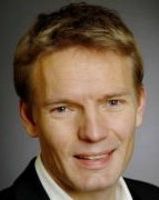 |
Christian F. Rostbøll is Associate Professor at the Department of Political Science, University of Copenhagen, Denmark. His scientific interests include deliberative democracy theory, autonomy and multidimensional conception of freedom, freedom of expression, and critical theory. He was awarded his PhD in political science with distinction by Columbia University, New York in 2004. His advisors included Professors Jean L. Cohen and Jon Elster. His doctoral dissertation Deliberative Democracy and Conceptions of Freedom was later published as Deliberative Freedom: Deliberative Democracy as Critical Theory (State University of New York Press, 2009).
Rostbøll has been publishing extensively in well-established philosophical journals such as Philosophy & Social Criticism and Political Theory on various aspects of deliberative democracy theory. His contributions focuses on liberty justification of deliberative democracy, the question of autonomy in democratic theory, and emancipation vs. accommodation in Rawlsian and Habermasian accounts of democracy. He also engaged in the debate on Danish cartoon controversy with his critical articles on justification of freedom of speech and limits of Millian and Kantian autonomy as character ideals. Currently he is working on the possibility of giving a non-instrumental justification of democracy. His aim is to defend a freedom argument for democracy that does not entail procedure-independent epistemic standards.
In the years 1998-2003 he was a Fulbright Grantee at the Columbia University. In 2010 he was awarded the Silver Medal by The Royal Danish Academy of Sciences and Letters. Currently he is an editorial associate for Constellations, An International Journal of Democratic and Critical Theory, and an editor for Politik [Journal of Politics] based in Denmark.