Mohn Prize Seminar 2026: Arctic environmental change
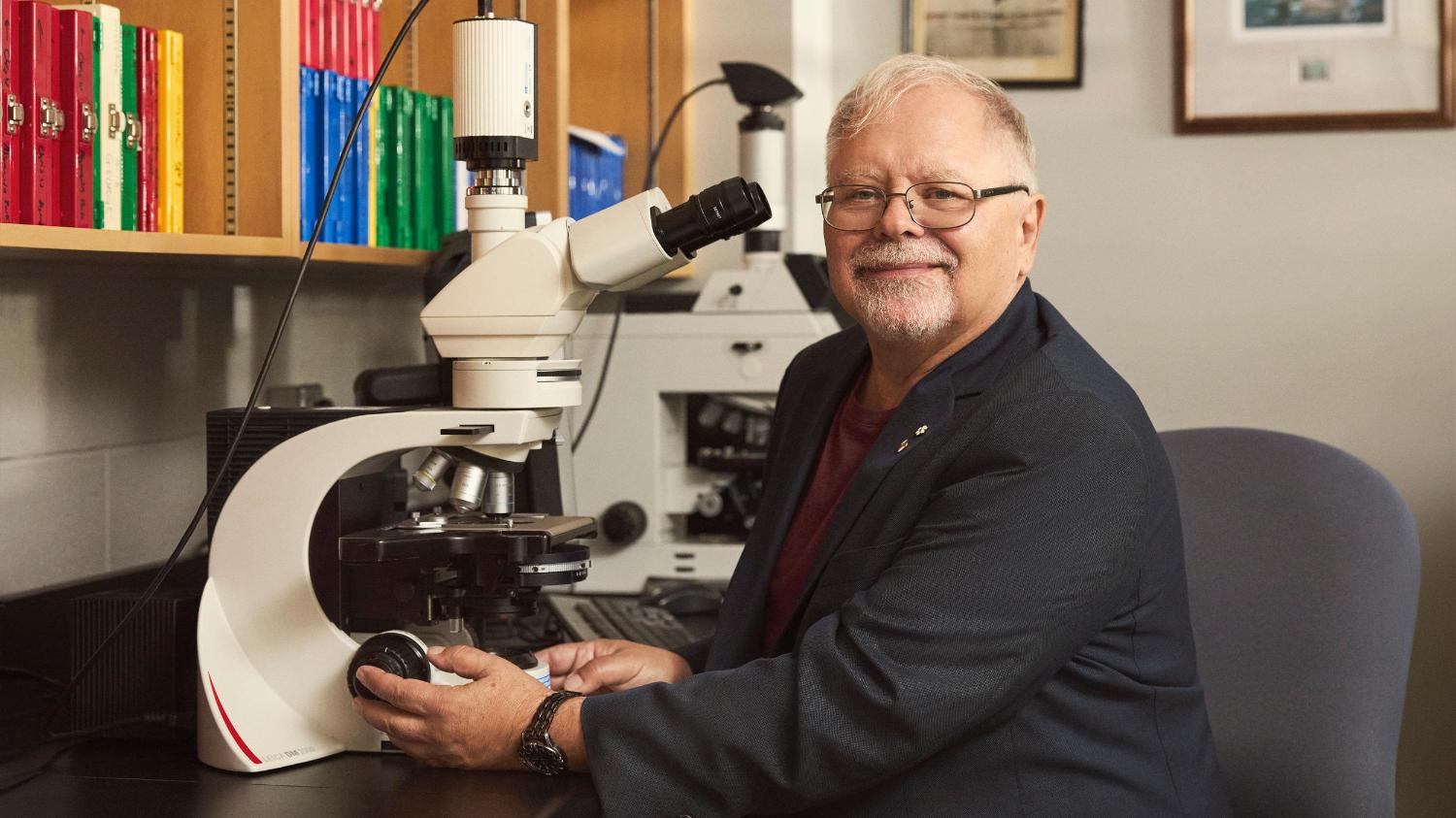
The Mohn Prize Seminar honor the Mohn laureate, Professor John P. Smol, with talks about Arctic environmental change, freshwater environments, and research related to the Arctic.
The entire seminar will be streamed on Panopto.
Opening of the Mohn Prize Seminar 2026 by Dag Rune Olsen, Rector, UiT The Arctic University of Norway
Mohn laureate, Professor John P. Smol:
Looking backwards but moving forward: Braiding information leveraged from lake sediments with Indigenous knowledge systems to address key environmental issues
One of the biggest challenges faced by environmental scientists is the lack of monitoring data at appropriate temporal and spatial scales. Without such data, it is difficult to determine if ecosystems have changed and, if so, when, to what degree, and why? Our retrospective “western science” approaches using lake sediments (i.e. paleolimnology) share many similarities to Indigenous knowledge systems, where a key focus often includes historical information on local ecosystems. This presentation will summarize some lessons we have learned by applying paleolimnology to address questions posed by our Indigenous partners. When combined with information provided by Indigenous knowledge holders, a strong case can be made for evidence-based remediation efforts and ongoing negotiations regarding reconciliation.
Professor Anders Schomacker, Department of Geosciences, UiT The Arctic University of Norway;
Lake sediments reveal postglacial sea-level change, glacier variations, and paleoenvironments in Svalbard, high-Arctic Norway
Lake sediment records from Svalbard contain a unique record of past environmental change. Here we use lithostratigraphy from proglacial lakes to reconstruct glacier variations and postglacial sea-level change. The lake sedimentary record combined with landform studies show glacioisostatic rebound due to the deglaciation of the Svalbard-Barents Sea Ice Sheet at the end of the last ice age. Organic geochemical compounds stored in the Holocene lake sediments show variations in Arctic temperature and precipitation patterns. Such paleoenvironmental reconstructions are much needed to understand modern climate change in the Arctic and to place it in a long-term context.
Associate Professor Dilli Prasad Rijal, The Arctic University Museum of Norway, UiT;
Life after ice: Post-glacial biodiversity trajectories in northern Fennoscandia revealed by sedimentary ancient DNA
Over the last 16,000 years, northern Fennoscandia was colonized by plants and animals after the retreat of the Scandinavian Ice Sheet. To track how these communities developed, sedimentary ancient DNA (sedaDNA) has emerged as a powerful palaeoecological archive, providing direct evidence of past communities. Here, I use sedaDNA to reconstruct post-glacial biodiversity trajectories from the Late Glacial into the Holocene, revealing rapid early establishment and long-term diversification. These records show how life responded to postglacial landscape and environmental changes, linking ecological dynamics to a transforming landscape.
Professor Sabina Strmic Palinkas, Department of Geosciences, UiT;
Environmental impact of historical copper mines on natural lakes: A case study from the Sulitjelma area, northern Norway
The Sulitjelma area in northern Norway hosts more than 20 copper-bearing ore bodies that were mined between 1884 and 1991. During this period, mine waste was disposed into the Langvatnet lake. Following mine closure, abandoned mine shafts have continued to generate acid mine drainage, posing an ongoing environmental threat to surrounding water bodies. The ongoing EU Horizon project ProCleanLakes assesses the current environmental status of the lake water, sediments, and biota and is developing an innovative mitigation approach. Together, these efforts aim to support effective remediation strategies and improve the long-term ecological health of the affected lake system.
Professor Gunhild Hoogensen Gjørv, Centre for Geopolitics, Peace and Security, UiT;
No Ref on the Ice: Climate research, Geopolitics, and the Erosion of Global Security
This talk explores how current geopolitical tensions are constraining the production and international sharing of climate change research. It highlights the implications of recent and proposed U.S. restrictions on climate-related research, data access, and scientific cooperation, and how these limitations undermine global understanding of climate risks. Framed within a security perspective, the talk argues that climate and environmental security are central to global stability, as climate change acts as a threat multiplier affecting human security, infrastructure, and geopolitical relations. At a moment when reliable climate knowledge is most urgently needed, growing political and strategic fragmentation risks weakening the research foundations of global security and resilience.
Professor Anders Schomacker, Department of Geosciences, UiT;
Closing remarks
Light refreshments