Ice ages, climate change and methane emissions in the Arctic
Welcome to NT-lunch seminar, the first in a series of three popular science seminars this semester.There will be served a "lunch-to-go" and we therefore need you to sign up for the event. Lunch is served 11.15 and the talk starts at 11.30. The seminar is open for everybody, join us!
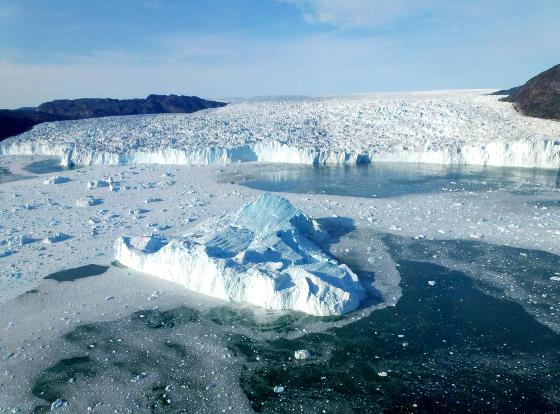
Foto: A.Hubbard
Large amounts of the powerful greenhouse gas methane are stored in the Arctic as gas hydrate. These exist within a narrow envelope of temperature and pressure conditions, small changes in which can destabilise the gas hydrates and trigger large scale methane release.
We propose that under the extreme conditions of past ice ages, storage of methane as gas hydrates was much more extensive. During these periods, vast ice sheets covered much of the Arctic. The high pressure, low temperature conditions beneath these ice sheets would have provided ideal conditions for the formation of thick, stable gas hydrate reservoirs.
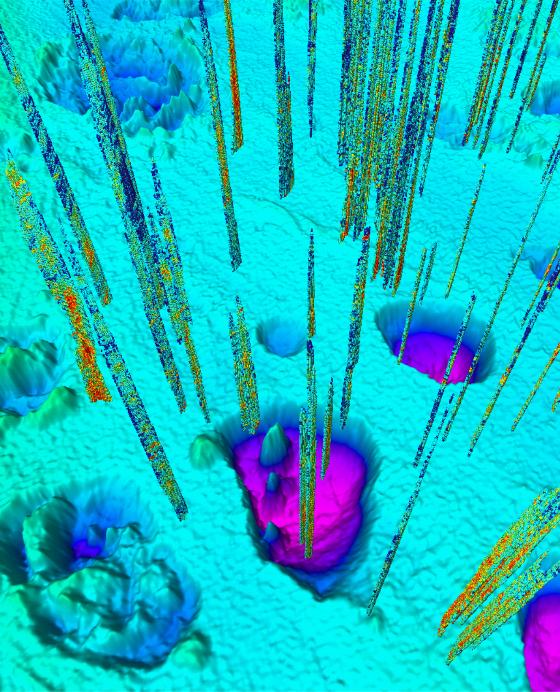
Foto: A. Faverola
We combine state-of-the-art marine geophysics with high-resolution ice sheet modelling to study long-term variability of methane storage and release, forced by glacial advance and retreat over the past 2.7 Ma. Our new understanding is crucial to improve the prediction of present and future greenhouse gas release from today’s Greenland and Antarctic ice sheets.
The talk will be given by Monica Winsborrow, researcher at Centre for Arctic Gas Hydrate, Environment and Climate (CAGE).