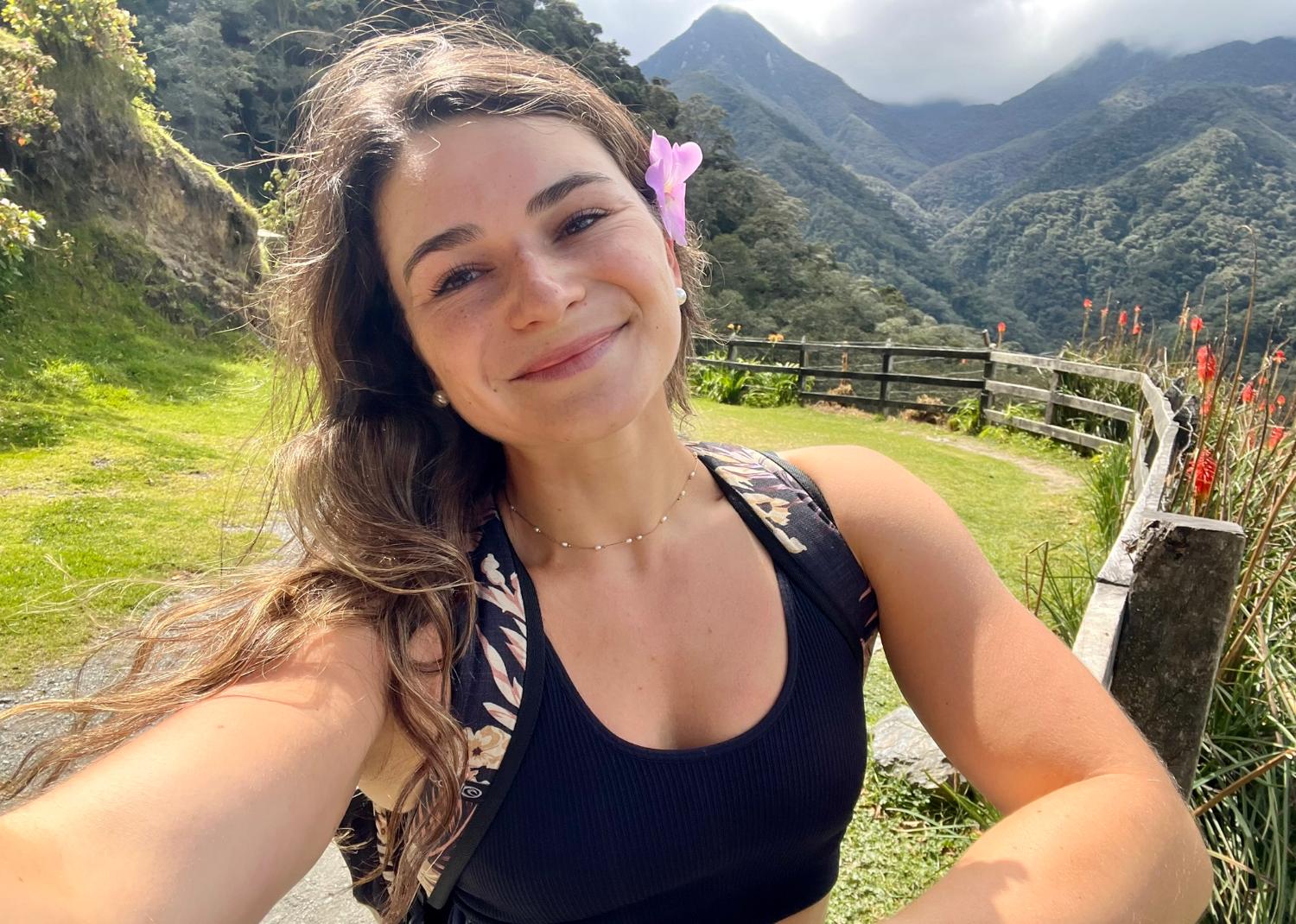
– The most rewarding aspect of the programme has been its diversity
Through the Joint Nordic Master Programme in Environmental Law (NOMPEL), Helena Wuehrer has developed a strong foundation in environmental law and gained an international perspective on the role of law in protecting nature. Now, a fresh graduate, she is eager to apply that knowledge to tackling pressing environmental challenges.
Facts
When she was studying for her master’s degree in law at the Paris Lodron University of Salzburg in Austria, Helena already knew that she wanted to dedicate her career to something meaningful and to something that would allow her to use her knowledge and skills to contribute to a positive change in the world.
Her passion for nature and environmental protection eventually led her to the Joint Nordic Master Programme in Environmental Law (NOMPEL), where students spend their first semester at Uppsala University in Sweden, their second semester at the University of Eastern Finland, and their third and fourth semesters at UiT The Arctic University of Norway.
Having recently graduated, she reflects on what first inspired her to study environmental law and the valuable experiences she gained through the two-year programme.
Why did you choose the Joint Nordic Master Programme in Environmental Law (NOMPEL)?
My motivation for choosing this programme stems from my passion for nature and travel. I have always felt most at home in nature, and from a young age I was drawn to exploring remote corners of the world. Over the years, I have been fortunate enough to experience beautiful rainforests and meet some of their indigenous communities, dive in vibrant coral reefs, and travel through vast regions of Africa, where I witnessed its remarkable wildlife.
Before visiting these places, I often had a certain image in mind of how they would look. But repeatedly, I was confronted with a different reality. Places that I expected to be untouched and thriving were often affected by pollution, environmental degradation, or the visible impacts of climate change.
These experiences increased my awareness of the environmental challenges our planet faces. Once that awareness is there, it becomes impossible to ignore. They motivated me to look for ways to contribute to environmental protection through my professional career, and NOMPEL seemed like a good starting point for that path.
How would you describe the academic content of the programme? What topics or areas of environmental law have you found particularly engaging or relevant?
I think the academic content is one of the programme’s greatest strengths. Its interdisciplinary and diverse nature allows students to gain knowledge across a wide range of environmental topics and to explore environmental challenges from different perspectives.
Personally, I found the courses on Marine Environmental Law, Indigenous Peoples Rights, and the Law and Policy of Biodiversity Conservation particularly engaging. These topics closely align with my interests and helped me better understand the complex relationship between environmental protection, governance, and social justice.
One of NOMPEL's unique features is that the students study in different Nordic countries. How has this international structure enriched your learning experience?
It has been particularly enriching for my academic studies, as each of the three countries offered a different academic environment, with its own teaching approaches and research focus areas.
What has your experience been like living and studying in Tromsø?
Living and studying in Tromsø has been a very rewarding experience. The beginning was challenging, as the coursework was demanding and I had to adjust to a new academic environment. At the same time, I was fortunate to explore the beautiful nature surrounding the city, which helped me find a good balance between my studies and spare time.
The university provides a great environment for meeting new people and building lasting connections. Tromsø itself is an international and vibrant city, offering a wide range of activities outside the university. One of the most unique aspects of living here has been experiencing both the Polar Night and the Midnight Sun.
What has been the most rewarding aspect of the programme?
The most rewarding aspect of the programme has been its diversity. From studying a wide range of topics to living in different Nordic countries, every semester offered new perspectives and experiences. Equally valuable has been the international community of students and scholars. The programme has allowed me to build meaningful friendships, expand my professional network, and learn from people with very different backgrounds and experiences.
How has the programme influenced your career goals or professional interests?
The programme strengthened my interest in environmental issues and reaffirmed my commitment to contributing to the protection of nature and its inhabitants. It has also inspired me to pursue a career in academia, where I hope to continue conducting research and collaborating with experienced scholars. I hope that one day, my research can contribute to meaningful solutions and have a positive impact on biodiversity conservation, environmental protection, and the advancement of Indigenous rights.