Md Asaf Ud Daula
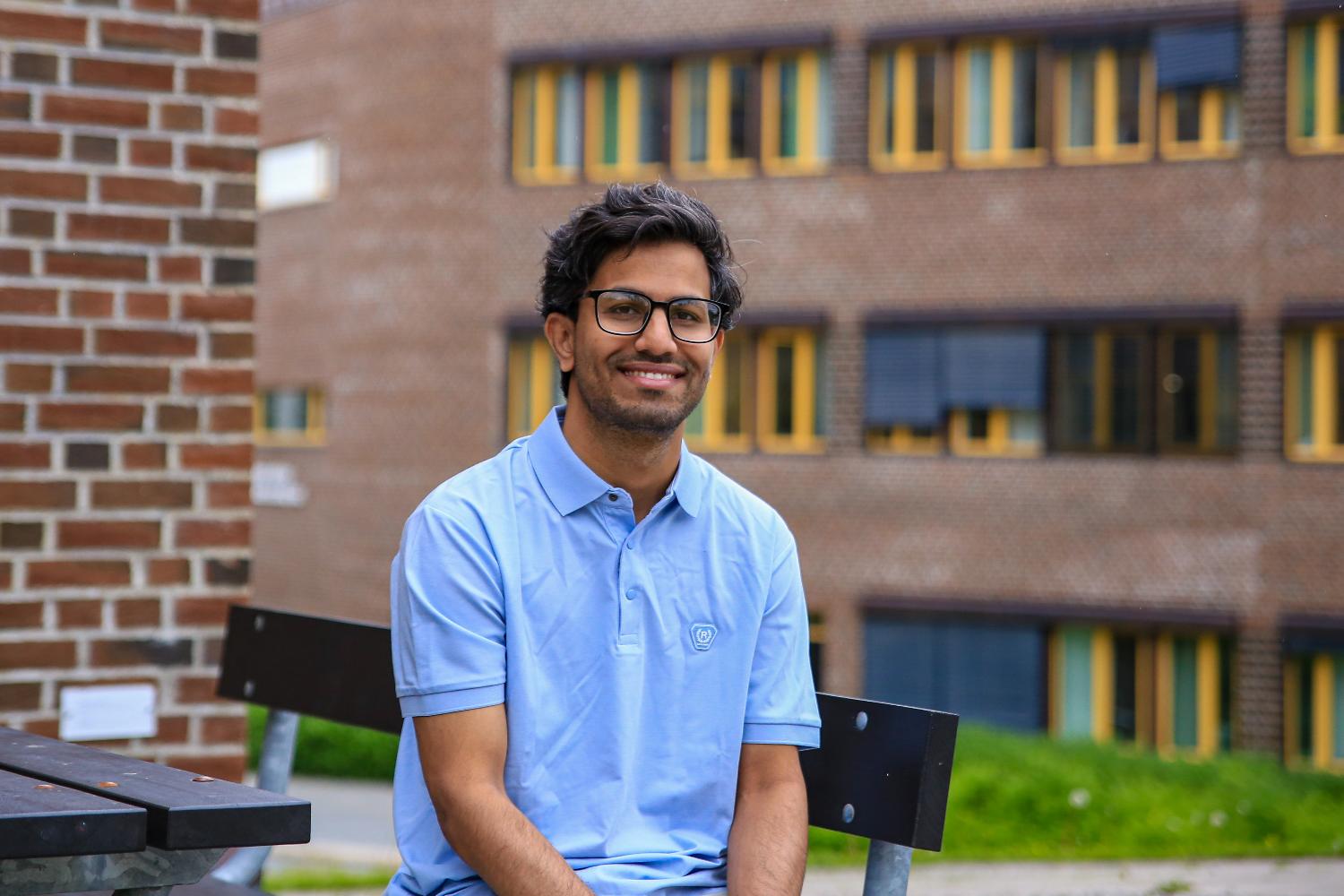
Having recently finished the Joint Nordic Master Programme in Environmental Law, Md Asaf Ud Daula reflects on his academic, cultural and personal experiences moving from South Asia to study at different institutions in Nordic countries and the Arctic.
Fakta
Asaf’s interest in law started at a very young age through his father, who served as a District Judge in Bangladesh. “I was inspired by his strong commitment to justice, integrity and public service,” says Asaf. Listening to his father talk about his experiences at work and his views on the law while growing up, ultimately became what motivated Asaf to pursue a legal career himself.
After completing a Bachelor of Laws (LL.B.) from BRAC University in Bangladesh, Asaf worked as a Research Associate at a law firm in his home country where he got experience doing legal research, drafting legal documents and summarizing landmark judgements. Some of his work included research on a public interest litigation challenging the confinement of death row prisoners in Condemn Cells and research on the disclosure of judges’ assets in Bangladesh.
Having worked as a Research Associate for a while, Asaf wanted to advance his legal expertise by doing a master’s degree in environmental law. His choice fell on the Joint Nordic Master Programme in Environmental Law (NOMPEL), a two-year master’s programme in which the first semester takes place at Uppsala University in Sweden, the second at the University of Eastern Finland and the third and fourth semesters at UiT the Arctic University in Norway.
What drew you to environmental law, and why did NOMPEL stand out among other master programmes you considered?
My interest in environmental law began during my LL.B. studies at BRAC University, Bangladesh. As part of an environmental law course, I worked on a coursework project about the Torrey Canyon oil spill, a landmark incident that significantly influenced the development of international maritime environmental law. While researching the case, I became fascinated by how major environmental disasters have shaped legal rules, institutions, and international cooperation for the protection of the marine environment. It ultimately motivated me to pursue a master's degree in environmental law.
When I came across NOMPEL, it immediately stood out from other programmes I was considering. What attracted me most was its unique structure, which allows students to study in Sweden, Finland, and Norway. Rather than learning from the perspective of a single country, I had the opportunity to experience different legal systems, academic environments and approaches to environmental governance across the Nordic region. Looking back, this has been one of the most valuable aspects of the programme and has greatly enriched both my academic and personal development.
Which courses or subject areas did you find particularly interesting or valuable, and why?
Several courses and academic experiences throughout NOMPEL have been particularly valuable to me. Among the courses, I especially enjoyed ‘International Economic Law and Green Transitions’ at the University of Eastern Finland and ‘Protection and Preservation of the Marine Environment at UiT the Arctic University in Norway. These courses provided me with deeper knowledge of environmental governance, sustainable development, and developed my interest in these fields.
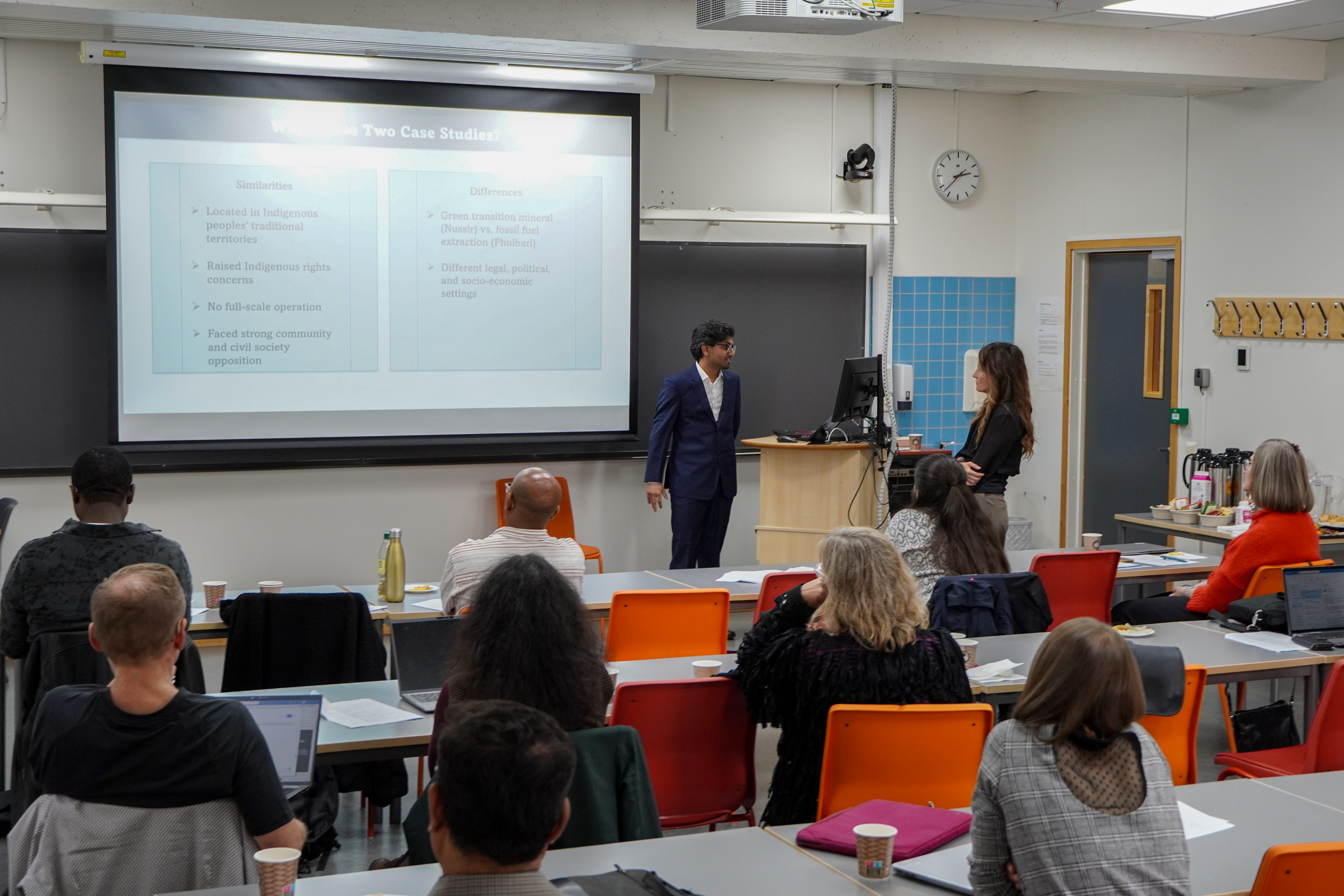
Beyond the classroom, one of the most valuable experiences of my master's journey was participating in the NORSIL seminar on Indigenous peoples' rights. Since my master's thesis focused on Indigenous rights in the context of mining projects, the seminar provided a unique opportunity to engage with these issues in greater depth. It was especially rewarding to exchange ideas with leading scholars, researchers and practitioners who have dedicated many years of their careers to Indigenous rights research. Listening to experienced scholars discuss their research, while also receiving feedback on my own work, was intellectually enriching. The discussions challenged me to approach Indigenous rights issues with greater nuance and to appreciate the complex social, cultural, environmental, and legal dimensions involved. More importantly, the experience strengthened my confidence as a young researcher and further motivated me to continue working in this field in the future.
One of NOMPEL's unique features is that students study in different Nordic countries. How has this international structure enriched your learning experience?
The international structure of NOMPEL has been one of the most rewarding parts of my master's journey. Academically, it allowed me to experience different teaching methods and academic cultures across Sweden, Finland and Norway. For example, at Uppsala University and UiT the Arctic University in Norway, many courses were built around seminars and discussions, whereas at the University of Eastern Finland, the teaching was more lecture-based. Experiencing these different approaches helped me become a more adaptable and independent learner.
The programme also gave me the opportunity to learn about environmental governance from different national perspectives. Studying in three Nordic countries allowed me to gain insights into their domestic legal systems and approaches to environmental protection, which greatly enriched my understanding of environmental law beyond a single jurisdiction.
Another highlight of the programme was the people. I had the opportunity to study alongside students from different countries and cultural backgrounds and to learn from leading scholars and researchers in the field of environmental law. These interactions actually made the learning experience much more engaging.
On a personal level, the journey was equally transformative. Coming from a developing country, moving to a new country every six months was initially challenging. However, it pushed me out of my comfort zone and helped me grow both personally and professionally. I became more confident, more communicative and more comfortable connecting with people from different backgrounds. Looking back, NOMPEL just did not provide me in-depth knowledge of environmental law but also helped shape me as a person and for that I am immensely grateful.
What has your experience been like living and studying in Tromsø?
Living and studying in Tromsø has been one of the most memorable experiences of my life. I have visited a few countries but I have never seen a place as beautiful as Tromsø. It is rare to find a place where mountains, fjords, beaches and the Arctic landscape come together so spectacularly. Before coming to Norway, I had only read about the Arctic in books and academic materials. Experiencing the polar night, the midnight sun, and the breathtaking Arctic environment firsthand has been both exciting and unforgettable. Having the opportunity to live and study here has made me feel incredibly fortunate.
Academically, Tromsø has been equally inspiring. I had the opportunity to work closely with experienced professors and researchers and to participate in seminars and conferences on topics such as Indigenous peoples’ rights and Law of the Sea. Conducting my master’s thesis at UiT in Tromsø was particularly rewarding, as it allowed me to engage with issues that are highly relevant to the Arctic region.
What I appreciate most about Tromsø is the balance between academic life and quality of life. Although it is a relatively small city, it has a vibrant international student community and countless opportunities to enjoy nature and outdoor activities. My time here has given me invaluable academic experiences, lasting friendships and memories that I will always cherish.
Are there particular sectors, organisations or areas of environmental law that you are interested in pursuing after graduation? How has NOMPEL helped prepare you for this next step?
Throughout my NOMPEL journey, I developed two major research interests: Indigenous peoples’ rights and the Law of the Sea. Studying in different academic environments and learning from experts in these fields inspired me to continue researching these topics in the future.
In the long term, I hope to pursue a PhD in areas related to these research fields and contribute greatly. I also aspire to work with international organisations such as the UNFCCC and ITLOS, which are at the forefront of environmental protection and ocean governance, at some stage of my professional career.
NOMPEL has played a significant role in preparing me for these ambitions. It gave me the confidence to believe that these goals are achievable. It helped me realise that I can contribute meaningfully to environmental law and governance, whether through research, international organisations or future academic work.