From music school to jazz, fusion, and teaching
Facts
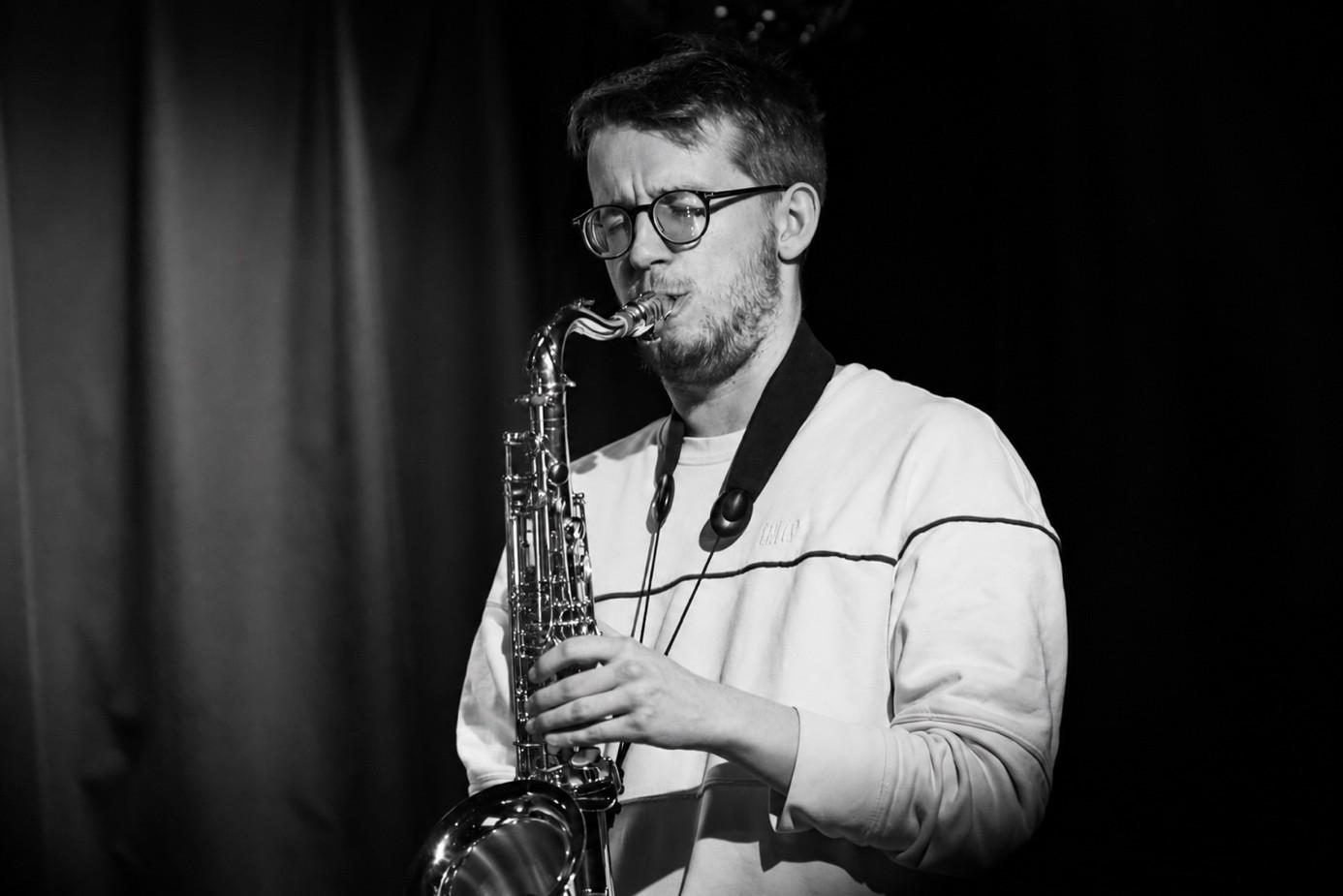
For Krister Gabriel Wollen, music has been a natural part of life ever since childhood. Growing up in a musical family, attending a school band, music school and music programme in upper secondary school, he knew from around the age of 12 that he wanted to work with music.
“Music has always been something I’ve been good at and really enjoyed, so for me, there was never really much of a question about studying anything else.”
Today, jazz and fusion are the styles closest to his heart. At the same time, he greatly appreciates the opportunity to explore a wide range of musical expressions at the Music Conservatory.
“During my studies, I’ve played in saxophone ensembles, sung in choirs and performed in orchestras. It’s great to be able to take part in projects across different programmes and explore other sides of music, rather than focusing only on your main instrument.”
– It was a natural choice
Krister was born and raised in Tromsø and was already familiar with both the environment and several of the teachers at the Music Conservatory. He had also attended the Conservatory’s talent programme before starting his bachelor’s degree.
“The transition into the degree programme was therefore very natural. I also auditioned for several universities in Norway and was accepted by a number of them, but in the end I chose the Music Conservatory in Tromsø.”
He has no regrets about that decision.
“I knew more about what I was getting into here, I knew the environment, and I knew it was a place where I could develop.”
An inclusive environment
The social environment is one of the things he values most about the Music Conservatory.
“Konsen is very inclusive and supportive. We’re not the largest institution, but I actually see that as a major advantage. Everyone knows everyone, and it’s easy to get to know people across different instruments and programmes.”
He also finds that the students are good at supporting one another.
“Everyone is given room to be themselves, and we’re good at looking out for each other and showing up to support one another at concerts and projects.”
The close relationship also extends to the teachers.
“The teachers see you and give you close follow-up. At the same time, we have a very highly skilled teaching staff, both in instrumental studies and theoretical subjects.”
Performed with Jarle Bernhoft
The project weeks, where students collaborate with established artists, have been among the highlights of his time as a student. Artists who have visited the Music Conservatory include Jarle Bernhoft, Beady Belle, Ole Børud and Hedvig Mollestad.
“We spend an entire week with the artist, learning and performing their music together. It’s very motivating to play with professional artists and get an insight into how they work.”
One particular memory stands out from the project with Jarle Bernhoft.
“I got to play a two-part flute arrangement with him during the concert, and afterwards Jarle gave me a high-five. It might seem like a small thing, but it’s one of those moments you remember.”
Wants to combine teaching and performing
After completing his studies, he would like to work at the music programme in Tromsø. At the same time, he wants to continue working as a performing musician and sound engineer.
“I’ve actually always imagined myself becoming a teacher. Being able to teach music to children and young people who are motivated and interested is something I find very rewarding.”
His goal is therefore to combine teaching with his own projects, concerts and other musical work.
– You don’t have to be a finished musician
For anyone considering applying to a music programme, he has some important advice:
“You don’t have to be a ‘finished musician’ when you start at a conservatory. You’re not expected to be a world-class musician when you begin, and that’s not the point. What matters most is that you’re motivated to learn and develop.”
At the same time, he believes you have to be willing to put in the work yourself.
“If you’re curious, open to feedback and willing to challenge yourself, you can develop tremendously. You have teachers, fellow students and a great environment around you, but ultimately, you’re the one who has to put in the work.”
“Nothing comes for free. You have to take responsibility for your own development and keep working on what you want to become good at. I think that’s actually one of the most important things you learn from a music education.”