What happened to medieval religious art after the Reformation—and what can damaged objects tell us today? Join us for an introduction to a project that brings together art, history, and cutting-edge science to better understand our shared cultural heritage: POLYCHROME.
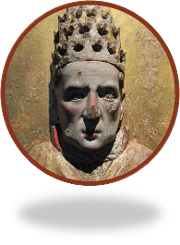
The POLYCHROME project explores a fascinating and little-known chapter of Nordic history: the survival of medieval painted wooden artworks that were altered, broken, or partially destroyed in the centuries following the Reformation. Many of these objects still exist, but their stories are often hidden beneath repairs, restorations, and the passage of time.
In this talk, we invite you to discover how researchers combine history, science, and advanced imaging technologies to uncover traces of the past. By examining sculptures, altarpieces, and panels in new ways, the project sheds light on why and how these objects were damaged—and what that reveals about changing beliefs, practices, and attitudes in Scandinavia.
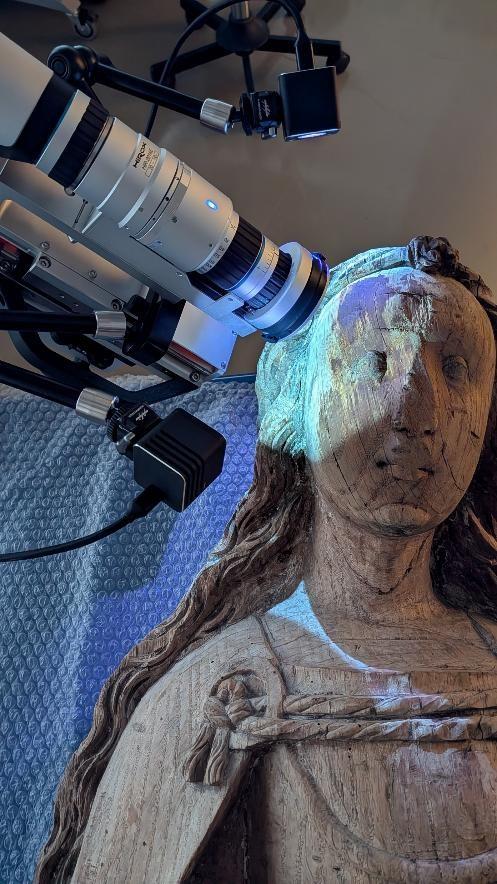
The work in the exhibition "Ecclastastical art" at the Arctic University Museum of Norway considers how medieval devotional images have been selectively mutilated prior to entering the Tromsø collection.
Join us for an engaging introduction to a project that brings together art, history, and cutting-edge science to better understand our shared cultural heritage. Professor Noëlle Streeton, Dr Jacopo Melada and Dr José Tapia will present the project, POLYCHROME - “The Survival of Damaged Medieval Polychromed Heritage in the Nordics”. The presentation will include demonstrations of analytical techniques that are essential for gathering data from paint, gilding and wood.
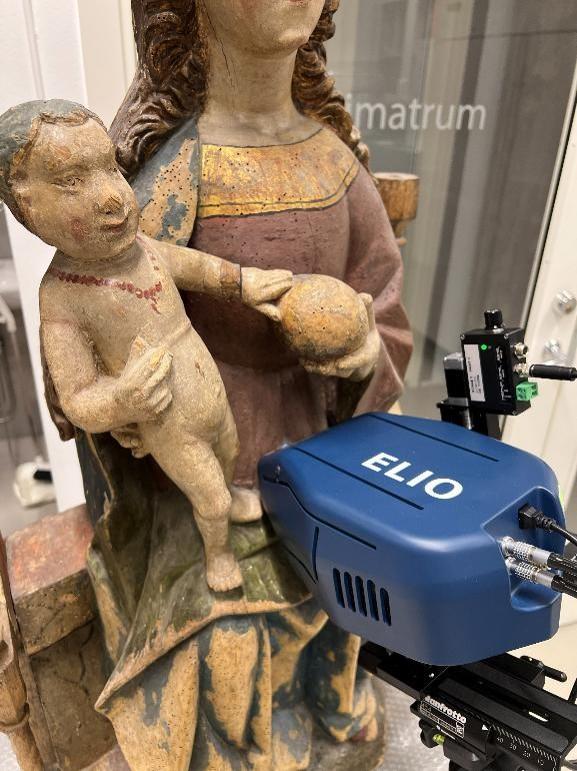
POLYCHROME research is based at the University of Oslo and funded by the European Research Council.
Find more information on the POLYCHROME project here.
The lecture will be held in English and is held in the exhibition "Ecclastastical art".
The event is a part of the “Wednesday at the museum” series, featuring extended evening hours and monthly events.
TIME Wednesday April 15 at 6PM-7PM (The museum is open from 10am)
PLACE The Arctic University Museum of Norway, Lars Thøringsveg 10
ENTRANCE Adults NOK 130,- / senior citizens and students NOK 100,- / UiT-students, children and youth under 18 years have free entrance. The ticket provides access to the entire museum from 10 AM to 9 PM on the same day.
Do you visit the museum often? A Museum Pass (NOK 500) gives free admission for one year for you and one guest of your choice (you can bring a new guest for each visit, of you would like). The Museum Pass is valid for one year at the Arctic University Museum of Norway, the Polar Museum, and MS Polstjerna (open during the summer months).
Når: 15.04.26 kl 18.00–19.00
Hvor:
Norges arktiske universitetsmuseum
Sted: Tromsø
Målgruppe: Ansatte, Studenter, Gjester / eksterne, Inviterte, Enhet
Kontakt: Siri Asphaug Holmøy
E-post: siri.a.holmoy@uit.no