

Laureate 2026
Professor John P. Smol
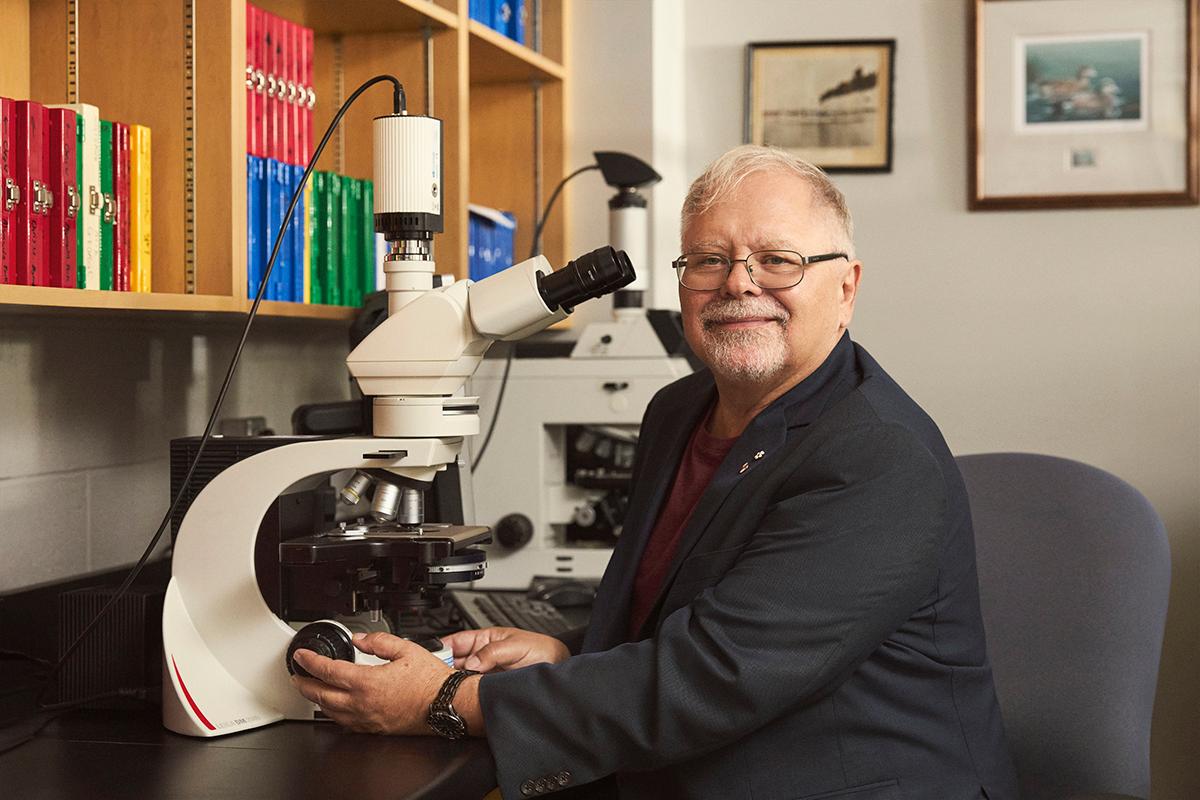
The awarding of the Mohn Prize to Smol is more than an academic recognition—it is a tribute to a method that unlocks the past, enabling us to navigate the future.
Smol is a scientific detective. His crime scene: Arctic lakes. His clues: microscopic remnants of life, preserved in sediment layers at the bottom of lakes. By reading these layers—some hundreds of thousands of years old—like the pages of a history book, he reveals how ecosystems have responded to changes over centuries.
His work has provided methods to identify early warning signs of ecological disruptions. By studying diatoms and other microscopic organisms, he can precisely document when a lake became more acidic, when pollution first appeared, or how aquatic life changed as the climate warmed.
This is not just academic curiosity—it is knowledge with immense practical value. Smol’s research has delivered concrete findings that have led to action against acid rain and pollution, with impacts far beyond local communities. He provides decision-makers with what they need most: a solid, scientific foundation for action.
Smol has a unique ability to bridge the past and the present. He shows us that lakes have a memory. This memory is our best reference for assessing the changes we see today. Without a clear picture of what an ecosystem looked like before industrial impact, we are fumbling in the dark when setting goals for management, restoration, and conservation.
When Prime Minister Jonas Gahr Støre presented the prize to Professor John P. Smol today at Arctic Frontiers, it was because Smol has shaped his field and inspired scientists worldwide. He has shown us that the small, often overlooked lakes of the Arctic are sensitive archives of the planet’s health.
His work also carries a profound societal dimension. The knowledge he generates informs national and international negotiations. It is relevant to discussions on sustainable development, Indigenous rights, and the management of the fragile northern regions
The Scientific Committee wrote in its recommendation:
We highly recommend Dr. John P. Smol as the 2026 Mohn Prize laureate for his academic leadership in palaeoecological studies in Arctic lakes; developing multiple research programmes to study lake water quality and ecology under ongoing environmental change; pioneering a broad spectrum approach to study long-term changes to lake systems, including pollution, climate change and biodiversity loss; and founding the Palaeoecological Environmental Assessment and Research Laboratory (PEARL). He continues to encourage students and research scientists to study global environmental change, primarily focused on changes in Arctic lake ecosystems.
The committee recognises the importance of his groundbreaking contributions to the detection and amelioration of human impacts on Arctic freshwater ecosystems. Dr. Smol’s research has contributed significant and time-tested knowledge about how we understand nature and the dynamic effects of external drivers in freshwater and terrestrial ecosystems. His seminal contributions to more than 700 papers and more than 20 books continue to be highly influential. Dr. Smol’s palaeoecological studies of Arctic lakes, undertaken through multiple research programmes on lake water quality and ecology under environmental changes, confirms his world-class leadership.
The future of freshwater and terrestrial ecosystems in the Arctic is highly uncertain and depends largely on the trajectory of Earth’s warming climate and human activities involving contamination and high stress on the environment. To understand and respond to these changes, we need indicators that can measure environmental shifts in freshwater and terrestrial ecosystems, much like a thermometer reveals temperature. Dr. Smol’s groundbreaking research has provided exactly this: tools for detecting environmental change in and around Arctic lakes and rivers, and for understanding how these changes affect wildlife. By developing methods to identify early signals of ecological disruption, Dr. Smol’s work makes it possible to assess the ongoing impacts of climate change, contaminants, and human activities. His research has not only delivered tangible, evidence-based remediation efforts but has also informed national and international discussions, including negotiations on reconciliation and sustainable development in the Arctic. As the founder of the Palaeoecological Environmental Assessment and Research Laboratory, he has created a powerful platform for studying past environments that provides a baseline for future development.