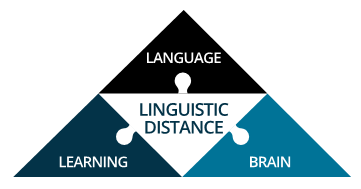
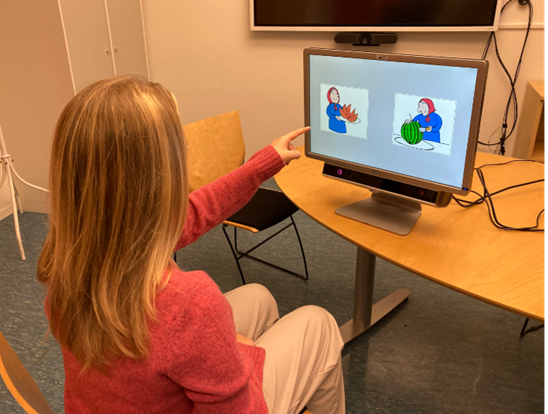
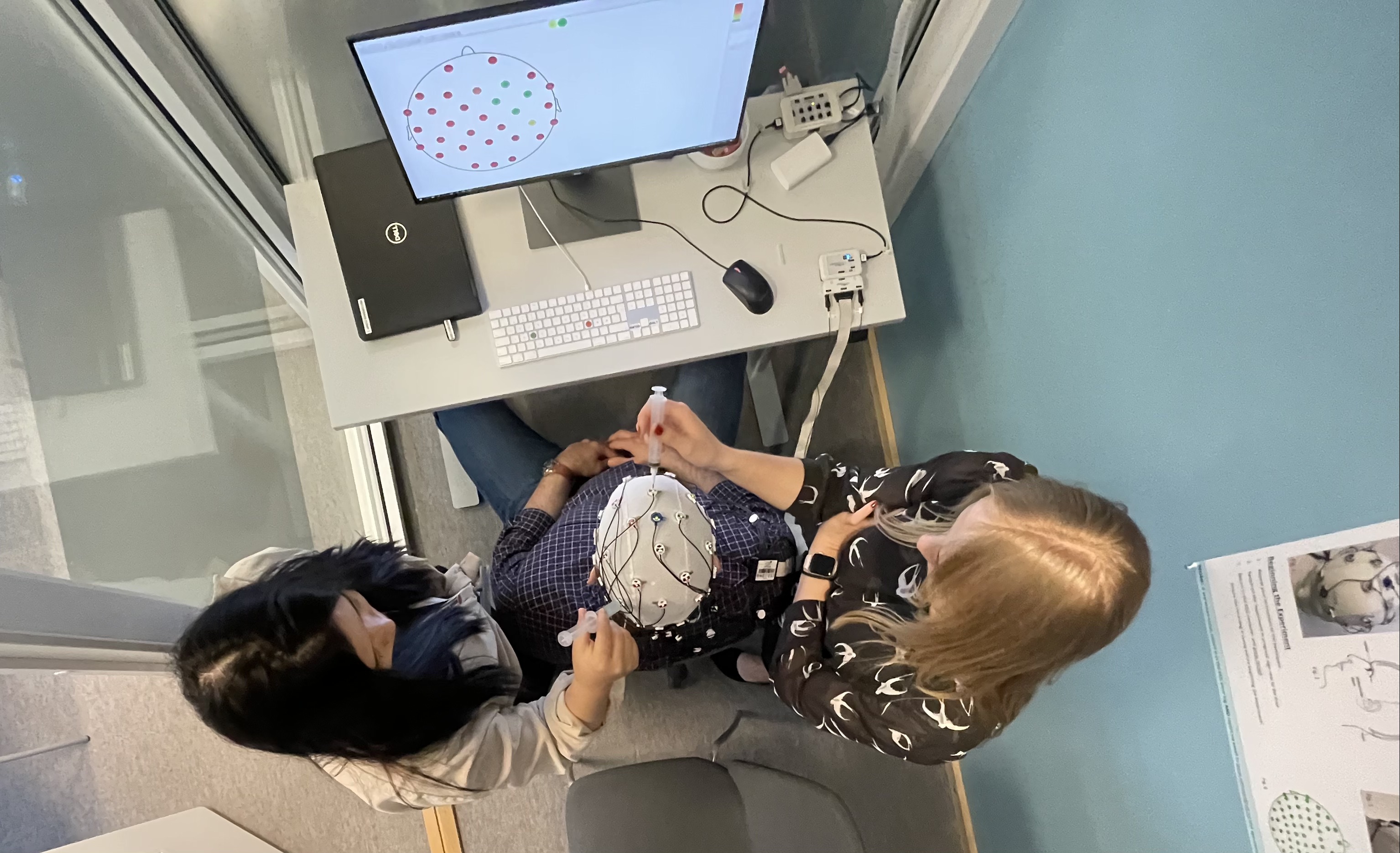
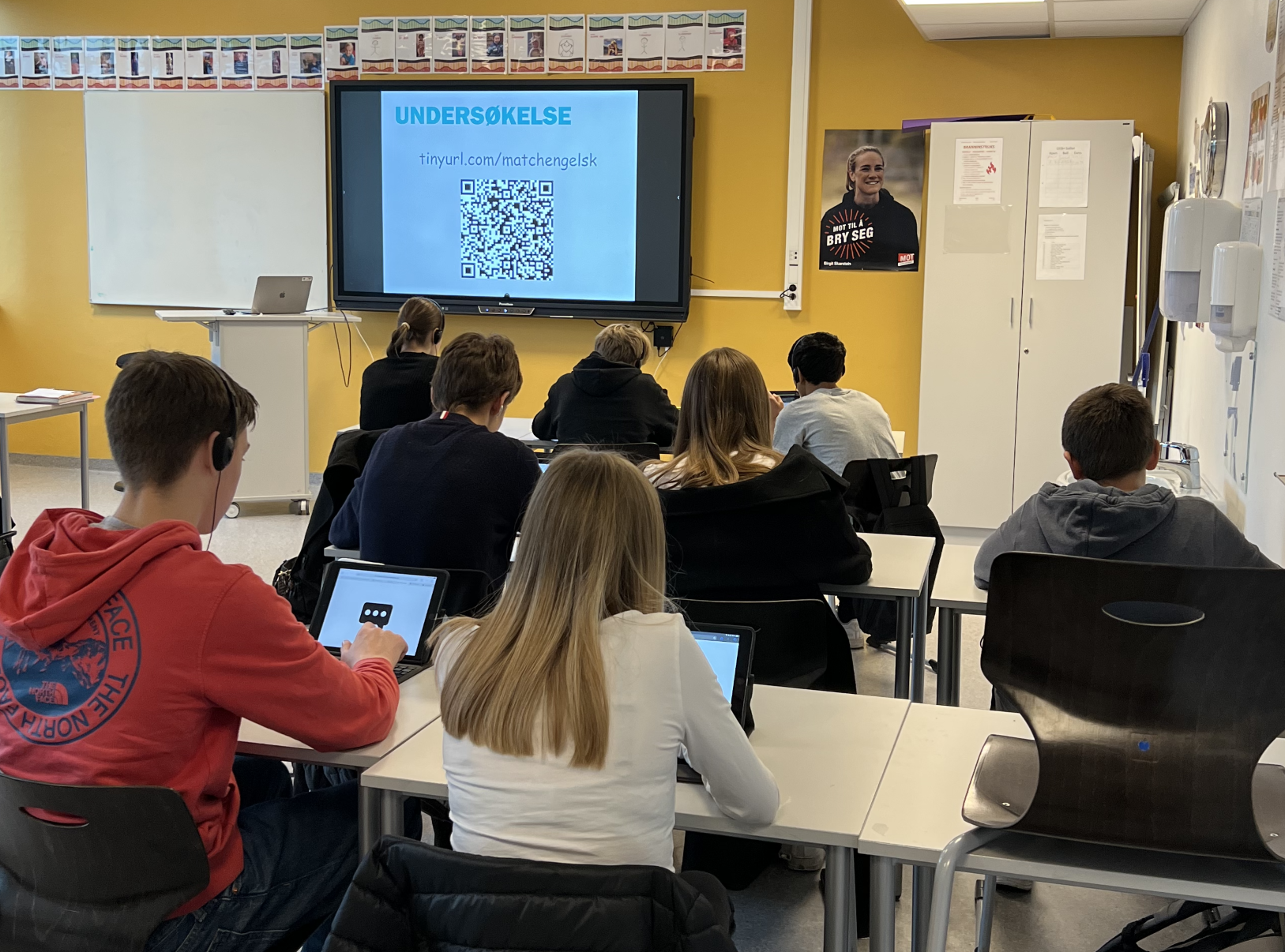
Giela, vuoiŋŋamaččaid ja oahppama guovddáža (C-LaBL) dutkan guorahallá mo máŋggat gielat ovttasdoibmet vuoiŋŋamaččain. Ovttasbarggu bokte rastá gielladieđalaš teoriijaid, nevrodiehtaga ja giellaoččodeami/-prosesserema, mii čalmmustahttit máŋggagielatvuođa čuozahusaid – guoskevaš gielaide, vuoiŋŋamaččaide main leat dat gielat, ja máŋggagielat oahppamii ja oahpahussii.
Seniordutkit: Jason Rothman, Vincent DeLuca; Professor II:Jubin Abutalebi
Oahppan
Seniordutkit: Roumyana Slabakova, Anne Dahl, Øystein A. Vangsnes; Professor II:Victoria Murphy
Lahtut
Guovddáža jođihangoddi
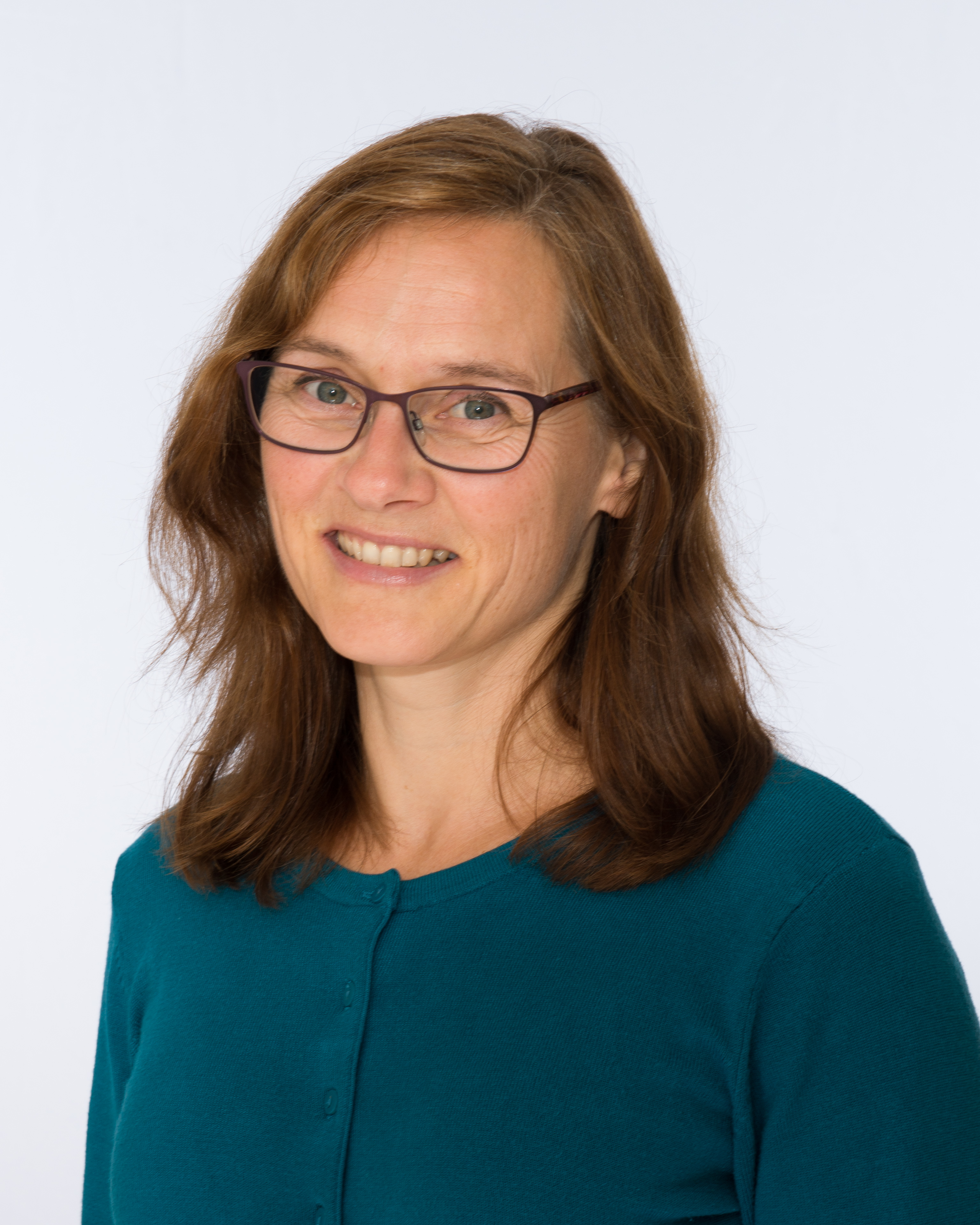
Vincent DeLucaProfessor
Vincent DeLuca – Professor
Research interests:
My research primarily focuses on how different aspects of bilingual language experience variably impact brain structure, function, and several cognitive processes. I study how these neural and cognitive adaptations dynamically shift over time and with changes to patterns of language use.

In short, I’m interested in first, second, third and multilingual acquisition, syntactic variation in adult and child language, language attrition/heritage languages, and especially how the languages of multilinguals affect one another.
My background is mainly within syntactic theory and monolingual first language acquisition. For my PhD, I investigated the structure of the Norwegian noun phrase, as well as how it is acquired. I collected a longitudinal corpus with three monolingual children between the ages of 1;9-3. In the study I accounted for the semantics, syntactic structure and the prosodic characteristics of early uses of articles and determiners. My main focus was on the phenomenon known as double definiteness. Following on from this, I worked a lot on word order variation, specifically on what determines the choice of word order when such variation is permitted, and how this is acquired. This included work on subject and object shift, double objects, and possessives, which in Norwegian may be pre- or postnominal. Many of these studies were based on elicited production data.
In recent years, I have expanded my work on the acquisition of noun phrases and word order variation to bilingual acquisition and heritage languages, in addition to continuing my work on monolingual children and adults. A lot of my work on multilinguals has focused on how structural similarity may result in crosslinguistic influence, and how it may be a factor not only in language acquisition, but also in heritage languages and language attrition. For example, I have studied subject shift and object shift in Norwegian heritage speakers in the US and L2 learners of Norwegian.
In the future, I want to continue working on multilinguals, including second and third language acquisition and heritage language more generally. So far my studies of heritage languages has been based on the elderly speakers in the Corpus of American Nordic Speakers (CANS) and on various bilingual child language corpora. Thus, so far I have worked with very young and very old heritage speakers. In the future my ambition is to study heritage speakers of varying ages. I am also planning a project on the effect of the word order similarities between English and Norwegian in different populations, including heritage speakers of different ages.
Organizer: Jenna Conklin Time: Thursdays 12:15-13:00 If you want to present at the Lunch Seminars, contact Jenna Conklin.
Spring 2026
JUNE 11TH
Jenna Conklin TBA
JUNE 4TH
Øystein Vangsnes TBA
MAY 28TH
Nina Hagen Kaldhol TBA
MAY 7TH
Natalia Mitrofanova TBA
APRIL 23RD
Yulia Rodina TBA
APRIL 16TH
Teija Waaramaa (University of Vaasa) Emotion in voice
MARCH 26TH
Leena Maria Heikkola (UiT) & Jonas Yassin Iversen (University of Inland Norway) Sustaining National Minorities in Education: A Project Presentation
Abstract: The NAMED project (Sustaining National Minorities in Education: Kven/Norwegian Finnish and Forest Finnish Experiences and Needs in Mainstream Schools) aims to assess the current state of teaching about and for the Kven/Norwegian Finnish and Forest Finnish national minorities in mainstream education in Norway. The project’s point of departure is the Norwegian Truth and Reconciliation Commission’s documentation of the devastating consequences of harsh assimilatory policies towards the national minorities Kvens/Norwegian Finns and Forest Finns. According to the Commission, the national minorities continue to experience discrimination, in part, due to a lack of knowledge about them. In response to this, the NAMED project produce knowledge of the state of education about and for national minorities in mainstream education, as education is a vital actor in addressing the need for more knowledge about national minorities in the general public.
MARCH 12TH
Rasmus Sinn (remote from Frankfurt) Study planning - ERP signatures of grammatical gender processing in German L1 reading
Abstract The retrieval of grammatical gender during reading remains underdetermined and largely absent from models of lexical access. Important support for a dual-route mechanism, where gender is thought to be partly accessed sub-lexically from form-based regularities of nouns, comes from even-related potential (ERP) studies conducted in Spanish and Italian. These are languages considered to be transparent with regard to form-to-gender mappings on nouns. However, the cross-linguistic generalization to more opaque languages is unclear. Thus, in this study we attempt to replicate the ERP findings from previous experiments with German, a semi-transparent language when it comes to gender. We plan to visually present native speakers with German sentences word-by-word while recording their electroencephalogram (EEG). Sentences will include grammatical gender violations on article–noun pairs and nouns will vary on their ending-to-gender transparency. In this talk, I will present the details of our experimental design and stimuli to get some feedback on our choices. Additionally, we plan to conduct a similar future study in Norwegian, a language that has been generally described as displaying (almost) no gender transparency. For this, it will be helpful to discuss cross-linguistic differences between German and Norwegian, which we should then carefully consider for a comparable and informative study design.
FEBUARY 26TH
Katie Sendek Bilingual experience changes linguistic prediction in surprising ways
Abstract Linguistic prediction has been reliably seen to enhance processing in monolinguals, but has been highly inconsistent for bilinguals. Given that the majority of previous studies have looked at these effects only between monolinguals and bilinguals in their L2, these mixed findings may have been due to conflation of different types of experience crucial to linguistic prediction. Here, I investigated two dissociable dimensions of experience to assess their impact on the neural effects of prediction: target language knowledge (TLK) and dual language experience (DLE). The results showed differential effects of these two types of experience, indicating the importance of accounting for experiential differences both between and within groups.
FEBUARY 12TH
C-LaBL leadership C-LaBLPlans for Spring 2026 and Research Days Discussion
Autumn 2025
DECEMBER 8TH - SVHUM B1004
Multilingual Musings team: Denise Amankwah (University of Essex), Anastasiia Ogneva (UiT The Arctic University of Norway), Teresa Poeta (University of Essex), Colin Reilly (University of Stirling), Divyanshi Shaktawat (UiT The Arctic University of Norway) Exploring terminologies and methodologies for researching multilingualism
NOVEMBER 20TH - SVHUM B1004
Peter Svenonius What is a word?
OCTOBER 30TH - SVHUM B1004
Antti Saloranta Kventity – research on Kven phonetics and identity
OCTOBER 16TH - SVHUM C1004
Jenia Gutova Berber languages and linguistics: overview of features and unresolved questions
SEPTEMBER 25TH - SVHUM B1004
Jakub Przybył The foreign language effect on self-referential bias in bilinguals: Study design
SEPTEMBER 11TH - Admin Workshop - TEO H1 Aud. 2
Joe Halsør Mini-workshop on administrative tasks. This seminar is reserved for C-LaBL members.
Spring 2025
JUNE 5TH - B1004
Jade Sandstedt Multilectal influence on reading: Language, Brain and Learning
MAY 15TH - B1004
Camilo R. Ronderos The social dimension of mindreading: Developmental evidence for the role of social categorization during utterance interpretation
The C-LaBL Guest Lecture Series invites outstanding researchers from all over the world approximately once a month.
Organizers:Divyanshi Shaktawat, Anders Gabrielsen, Anne Mette Sunde Time: 14.15 - 15.45 (unless mentioned otherwise) Location: see below & online (subscribe to our newsletter for links)
Autumn 2025
AUGUST 27TH - Phonology Group- SVHUM A2021, 14:00 CEST
Stefan Rabanus AlpiLinK (Alpine Languages in Contact)
Stefan Rabanus from the University of Verona will give a presentation of theAlpiLinKproject/database.
AlpiLinK (Alpine Languages in Contact) is a project for the documentation, investigation and promotion of the Germanic, Romance and Slavic dialects and minority languages spoken across the Alpine regions of Italy.
SEPTEMBER 17TH - Methods Workshop - SVHUM E0101, 14:14 CEST
Abstract: Compared with adults, children are sharply limited when it comes to many intellectual activities (math, science, art) or cognitive abilities (memory, attention, social inference). Nonetheless, they are strikingly more successful at learning language. The question of why is one of the oldest in cognitive science and among the most hotly debated. I present recent behavioral, neurological, and computational results based on millions of subjects that begin to fill in the missing parts of the puzzle, suggesting a radically different picture of how language learning changes with age.
Spring 2025
FEBRUARY 6TH - Brain domain - SVHUM E0101
Guillaume Thierry (Professor, Bangor University) Bridging the Syntactic Divide: How Language Distance Shapes Bilingual Minds
Abstract: Linguistic distance profoundly influences how bilinguals process and represent language at various levels and, particularly, syntax. This talk explores how syntactic distance shapes bilingual cognition, drawing on evidence from French-English, Polish-English, Welsh-English, and Chinese-English bilinguals. French-English bilinguals have different uses for the present perfect and the passé composé—forms that are formally equivalent but functionally distinct— and they display separate syntactic representations for these constructions. Eye-tracking results reveal that grammatical violations in English sentences fail to elicit the expected reading time increases due to interference from passé composé, since literal translations in French would be correct (Skałba & Thierry, in prep). Welsh-English bilinguals exemplify how abstract syntactic rules transfer anomalously across languages. The Welsh soft mutation rule, absent in English, can affect how anomalous words of English are processed, depending on whether they follow Welsh mutation rules. This transfer occurs independently of phonological overlap (Vaughan-Evans et al., 2014). Furthermore, the canonical Adjective-Noun word order of English and Welsh can co-exist in the mind of Welsh-English bilinguals tested only in English as shown by variation of the variations of the N200 (Sanoudaki & Thierry, 2014; 2015). Chinese-English bilinguals showcase an extreme case of linguistic distance since grammatical tense does not exist in Mandarin Chinese. Despite explicit mastery of English tense rules, Chinese individuals fluent in English fail to process tense-conveyed temporal differences in real time, as shown by the absence of expected N400 modulations of event-related potentials (Li et al., 2018; 2023). Together, these findings reveal how linguistic distance modulates syntactic processing in bilinguals, influencing representations and transfer. This work may have broad implications for second-language acquisition, bilingual education, and our understanding of cognitive flexibility in bilinguals.
MARCH 26TH - AcqVA Lab WORKSHOP
Ian Cunnings (Associate Professor, University of Reading) Individual differences in bilingual sentence processing
APRIL 24th - Learning Domain
Nils Jaekel (Associate Professor, University of Oulu) Title to be announced.
May 22ND - Language Domain
Jennifer Culbertson (Professor, University of Edinburgh) Artificial language experiments across populations
SEPTEMBER 15-16TH - Methods for Online Language Research
C-LaBL is proud to host the workshop "Methods for Online Language Research" with Research Associate ProfessorJoshua Hartshorne from the MGH Institute of Health Professions (USA).
Workshop Part 1: Rethinking your research for the online world The biggest challenge for most researchers attempting to do their research online is that the standard, tried-and-true experimental paradigms are often ill-suited or outright impractical. On further consideration, this is not surprising: our standard paradigms have been optimized over the last 150 years to the affordances of the in-person university laboratory. The online world has very different affordances, and indeed the most impactful online studies have looked very little like in-lab studies. Thus, this workshop is not about how to run established laboratory paradigms online, but how to use online studies to answer your research questions. The morning session will look at innovative online studies in order to provide inspiration. The afternoon session will be a hands-on "ideathon" in which you workshop research ideas and get feedback.
Both sessions will address both paid participants (e.g., through MTurk or Prolific) and volunteer citizen science methods, as well as the pros and cons of each. We will also consider studies with adults, with children, with clinical populations, with cross-cultural populations, and even some neuroscientific methods (warning: the latter remain mostly aspirational).
Workshop Part 2: Advances in online methods, with jsPsych and Pushkin Options for stimulus presentation and data-collection online keep getting better. An example is an explosion of recent work using webcams to do sophisticated eye-tracking experiments. The morning session will review recent research on data-quality, including timing of stimulus presentation, collecting reaction times, running eye-tracking experiments, calibrating audio, etc. We will also cover trips and pitfalls that snare the unwary experimenter.
The afternoon session will focus on jsPsych (and its companion project, Pushkin). Why use jsPsych when there are increasingly good drag-and-drop options for running online studies (e.g., Gorilla). The answer is, in a word, flexibility. The most interesting studies (in the opinion of the presenter) cannot be run online using Gorilla or other commercial options. There is a learning curve with jsPsych, though, so we will discuss under what conditions and for what studies it is worth the up-front investment. Depending on time and interest, we may also do some compare-and-contrast with other options, like Empirica or PsychoJS.
For both sessions, we will make things as concrete as possible by discussing actual research proposals and ideas, so audience members are encouraged to come with research ideas to get feedback on feasibility, consider the usefulness of jsPsych, etc.
NOVEMBER 11TH - Practical workshop on trauma-informed approaches to research and teaching
The large-scale resettlement of Ukrainian refugees across Europe has drawn growing research interest from linguists, sociolinguists, sociologists, and educators. Yet, in most cases, neither researchers nor educators have specialized training in working with populations who may have been exposed to traumatic events. This gap is significant, as psychological trauma can profoundly affect learning, communication, and participation.This practical workshop comprises three sessions focusing on trauma-informed teaching, trauma-informed research, and self-care/burnout prevention when workingwith individuals impacted by significant stress or trauma. The workshop will be led byAnna Lenchovska, a Ukrainian psychologist specializing in trauma-informed education and research.The workshop will be delivered in English and is open to faculty, students, practitioners, and community partners who work with displaced or war-affected communities.
This event is supported by NordForsk grant to the LINC project (Project No 191524) and the Trond Mohn Stiftelse grant to the Center for Language, Brain & Learning (C-LaBL), project number TMS2023UIT01.
NOVEMBER 27-28TH - Issues in Phonological Typology
Virtually all phonological theorising references phonological typology in some respect. For example, cross-linguistic tendencies are routinely invoked in support of claims about markedness and the constraint set. At the same time, there remain major divides in the field with respect to evidential and explanatory standards. Researchers often operate under distinct formal assumptions about levels of representation, the nature of phonological alternations, and the relationship between phonetics and phonology. A persistent question concerns how well a theory can accommodate only and all the attested patterns: formal accounts often face issues of over-generation or under-generation, and the nature of typological gaps remains elusive.
The workshop “Issues in Phonological Typology” seeks to bring together researchers whose work connects phonological theory and phonological typology across a broad range of theoretical, methodological, and empirical domains and approaches. We welcome contributions that:
Develop explanatory accounts of typological patterns and gaps that are grounded in acquisition, historical change, or system-internal factors;
Apply experimental methods such as Artificial Grammar Learning or other laboratory-phonological approaches to typological questions;
Use novel sources of empirical data beyond traditional descriptive materials;
Bridge formal and functional approaches;
Address methodological challenges in establishing and interpreting generalisations across different types of empirical evidence.
Welcome to a 2-hour workshop on how to archive and share your data in The Tromsø Repository of Language and Linguistics (TROLLing)!
We invite you to bring your own research data* and any research data management questions/challenges you may have. The workshop will start with a very brief introduction to the repository, followed by a practical part where you can test archiving your data.
The TROLLing curation team will be present and ready to guide you/answer questions/discuss challenges.
Please bring your own laptop. If you have questions prior to the workshop, please contact Helene N. Andreassen (Helene.n.andreassen@uit.no).
*planned, collected, in the course of being analysed, analysed, or finalized.
MARCH 11 & 14TH - Exploring Boundaries: Phonological Domains in the Languages of the World
The central event is the workshop “Exploring Boundaries: Phonological Domains in the Languages of the World”, on 13-14 March, co-hosted by Martin Krämer, Hannah Sande (UC Berkeley), and myself. If you’d like to attend, please register for free via the online form on the website by February 28. The workshop won’t be streamed, but we hope to see many of you in person!
In addition, we are delighted to announce that two of our workshop participants will be in Tromsø earlier that week and have agreed to give talks:
📌Tuesday, March 11, 14:15-16:00 –Chris Golston (California State University Fresno): “Phonological acquisition in Direct OT” (abstract attached) 📌Wednesday, March 12, time tba –Hannah Sande (UC Berkeley): "Discontinuous harmony in Guébie: Consequences for cyclic spell out"
MARCH 27-28TH - Eye-Tracking During Reading in Psycholinguistics
C-LaBL workshop with Ian Cunnings from the University of Reading (UK).
MAY 26TH - Parallel Language Acquisition
The event will include presentations byMirjam Broersma (Radboud University Nijmegen), Sterre Leufkens (Utrecht University), andKjersti Faldet Listhaug(NTNU), followed by a roundtable discussion and reception on the mezzanine. The workshop will be held on the UiT campus in B1004 and streamed via Teams for those unable to attend in person, please see the link below.
The workshop schedule is as follows:
13:00-13:10- Introductions 13:50-14:30- Mirjam Broersma:Psychological trauma and second language acquisition in Ukrainian refugees: Well-being, cognition, motivation, and participation 14:30-15:00- Coffee break 15:00-15:40- Kjersti Faldet Listhaug:Empirical methods in adult multilingual language acquisition research 15:40-16:10- Roundtable discussion 16:15 Reception (mezzanine)
Mapping the dynamics of linguistic distance Tekabe Legesse Feleke et al. (2020)
Spring 2025
FEBRUARY 5TH
Perception of European Portuguese Mid-Vowels by Ukrainian–Russian Bilinguals Vita Kogan & Gabriela Tavares (2024) — Presentation by authors
MARCH 10TH
Big data suggest strong constraints of linguistic similarity on adult language learning Schepens, van Hout, & Jaeger (2020)
APRIL 9TH
V2 is not difficult to all learners in all contexts: a cross-sectional study of L2 Danish Katrine Falcon Søby & Line Burholt Kristensen (2024) — Presentation by authors
Organizers: Anders Gabrielsen, Vincent DeLuca Location: PoLaR Lab SV-HUM A1005
Autumn 2025
OCTOBER 15TH
Squeezing through the Bottleneck: The Importance of Chunking in Language Learning Morten H. Christiansen -- Presentation
NOVEMBER12TH
Holding it together over time Anders Gabrielsen
NOVEMBER19TH
To be announced
DECEMBER 3RD
To be announced
DECEMBER 10TH
To be announced
Spring 2025
FEBRUARY 12TH
Language switching training modulates the neural network of non-linguistic cognitive control (2021) Mo Chen,Fengyang Ma,Zhaoqi Zhang,Shuhua Li,Man Zhang,Qiming Yuan,Junjie Wu,Chunming Lu,Taomei Guo https://doi.org/10.1371/journal.pone.0247100
APRIL 30TH - 13:15 CEST
Using latent variable analysis to capture individual differences in bilingual language experience(2023) Navarro Ester & Rossi Eleanora https://doi.org/10.1017/S1366728923000846
Nouns, verbs and adjectives are innate and highly conserved in animals Chris Golston (California State University Fresno), Guest Lecture
Abstract: There is surprising evidence that the grammatical categories person, number, and gender are part of general animal cognition and trace back 500 million years to the Cambrian explosion (Golston 2018). In this talk I argue that the same applies to the grammatical categories noun, verb, and adjective. I claim that these are universal in human language because they are universal in animal cognition. A typical dinosaur thought might be: My (person, number) nest(noun) is (verb) empty (adjective). Animals don’t express any of this in their communication systems, which are quite poor compared to any human language; but their thoughts, like ours, are not limited by their ability to communicate them.
FEBRUARY 10TH
Greek morphophonology Eirini Apostolopoulou & Martin Krämer
FEBRUARY 3RD
Substantive Bias in Artificial Phonology Learning Zheng & Do 2024
Autumn 2025
SEPTEMBER 9TH
Grass-Mud Horses to Victory: The Phonological Constraints of Subversive Puns Wiener (2011)
Minor, Serge (2026). Comparing effect latencies in the visual world paradigm: Monte Carlo simulations to assess resampling-based procedures. Behavior Research Methods,58: 70. DOI: 10.3758/s13428-025-02934-6
Sandstedt, Jade; Kubota, Maki; Anderssen, Merete; Helset, Stig; Lundquist, Björn; Vangsnes, Øystein A.; Rothman, Jason (2026). Neurolinguistic signatures of microvariation and language change: Individual production variability predicts morphosyntactic processing differences. Cognition, 272: 106477. DOI: 10.1016/j.cognition.2026.106477
Krämer, Martin (2026). Apocope and word-final consonants in Italo-Romance. Probus. DOI: 10.1515/probus-2025-0012
Wrembel, Magdalena; Castle, Chloe; Gruszecka, Justyna; Slabakova, Roumyana; Velnić, Marta; Westergaard, Marit (2026). The role of accentedness in acceptability judgements in L3 Norwegian: an across-domain investigation. International Journal of Multilingualism, 23 (1), 655-677. DOI: 10.1080/14790718.2025.2533470
2025
Schlenter, Judith; Westergaard, Marit (2025). The real-time processing of morphological case by German L1 speakers in Norway: A case of attrition? Applied Psycholinguistics, 46:e42. DOI: 10.1017/S0142716425100295
Shaktawat, Divyanshi; Stuart-Smith, Jane; Cohen, Clara (2025). Backward transfer of Glasgow English on Indian English and Hindi. International Journal of Bilingualism, (), . DOI:10.1177/13670069251393160
Hao, Jiuzhou; Chondrogianni, Vasiliki; Sturt, Patrick (2025). The production, online processing, and offline comprehension of non-canonical structures in Mandarin-speaking children with Developmental Language Disorder. Applied Psycholinguistics, 46 (), e48. DOI: 10.1017/S0142716425100386
Rodina, Yulia; Tomić, Aleksandra; De Cat, Cecile (2025). Direct objects in child heritage speakers of Bosnian and Serbian in Norway: Morphosyntax, pragmatics, and language experience. International Journal of Bilingualism, (), 13670069251386267. DOI: 10.1177/13670069251386267
Shaktawat, Divyanshi (2025). Phonetic Attrition Beyond the Segment: Variability in Transfer Effects Across Cues in Voiced Stops. Languages, 10 (11), 281. DOI: 10.3390/languages10110281
Sunde, Anne Mette (2025). Aldersbetinga variasjon eller språkendring? Om unge nordmenn og engelskpåvirkning. Målbryting, (16), 1-21. DOI: 10.7557/17.8035
Wulff, Stefanie; Ellis, Nick C.; Rothman, Jason (2025). Dichotomies as points of departure: A response to Truscott and Sharwood Smith (2024). Second Language Research, (), 02676583251389445. DOI:10.1177/02676583251389445
Anderssen, Merete; Jensberg, Helene; Lohndal, Terje; Lundquist, Björn; Westergaard, Marit (2025). Verb second word order and finite verb placement in North American Norwegian. A reference guide to the syntax of North American Norwegian, (), 279-312.zenodo.org/records/15274572
Leivada, Evelina; Kelly-Iturriaga, Lara; Masullo, Camilla; Westergaard, Marit; Rothman, Jason (2025). The unpredictable role of language distance in bilingual cognition: A systematic review from brain to behavior. Bilingualism: Language and Cognition, (), 1-14. DOI:10.1017/S1366728925100746
Unsworth, Sharon; Gusnanto, Arief; Kašćelan, Draško; Prévost, Philippe; Serratrice, Ludovica; Tuller, Laurie; Cat, Cécile De (2025). Unpacking the Richness of Language Experience as a Predictor of Bilingual Children’s Language Proficiency. Journal of Child Language, (), 1-33. DOI:10.1017/S0305000925100305
Al-Asiri, Ebtehal; Bakir, Nate Haj; Shaktawat, Divyanshi; Shaukat-Alam, Farhana; Stuart-Smith, Jane (2025). New speakers, new identities, new accents: Ethnicity and accent in Glasgow. Immigrant Englishes Around the World, (), . DOI: 10.4324/9781003401124
Blom, Elma; Cornips, Leonie; Vangsnes, Øystein A. (2025). Age, interactions with peers, and proficiency in the standard variety predict children’s dialect proficiency. International Journal of Bilingualism, (), 13670069251351581. DOI: 10.1177/13670069251351581
Hao, Jiuzhou; Rossi, Eleonora; Nakamura, Megan; Luque, Alicia; Rothman, Jason (2025). Individual differences matter in heritage language bilingual processing: An electroencephalography (EEG) study of grammatical gender. Studies in Second Language Acquisition, (), 1-20. DOI: 10.1017/S0272263125101149
Elin, Kirill; Gallo, Federico; Gabrielsen, Anders; Voits, Toms; Rothman, Jason; DeLuca, Vincent (2025). Flanking age: Multilingualism and its role in shaping cognitive decline and neural dynamics. NeuroImage, 317 (), 121312. DOI: 10.1016/j.neuroimage.2025.121312
Page, Debra; Flynn, Naomi; Dinneen, Astrid; Serratrice, Ludovica (2025). Exploring intercultural competence in children: the role of the young interpreter scheme. Journal of Multilingual and Multicultural Development, 0 (0), 1-23. DOI: 10.1080/01434632.2025.2541070
Westergaard, Marit (2025). Micro-variation and multiple grammars. Linguistic Approaches to Bilingualism, (), . DOI: 10.1075/lab.25039.wes
Shaktawat, Divyanshi (2025). Identity-driven variation in phonetic backward transfer: Glaswegian versus Indian identity in Glasgow-Indian bilinguals’ VOT. Bilingualism: Language and Cognition, (), 1-12. DOI: 10.1017/S136672892510014X
Ogneva, Anastasiia; Arce, Constantino; Pérez-Pereira, Miguel (2025). Writing skills and executive functions: What happens to low risk preterm children?. Reading and Writing, (), . DOI: 10.1007/s11145-025-10661-9
Busterud, Guro; Lohndal, Terje; Opsahl, Toril; Rodina, Yulia; Westergaard, Marit (2025). Language change and the loss of feminine gender: grammatical gender and declension class in the Oslo dialect. Nordic Journal of Linguistics, (), 1-26. DOI: 10.1017/S0332586525000071
Castle, Chloe Michelle; Jensen, Isabel Nadine; Mitrofanova, Natalia; Westergaard, Marit (2025). Investigating crosslinguistic influence (CLI) in L3 morphosyntax through artificial languages. Second Language Research, (), 02676583251332128. DOI: 10.1177/02676583251332128
Rothman, Jason; Bayram, Fatih; Hao, Jiuzhou; Rebuschat, Patrick (2025). On “Local Theory” Neutrality with Respect to “Meta-Theories” and Data from a Diversity of “Native Speakers”, Including Heritage Speaker Bilinguals: Commentary on Hulstijn (2024). Languages, 10 (5), 98. DOI: 10.3390/languages10050098
Lohndal, Terje; Elise Newman (2025). When Arguments Merge. Nordic Journal of Linguistics, (), 1-6. DOI: 10.1017/S0332586525000022
Kubota, Maki; Chondrogianni, Vasiliki; Kurokawa, Satsuki; Wulff, Stefanie; Rothman, Jason (2025). Changes in referential production among Japanese-English bilingual returnee children: a five-year longitudinal study. Bilingualism: Language and Cognition, (), 1-12. DOI: 10.1017/S1366728925000173
Castle, Chloe; Skałba, Anna; Westergaard, Marit (2025). Cross-linguistic influence in L3 acquisition: Investigating the roles of dominance, recency, and property. Linguistic Approaches to Bilingualism, (), . DOI: 10.1075/lab.24022.cas
Krämer, Martin; Golston, Chris; Vogt, Barbara Maria (2025). The Emergence of the *ed in Word (De-)Formation. Catalan Journal of Linguistics, 24 (1), 185-209. DOI: 10.5565/rev/catjl.457
Vihman, Virve-Anneli; Hržica, Gordana; Aigro, Mari; Košutar, Sara; Botica, Tomislava Bošnjak (2025). Acquisition of Morphological Variation: An Elicitation Experiment on Children’s Production of Parallel Forms in Croatian and Estonian. Journal of Child Language, (), 1-36. DOI: 10.1017/S0305000925000017
Velnić, Marta; Slabakova, Roumyana; Dahl, Anne; Listhaug, Kjersti Faldet (2025). Singular NPs and the expression of genericity in Norwegian. Nordic Journal of Linguistics, (), 1-31. DOI: 10.1017/S0332586524000258
Sandstedt, Jade; Kubota, Maki; Anderssen, Merete; Darby, Jeannique Anne; Helset, Stig; Tavakoli, Elahe; Vangsnes, Øystein A.; Rothman, Jason (2025). Bidialectal language representation and processing: Evidence from Norwegian ERPs. Journal of Memory and Language, 140 (), 104557. DOI: 10.1016/j.jml.2024.104557
Della Rosa, Pasquale Anthony; Videsott, Gerda; Borsa, Virginia Maria; Catricalà, Eleonora; Pecco, Nicolò; Alemanno, Federica; Canini, Matteo; Falini, Andrea; Franceschini, Rita; Abutalebi, Jubin (2025). The Neurodevelopmental Dynamics of Multilingual Experience During Childhood: A Longitudinal Behavioral, Structural, and Functional MRI Study. Brain Sciences, 15 (1), 54. DOI: 10.3390/brainsci15010054
Kubota, Maki; Goto, Yuka; Kurokawa, Satsuki; Matsuoka, Yuko; Otani, Masashi; Rothman, Jason (2025). Different variables hold varying significance from childhood to adolescence: Exploring individual differences in grammar development of Japanese heritage speakers. Studies in Second Language Acquisition, 47 (1), 104-135. DOI: 10.1017/S0272263124000615
González Alonso, Jorge; Bernabeu, Pablo; Silva, Gabriella; DeLuca, Vincent; Poch, Claudia; Ivanova, Iva; Rothman, Jason (2025). Starting from the very beginning: Unraveling Third Language (L3) Development with Longitudinal Data from Artificial Language Learning and EEG. International Journal of Multilingualism, 22 (1), 119-142. DOI: 10.1080/14790718.2024.2415993
Kubota, Maki; Rothman, Jason (2025). Modeling individual differences in vocabulary development: A large-scale study on Japanese heritage speakers. Child Development, 96 (1), 325-340. DOI: 10.1111/cdev.14168
2024
Castle, Chloe; Jensberg, Helene Ruud; Velnić, Marta; Malarski, Kamil; Jensen, Isabel Nadine; Wrembel, Magdalena (2024). Can lexical and morphosyntactic dialect features be acquired by L3 speakers? The case of Poles in Tromsø. International Journal of Bilingualism, (), 13670069241303859. DOI: 10.1177/13670069241303859
Prystauka, Yanina; Hao, Jiuzhou; Cabrera Perez, Reinaldo; Rothman, Jason (2024). Lexical interference and prediction in sentence processing among Russian heritage speakers: an individual differences approach. Journal of Cultural Cognitive Science, 8 (3), 223-245. DOI: 10.1007/s41809-024-00148-4
Busterud, Guro; Dahl, Anne; Listhaug, Kjersti Faldet (2024). Third language acquisition in the Nordic context. Nordic Journal of Linguistics, 47 (3), 376-378. DOI: 10.1017/S0332586524000180
Hao, Jiuzhou; Chondrogianni, Vasiliki; Sturt, Patrick (2024). Sources of children’s difficulties with non-canonical sentence structures: Insights from Mandarin. Journal of Child Language, (), 1-28. DOI: 10.1017/S0305000924000424
Tomić, Aleksandra; Rodina, Yulia; Bayram, Fatih; Cat, Cecile De (2024). Individual language experience determinants of morphosyntactic variation in heritage and attriting speakers of Bosnian and Serbian: A causal inference approach. Linguistic Approaches to Bilingualism, (), . DOI: 10.1075/lab.24016.tom
van Baal, Yvonne; Eik, Ragnhild; Solbakken, Hedda; Lohndal, Terje (2024). The decline of feminine gender: a cross-dialectal study of seven Norwegian dialects. The Journal of Comparative Germanic Linguistics, 27 (1), 9. DOI: 10.1007/s10828-024-09155-9
Hao, Jiuzhou; Kubota, Maki; Bayram, Fatih; González Alonso, Jorge; Grüter, Theres; Li, Muhan; Rothman, Jason (2024). Schooling and language usage matter in heritage bilingual processing: Sortal classifiers in Mandarin. Second Language Research, (), 02676583241270900. DOI: 10.1177/02676583241270900
Leivada, Evelina; Blanco-Elorrieta, Esti; Kelly-Iturriaga, Lara Maite; Masullo, Camilla; Westergaard, Marit; Rothman, Jason (2024). The unpredictable role of language distance in bilingual cognition: A systematic review from brain to behavior. , (), . DOI: 10.31234/osf.io/29ucp
Solbakken, Hedda; Eik, Ragnhild; Baal, Yvonne van; Lohndal, Terje (2024). The decline of feminine possessives in Norwegian: An empirical and theoretical investigation of gender and declension class. Glossa: a journal of general linguistics, 9 (1), . DOI: 10.16995/glossa.15391
Eidshaug, Jo Sindre P.; Bjerck, Hein B.; Lohndal, Terje; Risbøl, Ole (2024). Words as Archaeological Objects: A Study of Marine Lifeways, Seascapes, and Coastal Environmental Knowledge in the Yagan-English Dictionary. International Journal of Historical Archaeology, 28 (3), 722-766. DOI: 10.1007/s10761-024-00729-7
Voits, Toms; DeLuca, Vincent; Hao, Jiuzhou; Elin, Kirill; Abutalebi, Jubin; Duñabeitia, Jon Andoni; Berglund, Gaute; Gabrielsen, Anders; Rook, Janine; Thomsen, Hilde; Waagen, Philipp; Rothman, Jason (2024). Degree of multilingual engagement modulates resting state oscillatory activity across the lifespan. Neurobiology of Aging, 140 (), 70-80. DOI: 10.1016/j.neurobiolaging.2024.04.009
Zhao, Chen; Serratrice, Ludovica; Lieven, Elena; Steele, Circle; Malik, Nivedita; An, Yi; Hayden, Emily; Neumegen, Jo; Cameron-Faulkner, Thea (2024). Communicative function in child directed speech: A cross-cultural analysis. First Language, 44 (4), 395-421. DOI: 10.1177/01427237241259065
Jensberg, Helene R.; Anderssen, Merete B.; Lohndal, Terje; Lundquist, Björn; Westergaard, Marit (2024). Verb placement in embedded clauses in heritage Norwegian. International Journal of Bilingualism, (), 13670069241260250. DOI: 10.1177/13670069241260250
Seifi, Pouran; Loerts, Hanneke; Mak, Pim (2024). The effects of restrictiveness on relative clause processing in Farsi. Acta Psychologica, 247 (), 104299. DOI: 10.1016/j.actpsy.2024.104299
Schlenter, Judith; Westergaard, Marit (2024). What eye and hand movements tell us about expectations towards argument order: An eye- and mouse-tracking study in German. Acta Psychologica, 246 (), 104241. DOI: 10.1016/j.actpsy.2024.104241
Chalmers, Hamish; Faitaki, Faidra; Murphy, Victoria A. (2024). Setting research priorities for English as an Additional Language: What do research users want from EAL research?. Language Teaching for Young Learners, 6 (1), 5-31. DOI: 10.1075/ltyl.00043.set
Wesierska, Marta; Serratrice, Ludovica; Cieplinska, Vanessa; Messenger, Katherine (2024). Investigating crosslinguistic representations in Polish–English bilingual children: Evidence from structural priming. Bilingualism: Language and Cognition, (), 1-15. DOI: 10.1017/S1366728924000099
Johannessen, Janne Bondi; Lundquist, Björn; Rodina, Yulia; Tengesdal, Eirik; Kaldhol, Nina Hagen; Türker, Emel; Fyndanis, Valantis (2024). Cross-linguistic effects in grammatical gender assignment and predictive processing in L1 Greek, L1 Russian, and L1 Turkish speakers of Norwegian as a second language. Second Language Research, (), 02676583241227709. DOI: 10.1177/02676583241227709
Di Pisa, Grazia; Pereira Soares, Sergio Miguel; Rothman, Jason; Marinis, Theodoros (2024). Being a heritage speaker matters: the role of markedness in subject-verb person agreement in Italian. Frontiers in Psychology, 15 (), . DOI: 10.3389/fpsyg.2024.1321614
Laméris, Tim Joris; Kubota, Maki; Kupisch, Tanja; Cabrelli, Jennifer; Snape, Neal; Rothman, Jason (2024). Language change in Japanese–English bilingual returnee children over the course of five years: Evidence from accent-rating. Second Language Research, (), 02676583241230854. DOI: 10.1177/02676583241230854
Rothman, Jason (2024). Harnessing the bilingual descent down the mountain of life: Charting novel paths for Cognitive and Brain Reserves research. Bilingualism: Language and Cognition, (), 1-9. DOI: 10.1017/S1366728924000026
Bohnacker, Ute; Westergaard, Marit (2024). Learning and unlearning Verb Second word order. The Routledge Handbook of Second Language Acquisition, Morphosyntax, and Semantics, (), . DOI:
Lohndal, Terje; Putnam, Michael T. (2024). Modeling multilingual grammars: Constraints and predictions. Linguistic Approaches to Bilingualism, 14 (1), 104-114. DOI: 10.1075/lab.23074.loh
Lohndal, Terje; Putnam, Michael T. (2024). The importance of features and exponents: Dissolving Feature Reassembly. Linguistic Approaches to Bilingualism, 14 (1), 1-36. DOI: 10.1075/lab.23023.loh
Minor, Serge; Mitrofanova, Natalia; Westergaard, Marit (2024). The Interaction of Linguistic and Visual Cues for the Processing of Case in Russian by Russian-German Bilinguals: An Eye Tracking Study. Topics in Cognitive Science, n/a (n/a), . DOI: 10.1111/tops.12724
Vanek, Norbert; Matić Škorić, Ana; Košutar, Sara; Matějka, Štěpán; Stone, Kate (2024). Mental simulation of the factual and the illusory in negation processing: evidence from anticipatory eye movements on a blank screen. Scientific Reports, 14 (1), 2844. DOI: 10.1038/s41598-024-53353-0
Abutalebi, Jubin; Gallo, Federico; Fedeli, Davide; Houdayer, Elise; Zangrillo, Federica; Emedoli, Daniele; Spina, Alfio; Bellini, Camilla; Del Maschio, Nicola; Iannaccone, Sandro; Alemanno, Federica (2024). On the brain struggles to recognize basic facial emotions with face masks: an fMRI study. Frontiers in Psychology, 15 (), . DOI: 10.3389/fpsyg.2024.1339592
Kubota, Maki; Matsuoka, Yuko; Rothman, Jason (2024). The acquisition of the semantics of Japanese numeral classifiers: The methodological value of nonsense. Journal of Child Language, (), 1-26. DOI: 10.1017/S0305000923000661
Eanet gielat eambbogiidda
Flere språk til flereer formidlingskanalen til C-LaBL. Vi er en gren av forsknings- og informasjonssenteret Bilingualism Matters, et globalt nettverk med mer enn 25 universiteter som arbeider med flerspråklighet, grunnlagt av professor Antonella Sorace i 2008. Målet vårt er å formidle forskningsfunn om flerspråklighet og språklæring til et bredere publikum. Vi mener at det er mange fordeler ved å ha mer enn ett språk.
gi råd til foreldre og/eller barn om flerspråklighet
svare på spørsmål (via e-post, telefon, zoom eller personlig) om å oppdra flerspråklige barn
holde en presentasjon i barnehagen din, skolen din eller i lokalsamfunnet ditt
tilby opplæring om flerspråklighet og språklæring
gi ytterligere informasjon og ressurser via nettstedet vårt
invitere deg til å delta i forskning ved C-LaBL
For ytterligere informasjon, råd eller for å avtale en presentasjon, send oss gjerne en e-post på Postboks-FSF@HSL.uit.no. Du kan følge oss på Facebookeller besøke nettstedet vårt.