The Survey of Living Conditions in the Arctic (SLiCA)
The Survey of Living Conditions in the Arctic (SLiCA): Inuit, Saami and the Indigenous Peoples of Chukotka was a survey of the living conditions of the Sami and other circumpolar indigenous peoples.


The survey was a collaboration between the USA/Alaska, Denmark/Greenland, Finland, Russia, Sweden and Norway with the aim of collecting data on the living conditions of indigenous peoples in the Arctic. Researchers and indigenous people from the Arctic countries helped to formulate the questions and monitor the project.
The key question the researchers asked was how the rapid social, political, economic and environmental changes of recent decades have affected the living conditions of indigenous peoples in the circumpolar region.
SLiCA highlighted the specific challenges of the High North by comparing conditions locally, regionally, nationally and internationally. The purpose of the survey was to gather shared knowledge about similarities and differences in the Arctic region.
Purpose
The purpose of the study was to describe the health situation and other aspects of the living conditions of Arctic indigenous peoples. The study aimed to consider these conditions in the context of language, traditions and use of resources.
Study design and method
This was a cross-sectional study that included people aged 16 and over living in traditional indigenous areas in:
- Greenland
- Alaska
- Canada
- Russia
- Sweden
- Norway
Data were collected in 2002-2008. In Norway, most of the data were collected from June 2006 to June 2008. A small amount was also collected in 2003.
The main method used in SLiCA was questionnaire-based face-to-face interviews.
About 8000 people were interviewed in the six Arctic countries included in the project. The sampling methods differed between the countries.
In Norway, contact with participants was established via key informants. Key informants are people who have specific detailed knowledge of a local community. In Finnmark, in addition to using key informants, respondents were randomly selected from the SAMINOR 1 Survey.
Interviews were conducted in the following municipalities: Røros, Snåsa, Grane, Hattfjelldal, Tysfjord (now either Narvik or Hamarøy), Narvik, Lavangen, Gratangen, Evenes, Skånland (now Tjeldsund), Kåfjord, Kautokeino, Karasjok and Nesseby.
In Greenland, a probability sample was drawn from the population register, as over 90 percent of the population are Inuit. A probability sample was also used in Alaska based on indigenous settlements, in addition to key informants. In Canada, previous census data were used, where participants had stated their indigenous ethnicity. In Sweden, the Sami Parliament’s electoral register and a previously compiled research census were used as a basis. In Chukotka in Russia, the census of indigenous peoples in certain geographical areas was used, and in addition, key people in the community were used to verify peoples’ indigenousness.@
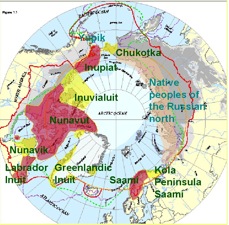
Read more about the SLiCA project here
Participation in Norway
|
Age spread |
Number invited |
Number of participants |
Participation rate (%) |
|
16–87 |
788 |
445 |
56.5 |
What was investigated?
A comprehensive 65-page questionnaire was used. It contained the following topics: family, background (including language background and fluency), work and traditional activities, health, housing and standard of living, activities, values, religion and spirituality, local communities and the environment.
What has the study shown so far?
- Different methods were used to recruit and invite participants to SLiCA (Eliassen BM, Melhus M, Kruse J, Poppel B, Broderstad AR. Design and methods in a survey of living conditions in the Arctic - the SLiCA study. International Journal of Circumpolar Health. 2012;71:17229).
- A study from 2012 shows an association between indicators of assimilation and poor self-reported health among Greenlanders and indigenous women in Alaska. This association was not found among Sami in Norway and indigenous men in Alaska (Eliassen BM, Braaten T, Melhus M, Hansen KL, Broderstad AR. Acculturation and self-rated health among Arctic indigenous peoples: a population-based cross sectional study. BMC Public Health 2012, 12:948).
- Information on suicidal thoughts was available in the datasets from Alaska, Greenland, Sweden and Norway. Suicidal thoughts were most common in Greenland and least common in Sweden. Stratified analysis showed that the differences between the countries were only present in the youngest age groups. Educational level partly explained these differences (Broderstad AR, Eliassen B-M, Melhus M. Prevalence of self-reported suicidal thoughts in SLiCA. The survey of living conditions in the Arctic (SLiCA). Global Health Action. 2011;4:1-7.).
- The main results from SLiCA are presented in a book: Poppel B (editor). SLiCA: Arctic living conditions. Copenhagen: Nordic Council of Ministers 2015 (ISBN 978-92-893-3895-0)
Project status
This project has been completed and all data obtained during interviews has been deleted.
Research team
SLiCA was a project linked to the Sustainable Development Working Group of the Arctic Council. The project had a broad international basis and was led by an international steering group consisting of:
- Jack Kruse, ISER, University of Alaska Anchorage, Alaska, USA (programme director)
- Ann Ragnhild Broderstad, UiT The Arctic University of Norway, Tromsø
- Gerard Duhaime, Laval University, Canada
- Hugh Beach, Department of Cultural Anthropology and Ethnology, Uppsala University, Sweden
- Larissa Abruitina, RAIPON, Russia
- Birger Poppel, Ilisimatusarfik, University of Greenland. Project manager of SLiCA’s international group
Norwegian working group: Ann Ragnhild Broderstad, Marita Melhus, Bent-Martin Eliassen (now at Nord University)
Contact
Appendix