The puzzle of nerve aging: unravelling the trinity of fat, chondral proteoglycans, and fibroblast growth factors
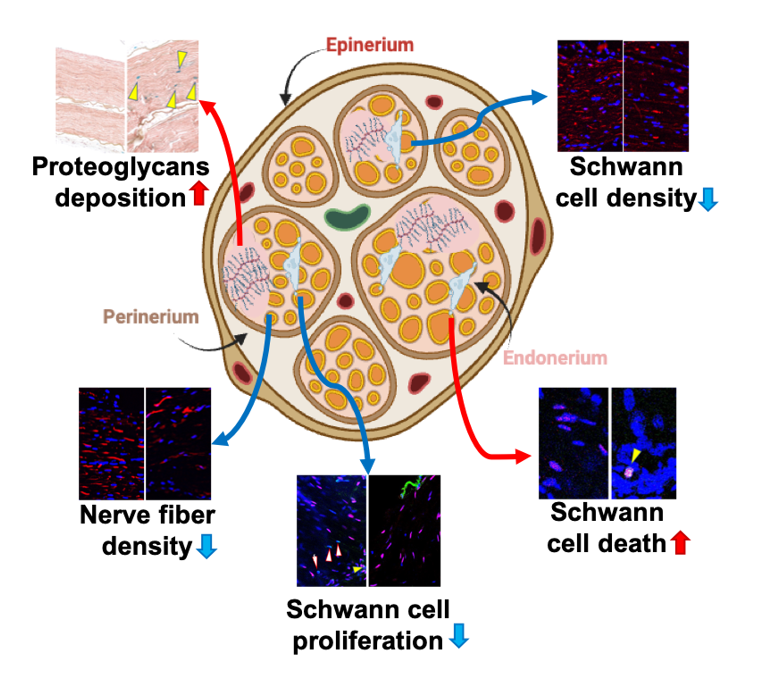
Sedentarism, also called “sitting disease”, poses a significant challenge to modern society, particularly among the elderly, increasing frailty and all-cause mortality. As individuals age, one of the main reasons for sedentarism is muscle loss and weakness, for which impaired innervation from the peripheral nervous system is a major contributing factor. Our preliminary work highlights dynamic changes in cellular composition during peripheral nerve aging. For example, we have found increased FGF2-expressing adipocyte numbers and a novel CSPG4-expressing chondrocyte-like state fibroblasts which are activated by high concentrations of FGF2. Therefore, we hypothesized that during aging, increased FGF2 signaling induces activation of neural fibroblasts which deposit more CSPG4, and a deterioration on Schwann cell function leading to nerve fiber degeneration.
Based on this hypothesis, this work aims to better understand age-related peripheral neurodegeneration by studying the role of adipocytes and FGF2 signaling, in the age-related cellular changes in neural fibroblast, and Schwall cells. In addition, our goal is also to find lifestyle and medical interventions to prevent these cellular changes to preserve motoric function and quality of life in the elderly. To do so, we plan to use human cells and transgenic mice to understand the mechanisms of peripheral nerve aging, and exercise, calorie restriction, and a ligand trap intervention to find means of preventing and/or treating age-related nerve degeneration.
Members:
Financial/grant information:
FRIPRO
UiT