Brain Cancer (NORTHCARE )
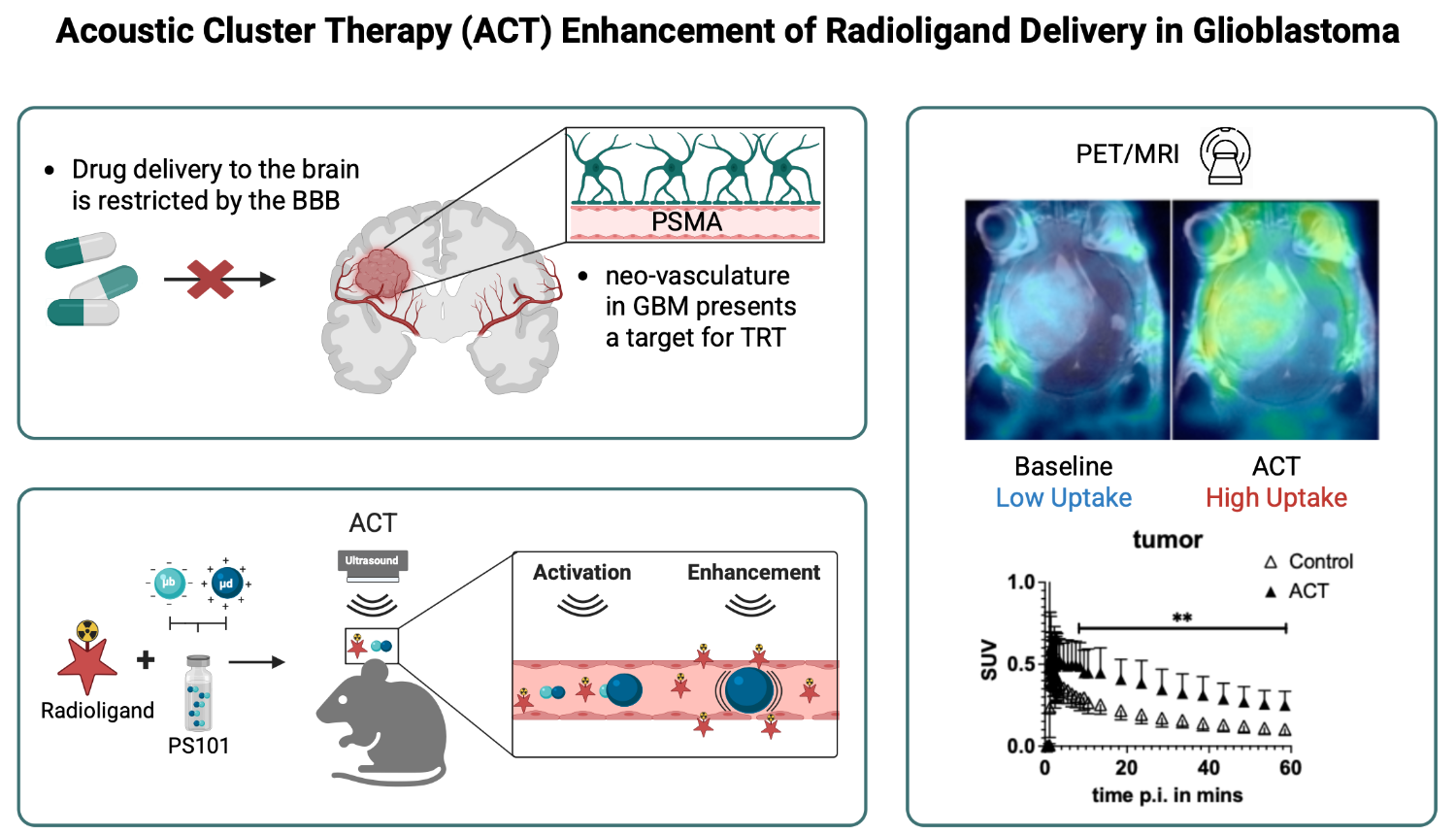
NORTHCARE is developing a theranostic platform that improves glioblastoma treatment by enhancing precision delivery of radiotherapeutics via focused ultrasound and PET imaging.
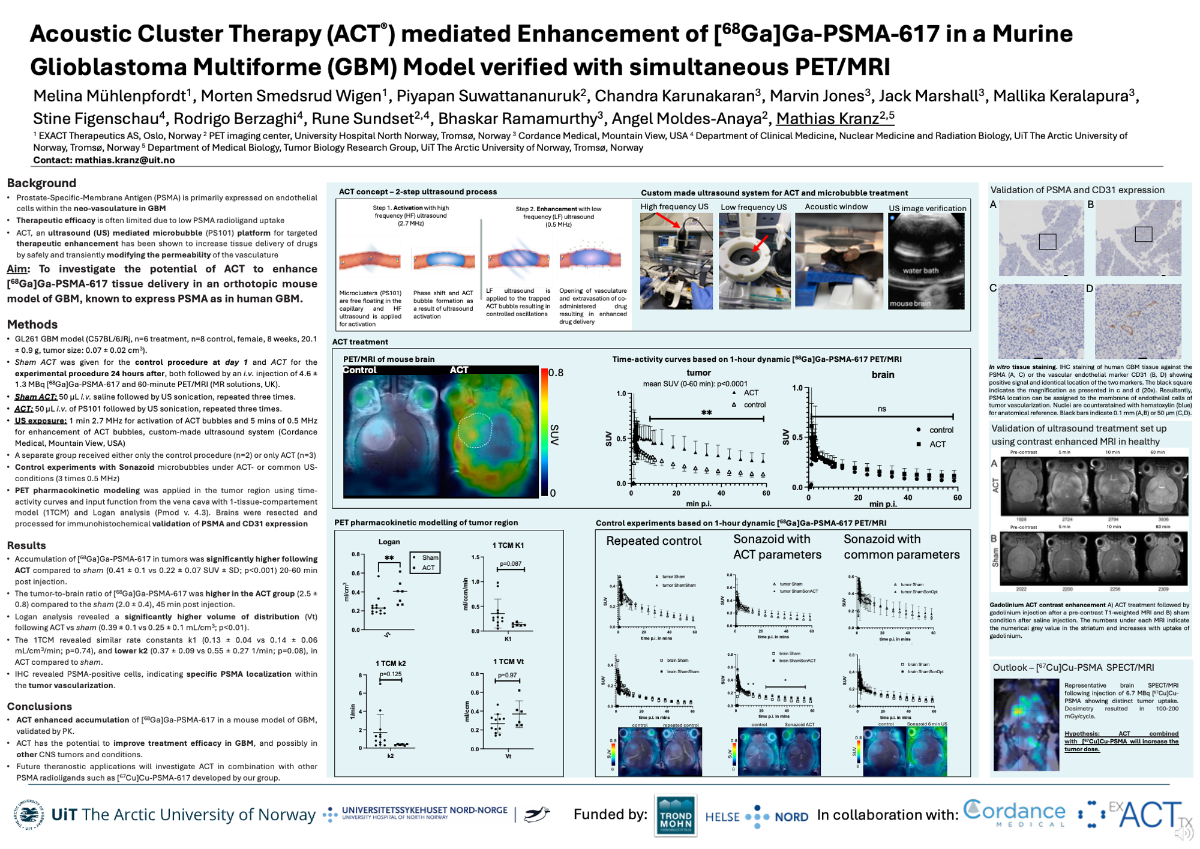
Concept of Acoustic Cluster Therapy
Contact: Mathias Kranz (mathias.kranz@uit.no)
What is NORTHCARE?
NORTHCARE (Novel theranostic application of radiotherapeutics for personalized cancer treatment using focused ultrasound with Positron Emission Tomography) is a research project funded by the Tromsø Research Foundation and focused on developing advanced theranostic strategies for personalized cancer treatment. The project combines diagnostic imaging and targeted radiotherapy in a single platform, aiming to improve both treatment precision and outcome monitoring. By integrating focused ultrasound with PET and SPECT imaging, NORTHCARE seeks to enhance the delivery and effectiveness of radiolabeled therapeutic agents while allowing real-time assessment of tuuptake and response.
Scientific Approach
The project is centered around the use of radiotracers like prostate-specific membrane antigen (PSMA) and others which serves as molecular targets. While PSMA is best known for its role in prostate cancer, it is also expressed in the neovasculature of glioblastoma tumors. This makes it an attractive target for both imaging and therapy in brain cancer.
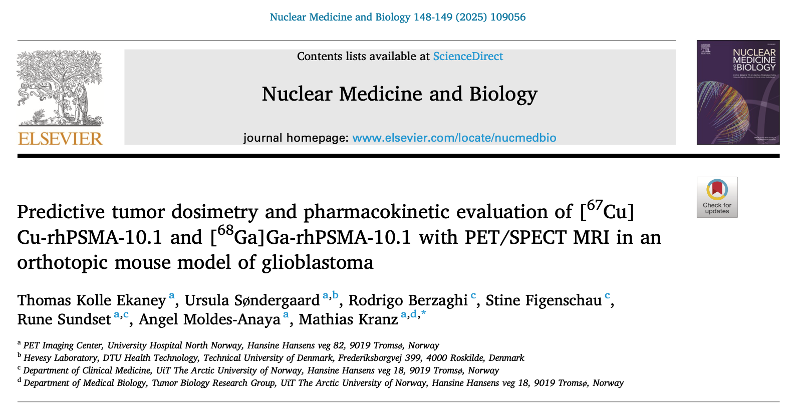
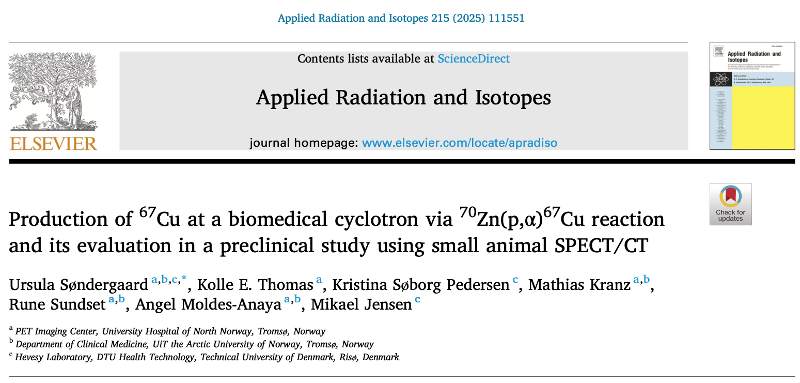
Radiolabeled PSMA ligands are used for theranostic purposes. Copper-64-labeled PSMA enables high-resolution PET imaging and quantitative assessment of tumor uptake, while copper-67-labeled PSMA is applied for SPECT-guided radiotherapy. Together, these radionuclides allow the same molecular construct to be used for diagnosis, treatment planning, and therapy.
Radiotracer development at the PET imaging center Tromsø connects preclinical and clinical research and was initated and funded by the 180 degrees north project.
Focused Ultrasound and Acoustic Cluster Therapy
Focused ultrasound plays a key role in the NORTHCARE strategy through the use of Acoustic Cluster Therapy (ACT). ACT involves the activation of microbubbles within tumor blood vessels using focused ultrasound, leading to a temporary and localized increase in vascular permeability. This effect enhances the delivery of PSMA-targeted radiotherapeutics to the tumor tissue.
By improving tumor uptake, focused ultrasound increases both the therapeutic efficacy of the radiolabeled compounds and the accuracy of imaging-based dosimetry. This combination supports a more precise and individualized treatment approach
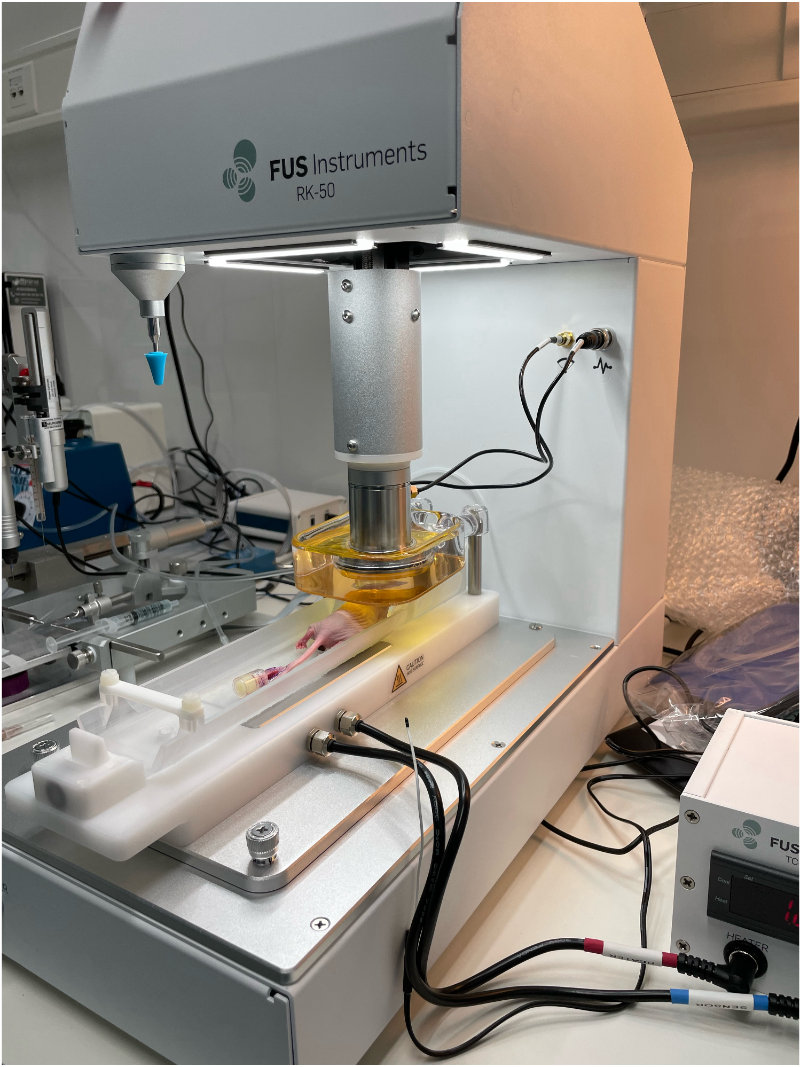
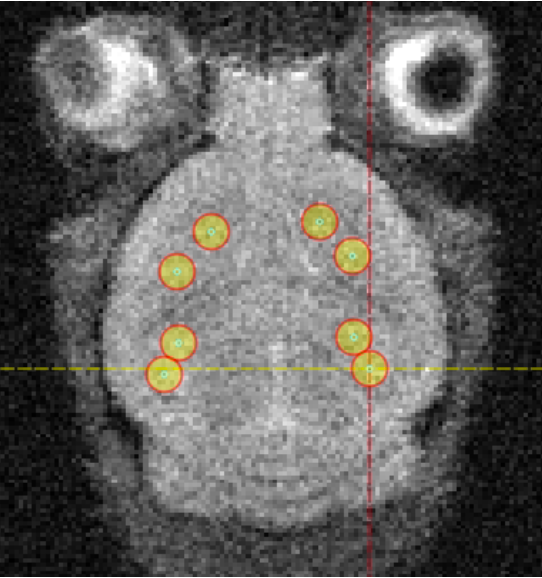
The video is showing a mouse brain under an ultrasound acoustic window. After 6 seconds the contrast changes in the brain due to micro bubble injection.
Theranostic Integration and Preclinical Models
A central aim of NORTHCARE is to integrate imaging and therapy in a way that allows treatment to be monitored and adjusted based on biological response. PET and SPECT imaging are used to quantify radiotracer distribution, enabling assessment of pharmacokinetics, tumor dosimetry, and treatment effect.
The project is currently conducted in preclinical mouse models of glioblastoma, which provide a controlled environment for evaluating therapeutic delivery, imaging accuracy, and treatment response before translation toward clinical applications.
 |
 |
Collaboration with Industry
This research project is conducted in close collaboration with Exact Therapeutics Oslo and Cordance Medical, USA.
Publications
|
Mühlenpfordt, M., Wigen, M. S., Suwattananuruk, P., Karunakaran, C., Jones, M., Marshall, J., ... & Kranz, M. (2026). Acoustic cluster therapy mediated enhancement of [68Ga] Ga-PSMA-617 in a murine glioblastoma multiforme model verified by simultaneous PET/MRI. Biomedicine & Pharmacotherapy, 201, 119682. https://www.sciencedirect.com/science/article/pii/S0753332226007183
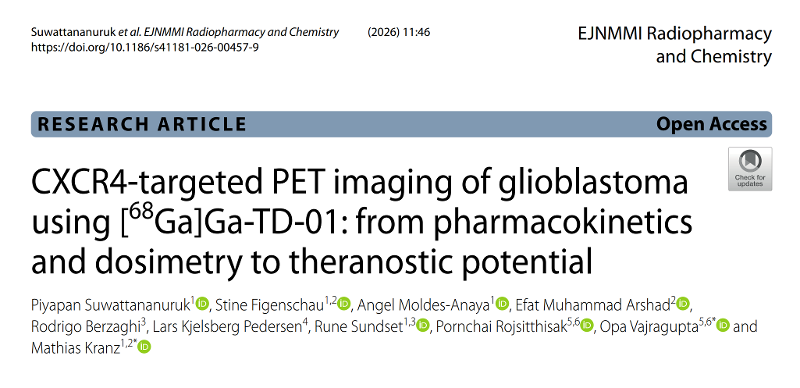
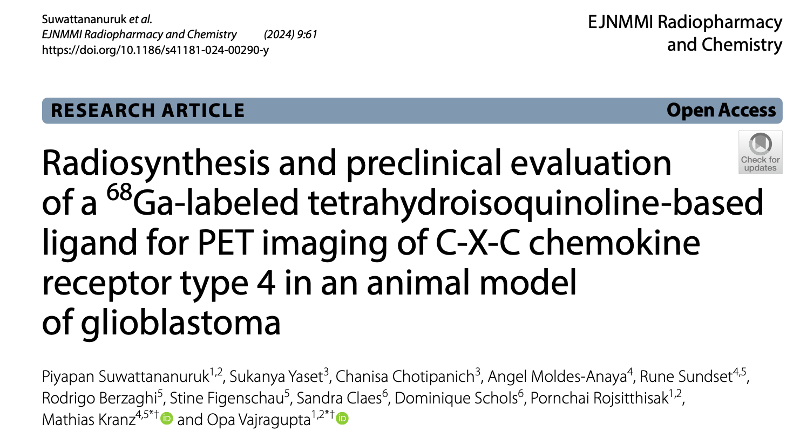
Suwattananuruk, Piyapan, Stine Figenschau, Angel Moldes-Anaya, Efat Muhammad Arshad, Rodrigo Berzaghi, Lars Kjelsberg Pedersen, Rune Sundset, Pornchai Rojsitthisak, Opa Vajragupta, and Mathias Kranz. "CXCR4-targeted PET imaging of glioblastoma using [68Ga] Ga-TD-01: from pharmacokinetics and dosimetry to theranostic potential." EJNMMI Radiopharmacy and Chemistry (2026). https://link.springer.com/article/10.1186/s41181-026-00457-9 |

Associated group members
Angel Moldes-Anaya (Radiochemist)
Piyapan Suwattananuruk (Radiochemist)
Members:
Financial/grant information:
Tromsø Reseachr Foundation Starting Grant (TMF2024UITSTG03, 2024), Helse-Nord grants HNF1591-2021/HNF1695-2023, Tromsø forskningsstiftelse, TMS/TFS (grant number 19_PET-NUKL, 2019)