Arctic fox
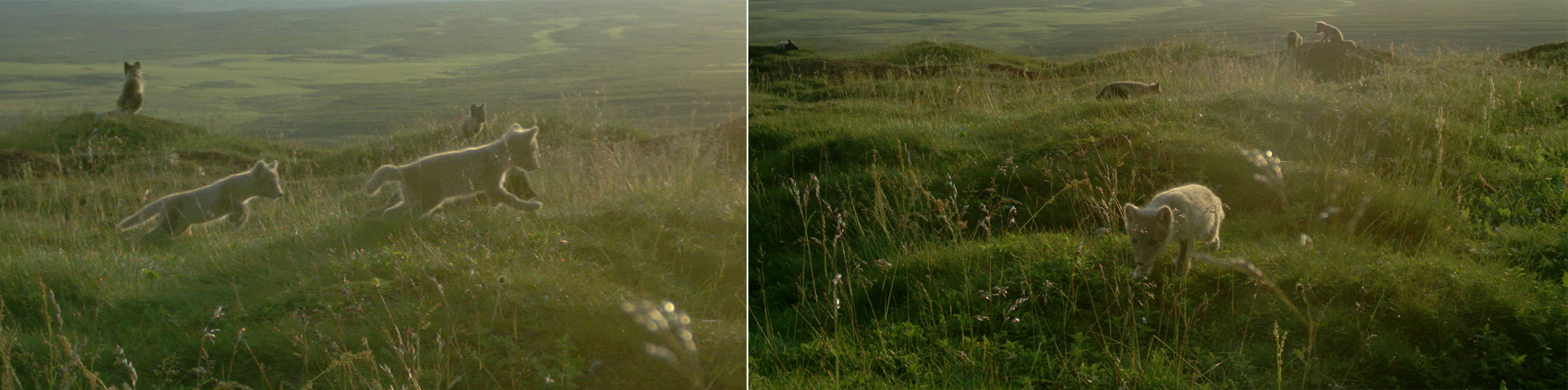
Few species are as iconic as the Arctic fox. Right up until the 1980s, it was a common species up here in the north, while it had been rare in the rest of Norway since the 1920s, largely because its fur was a sought-after resource.
Today you are lucky if you catch a glimpse of it. Large sums are invested every year to increase the population, and there have been more Arctic foxes on the Varanger Peninsula in recent years.
What makes it so difficult for the arctic fox to survive, and what are we doing to help it?
The Arctic Fox on the Varanger Peninsula
Due to its valuable fur, arctic foxes were excessively hunted, and the species was protected in Norway as early as 1930. Nevertheless, the population has continued to decline. Now it is on the Red List as endangered (EN).
The causes for the lack of recovery of the arctic fox population are complex, but important factors are likely linked to climate change.
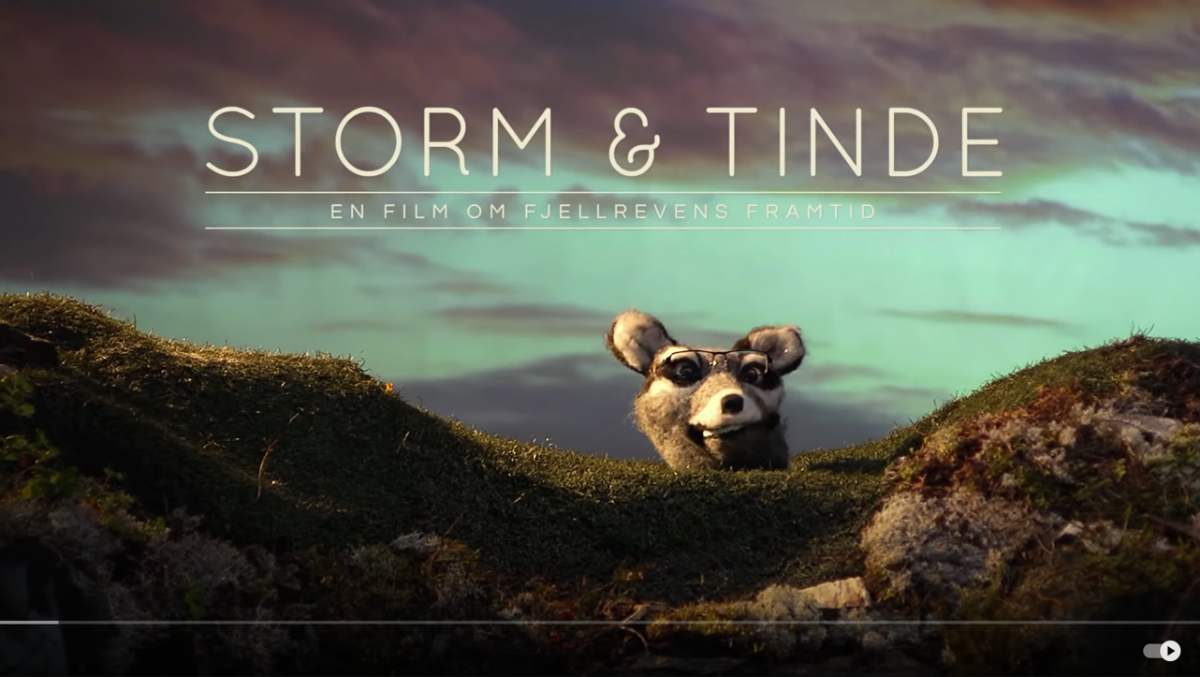
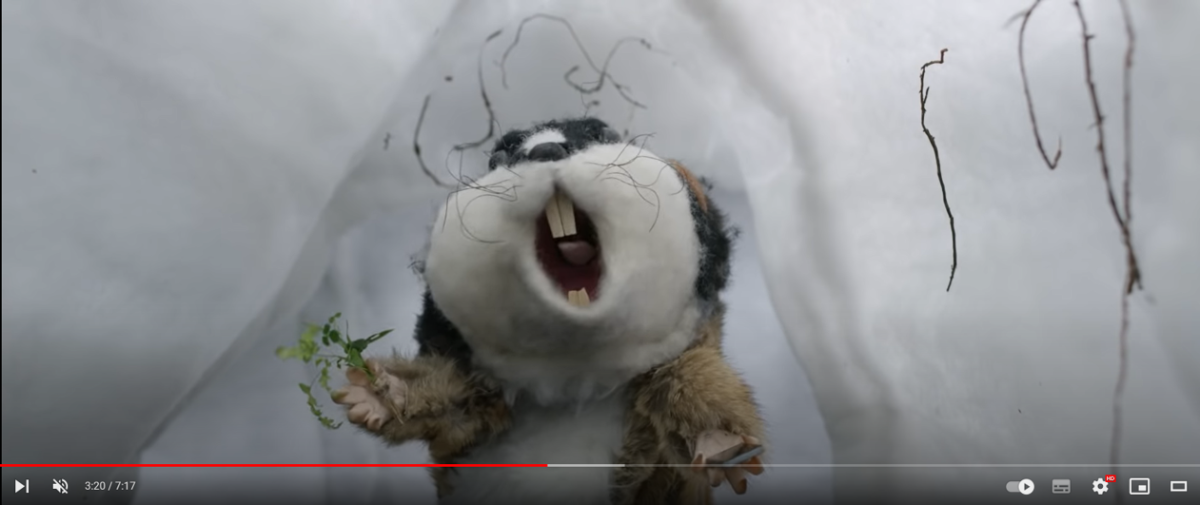
Gain insight into the life of an arctic fox in the videos Storm and Tinde, produced by the Norwegian Environment Agency (Miljødirektoratet):
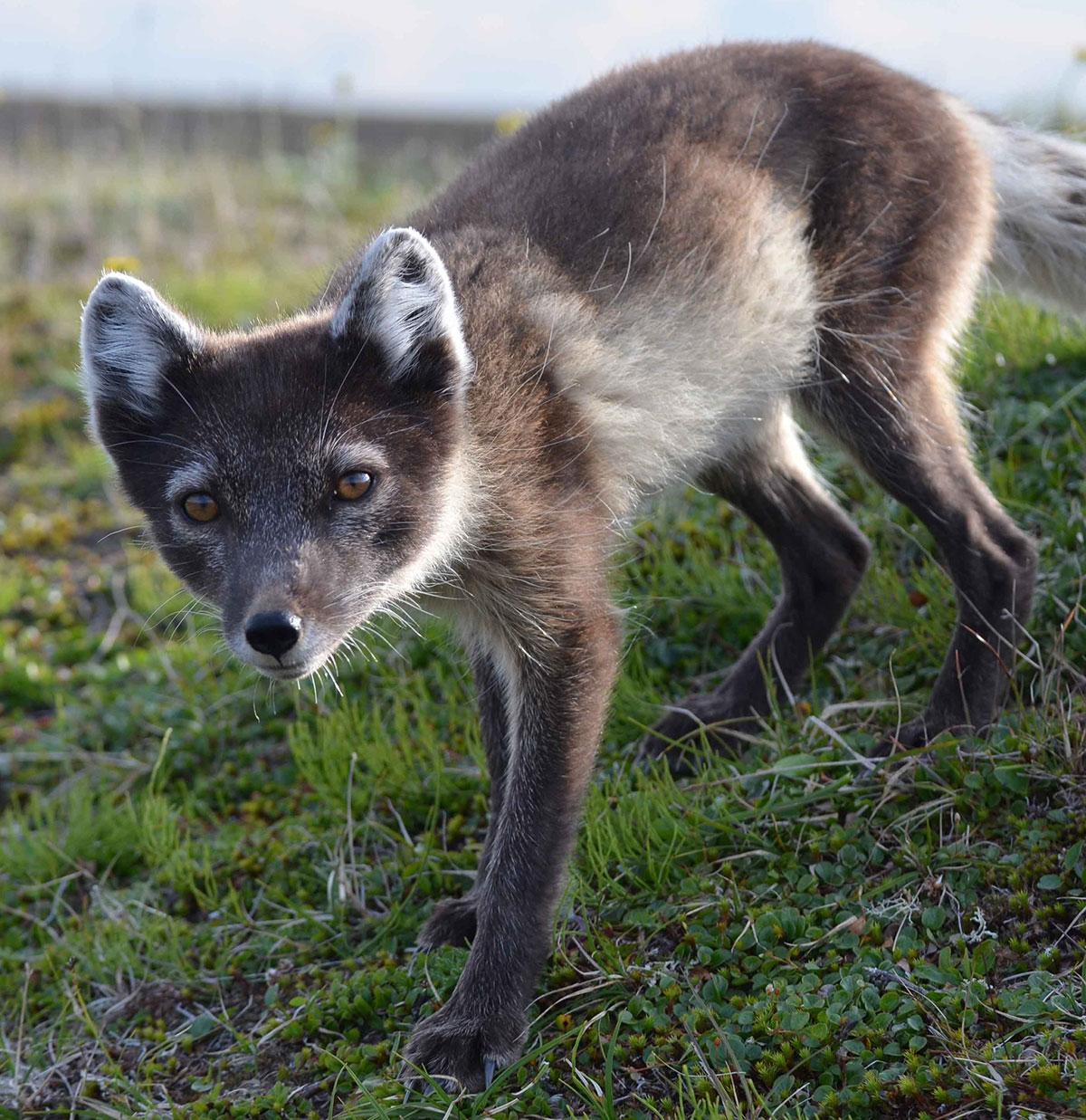
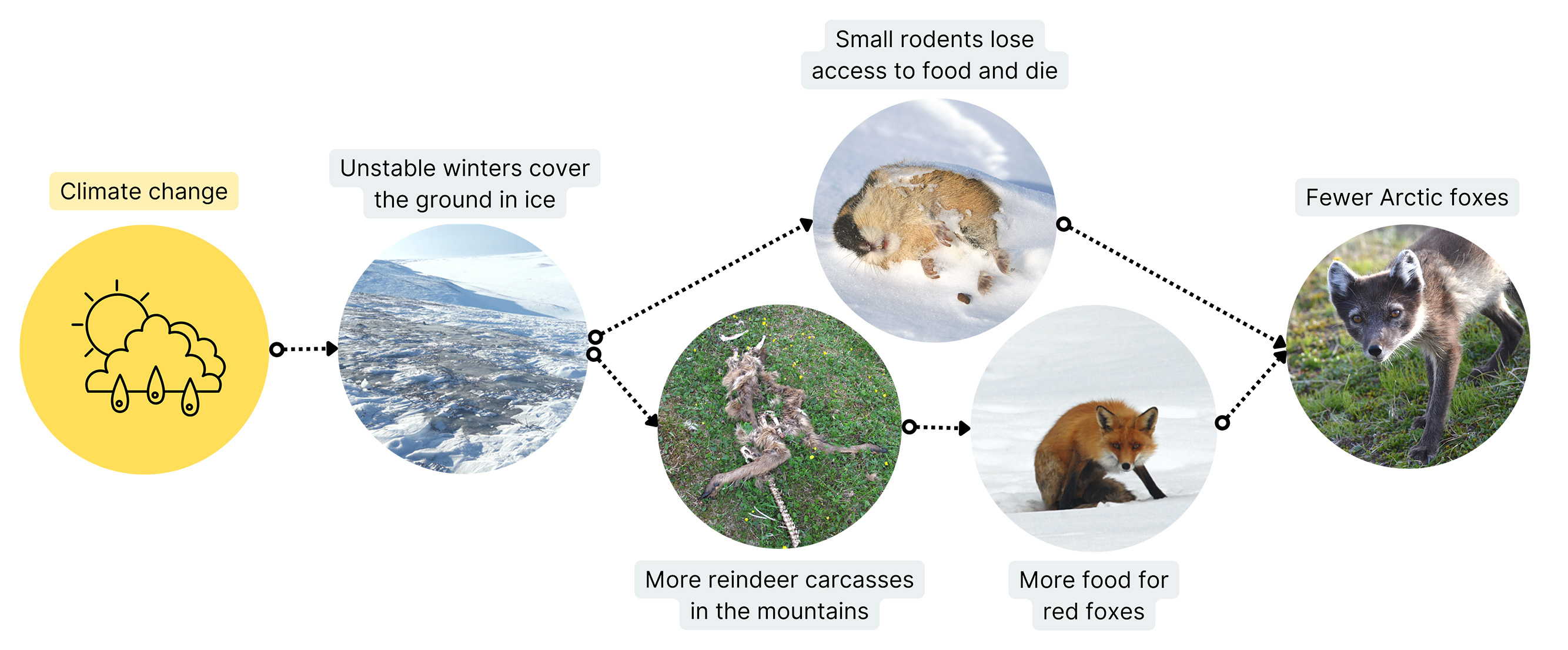
Climate change is affecting food availability for various species. This has consequences for the Arctic fox, among others.
Climate change and increased human activity are leading to the spread of southern species northward and into the mountains. This is the case for the red fox.
Our research has revealed that an increase in red fox abundance and a decline in lemmings as major factors that affect the arctic fox.
Lemmings are not only the arctic fox's favorite food; the arctic fox also depends on good lemming years to get enough food to be able to have pups.
Climate change reduces the availability of food for small rodents in the winter, and lemming peaks occur less frequently and are not as large as before.
Fewer lemmings mean that the Arctic fox loses access to important food resources that it needs in order to have pups, and for the pups to grow large.
More about small rodents
The red fox is becoming more common in the north. Part of the reason is increased human activity in the mountains and the fact that more reindeer are dying on their winter pastures for various reasons (including changes in climate). More reindeer carcasses provide better food access for scavengers such as the red fox.
The red fox is larger and stronger than the Arctic fox and drives it away from both food and dens. Red foxes have even been observed killing Arctic foxes.
Photo: Ice on the ground: Jan Erik Knutsen, dead reindeer: Rolf A. Ims, dead lemming: Rolf A. Ims, red fox: Geir Vie, and arctic fox: Laurent Demongin.
How we help the Arctic fox
Measures to strengthen the Arctic fox population on the Varanger Peninsula are carried out by the Norwegian Environment Agency and NINA
Breeding and release of arctic fox pups; a total of 67 pups were released in the years 2018-2020 by the Norwegian Institute for Nature Research (NINA).
Establishment of feeding stations where the Norwegian Nature Inspectorate (SNO) provides arctic foxes with supplementary food (dog pellets).
Increased hunting of red foxes to reduce competition for food and denning areas for the arctic fox.
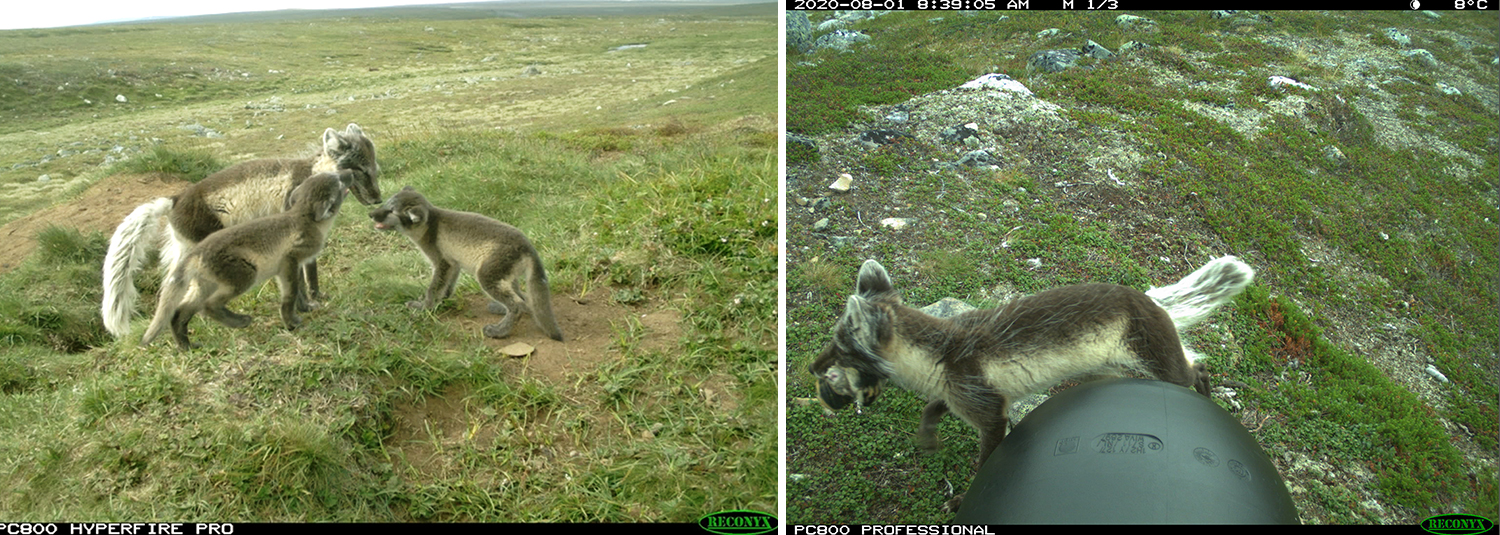
Arctic fox pups documented at dens and at feeding stations with our wildlife cameras. Photo: coat.no
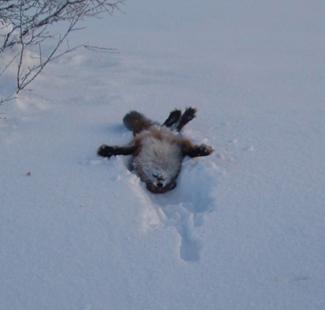 Culling of red foxes is one of the measures taken to preserve the arctic fox.
 Limiting the Red Fox Population
The culling of red foxes is carried out both by local hunters and by the Norwegian Nature Inspectorate (SNO). Hunters who deliver a fox carcass for research purposes to COAT receive compensation.
We also do research on red foxes to understand what causes the population to grow and spread into arctic fox habitats. Scroll further to see how this is done!
Follow the Red fox live!
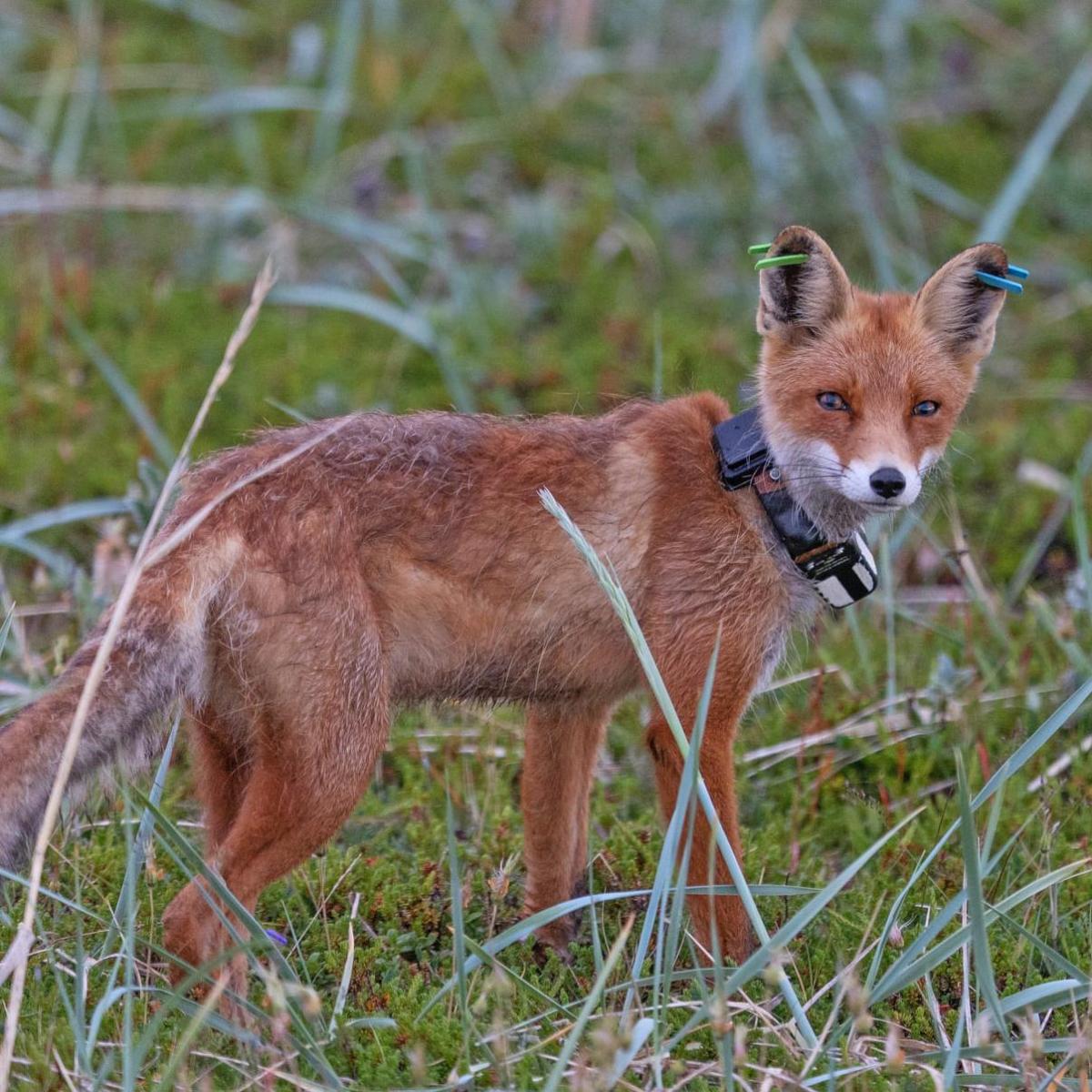 Photo: Svein Johannessen
Here you can see Thorsen, the first fox we caught in 2021. He was an adult male fox who spent most of the summer of 2021 in Smelror near Vardø. The markings are clearly visible in his thin summer coat.
We have fitted GPS collars on some red foxes to monitor their movements. On the map you can see where our red foxes are right now (recently there have been some issues with data transmission, so sometimes no foxes are visible).
Uhcci Biret, a young female caught at Svartnesodden, is released after being fitted with a GPS collar. The collar was somewhat unfamiliar at first. But, like dogs, the foxes also quickly get used to wearing collars.
How do we keep an eye on the arctic foxes?
Wildlife cameras are set up at dens during the summer and at feeding stations year round. This allows us to see how many pups the families in the different dens have had.
The images from the wildlife cameras also provide information about whether predators such as eagles or red foxes appear. They can attack and take pups.
The Norwegian Nature Inspectorate (SNO) conducts annual den checks, where they record activity and collect scat. NINA extracts DNA from the scat and uses it to track individual foxes and to estimate population size.
Examination of dead red foxes provides information about age, whether females have had pups, and what the foxes have been eating.

The graph to the right shows the number of arctic fox litters and pups, as well as the population of lemmings in Varanger over the last few decades.
Comparing the trends of the two species, it is clear that the arctic fox fares better in years with many lemmings.
The red line indicates when we began culling red foxes, and the blue marks at the bottom right represent the three years we have released arctic fox pups.
What does the fox say?
Answer the questions about arctic fox sounds.
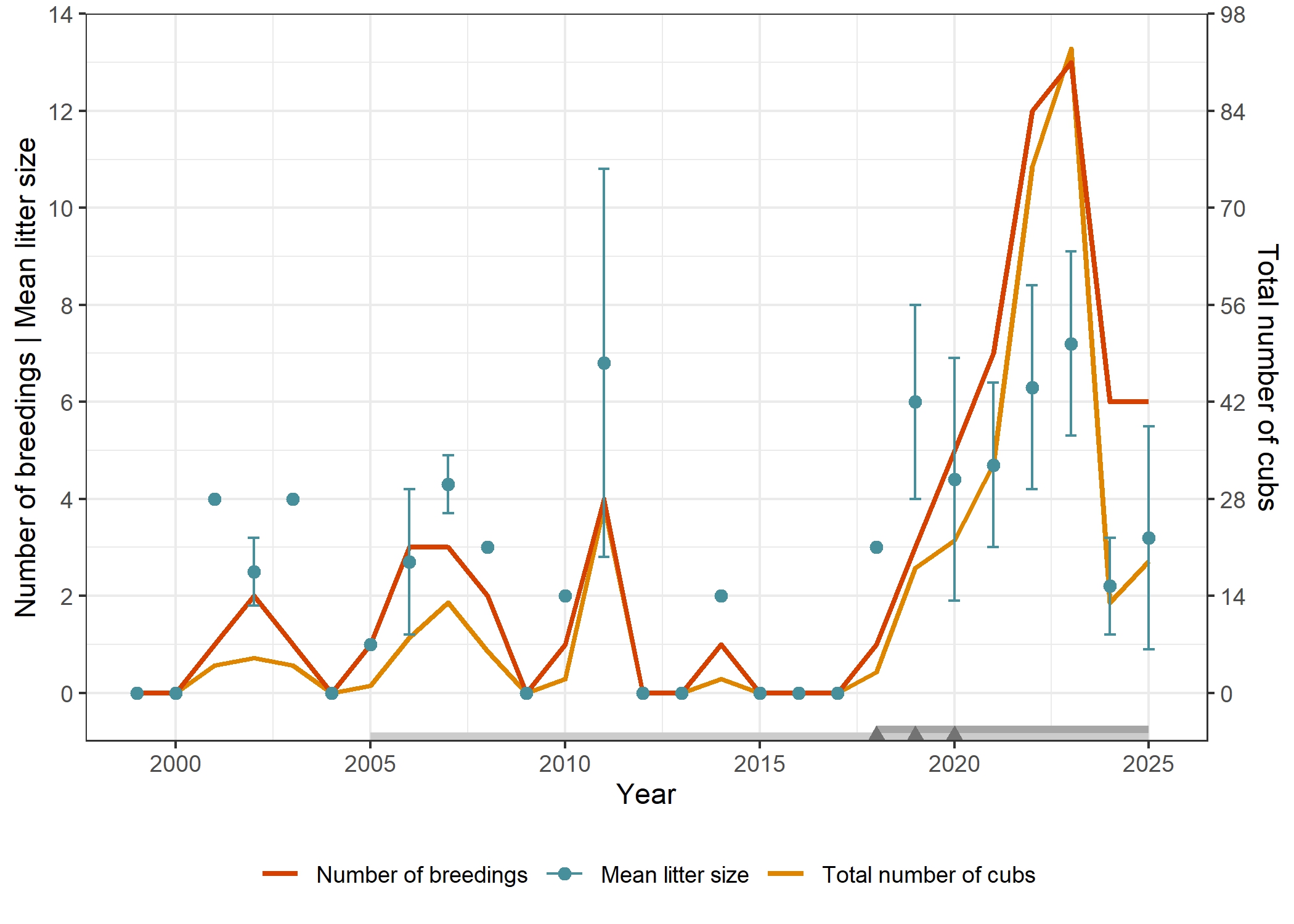
The release of foxes from the breeding station and supplementary feeding have had a clearly positive effect on the Arctic fox population. The number of breeding events and the number of foxes on the Varanger Peninsula have increased considerably since these measures were initiated.
The goal of the measures is to increase the Arctic fox population across all of Fennoscandia to a sustainable level, and then gradually phase out the measures.
However, the causes of the Arctic fox population decline, especially the absence of large lemming years have not been eliminated. Thus, only time will tell whether the Arctic fox will manage on its own in the future. Perhaps it can survive on the Varanger Peninsula by eating more marine food, if the red fox is kept in check along the coast?